
 AI photo
Almond Milk Cookies
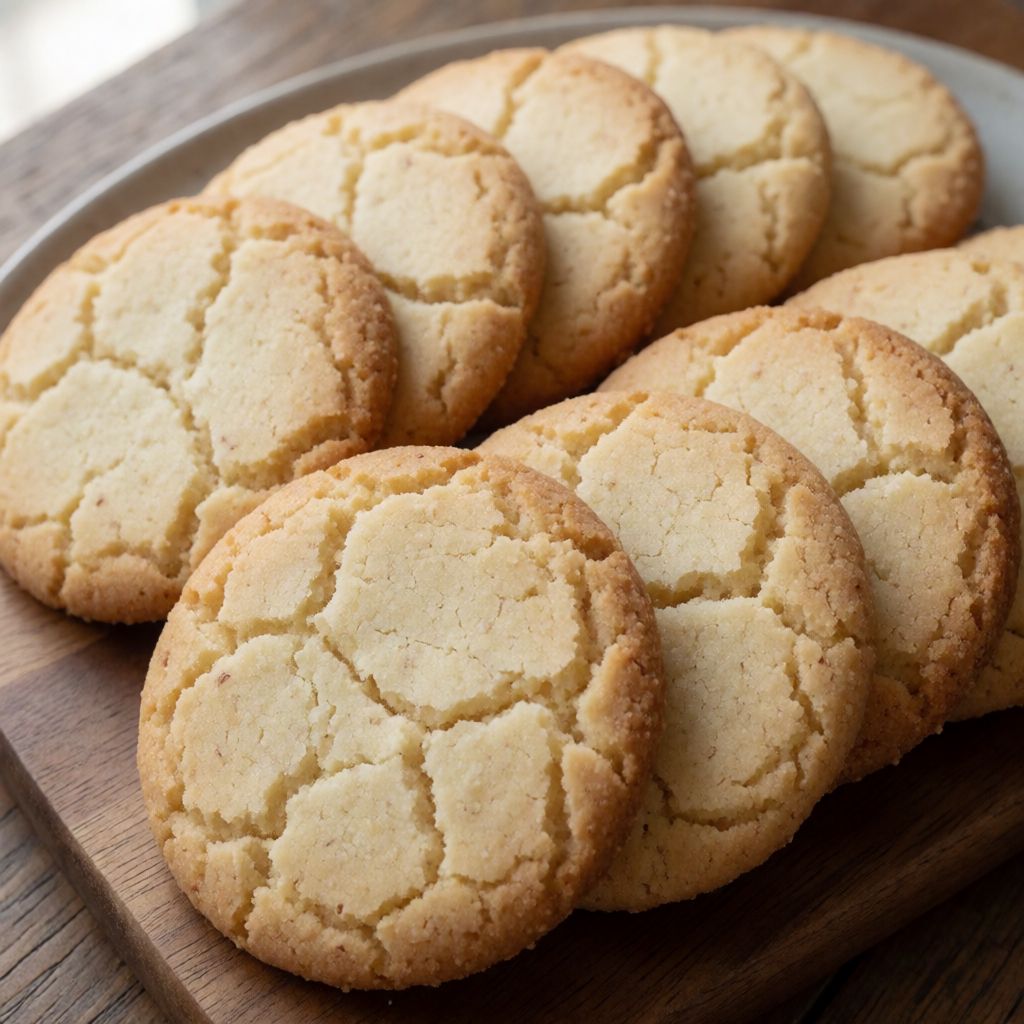
Soft almond milk cookies rolled in brown sugar before baking.
Labels are worked out automatically from the ingredients and can be wrong. Check the packaging if it matters to you.
Ingredients
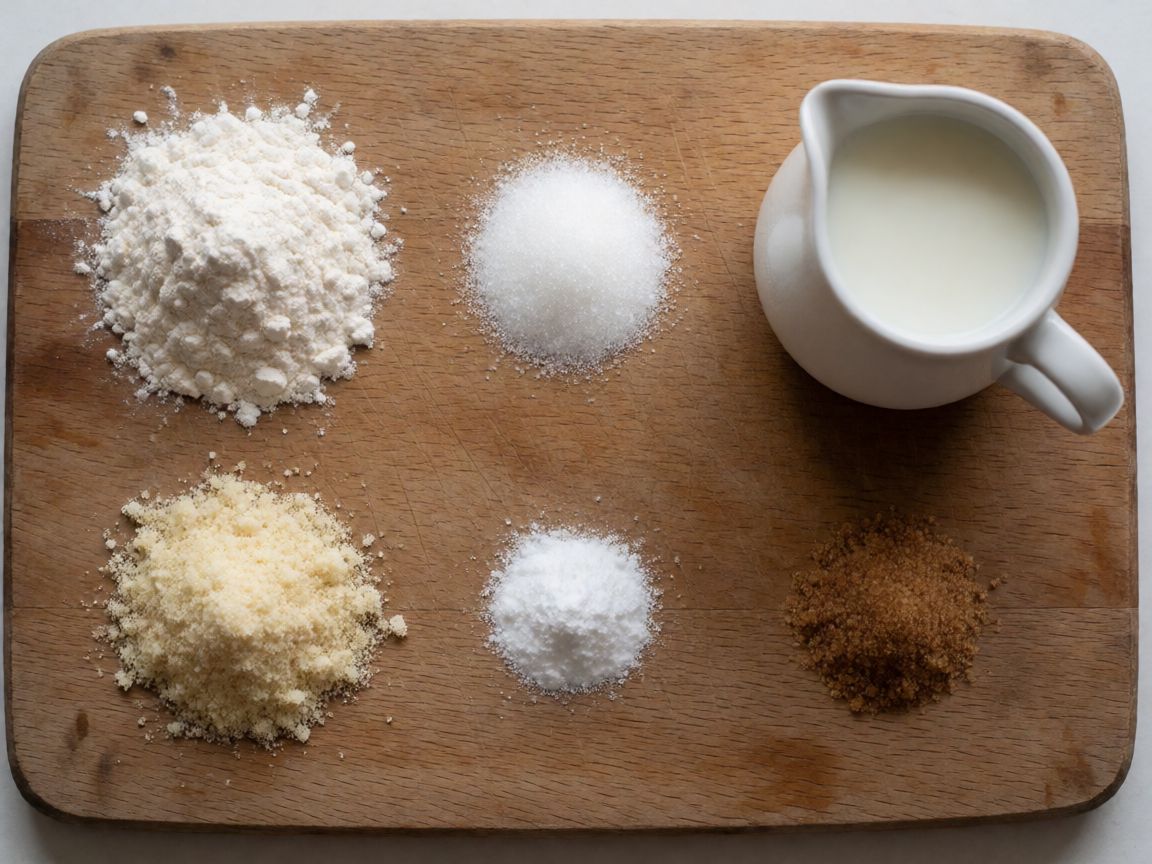
- 420 g Plain flour
- 100 g Caster sugar
- 30 g Almond flour
- 1.75 tsp Baking powder
- 250 ml Almond milk
- Brown sugar to taste






Steps
In a large bowl, combine the flour, sugar, almond flour and baking powder.
Gradually add the almond milk and knead by hand until the dough is smooth and even.
Shape the dough into a ball, wrap it and let it rest in the fridge for about 30 minutes.
30 minForm small balls from the dough, roll them in brown sugar and place them on a baking tray.
Bake in a preheated fan oven at 200°C for about 10 minutes.
10 minTake the cookies out of the oven and serve while they are still fragrant and fresh.
These are dry-crumbed, lightly leavened biscuits built on flour and milk rather than butter and egg — closer in spirit to a scone that's been rolled into a ball and rolled in sugar than to a Western soft-centred cookie. There's no fat to speak of beyond what's naturally in almond milk and almond flour, so the whole texture question comes down to how much water the flour has actually taken in, and how relaxed the gluten is by the time it meets the oven.
That's why the fridge rest isn't a formality you can skip because you're hungry. 420 g of flour against 250 ml of liquid is a stiff, low-hydration dough — kneaded by hand it tightens up fast. Thirty minutes resting cold lets the starch finish drinking in the milk and lets the gluten you just built relax back down. Skip it, bake straight away, and you get a biscuit that's tough at the edge and still floury in the middle, because the water never fully migrated through the crumb.
The oven does one job here: give the brown-sugar coating a short, hot window to melt and catch colour before the inside dries past the point of being tender. 200°C with the fan on is chosen for speed and evenness, not because a gentler oven would ruin anything — a slower oven just gives you a paler, less crackled surface and a slightly drier biscuit, because the sugar has longer to just melt and soak in rather than caramelise on top.
Flour is the frame of the whole thing, and at 420 g to 250 ml of liquid you're well past pancake-batter hydration and into dough that needs real kneading to come together smoothly — that's deliberate, it's what gives the biscuit body rather than a cakey crumb. Plain flour is right because you don't want the extra protein of a bread flour fighting you after a rest this short; if that's what's in your cupboard, knead less and rest it longer to compensate.
Almond flour at 30 g is a flavour and fat addition, not structure — it's ground almonds with their natural oil still in them, and that oil is doing a small, quiet version of butter's job: coating a few gluten strands here and there so the crumb isn't completely lean. If you haven't got it, ground almonds work exactly the same way; if you've got neither, leave it out and don't try to replace it gram for gram with more plain flour — you'll lose the only fat in the whole dough and the biscuits will eat drier than they're meant to.
Almond milk is simply the liquid that hydrates everything — its job here is water, not almond flavour, which is why any milk with no strong character of its own will do: oat milk, dairy milk, even water with a spoon of neutral oil stirred through in a pinch. What you're choosing against is a milk that brings its own taste loud enough to fight the brown sugar on top — coconut milk would do that, so skip it unless you want coconut biscuits.
Baking powder at 1¾ tsp is there to give a little lift without an egg to do the job — it reacts with moisture and heat, so most of its work happens in that first blast of oven heat, which is another reason the bake needs to be hot and quick: a slow oven lets the gas escape before the crust has set enough to trap it, and you end up with a flatter, denser biscuit.
Caster sugar in the dough is for sweetness and a touch of tenderness — fine sugar dissolves into the dough rather than sitting as grit, which matters because the real crunch and colour here comes from the brown sugar rolled on the outside, not from anything inside. Brown sugar carries molasses, and molasses caramelises differently from white sugar — it gives you that darker, slightly bitter-edged crust rather than a plain sweet glaze, which is the whole point of rolling the balls in it before they go in. Use demerara or any coarse, molasses-bearing sugar if that's what's to hand; caster sugar on the outside will just melt flat and give you none of the crackle.
Economically this is an unfussy teatime bake — no eggs, no butter, nothing that needs the fridge stocked beyond a carton of milk, which is exactly the kind of recipe that survives in a household where biscuits get made on a whim between the kettle going on and tea being poured. Eight biscuits is a small batch on purpose: this isn't a keeping tin of biscuits, it's a today thing, and that's also why the recipe tells you to eat them warm — without fat to slow it down, the starch in a lean dough like this starts going stale within hours, turning from tender to leathery. A domestic fan oven runs its own way — trust the sugar crust's colour and the firm-but-not-hard give of the biscuit under your thumb over the clock, and turn the tray round halfway if your oven browns one side faster, because most of them do.