
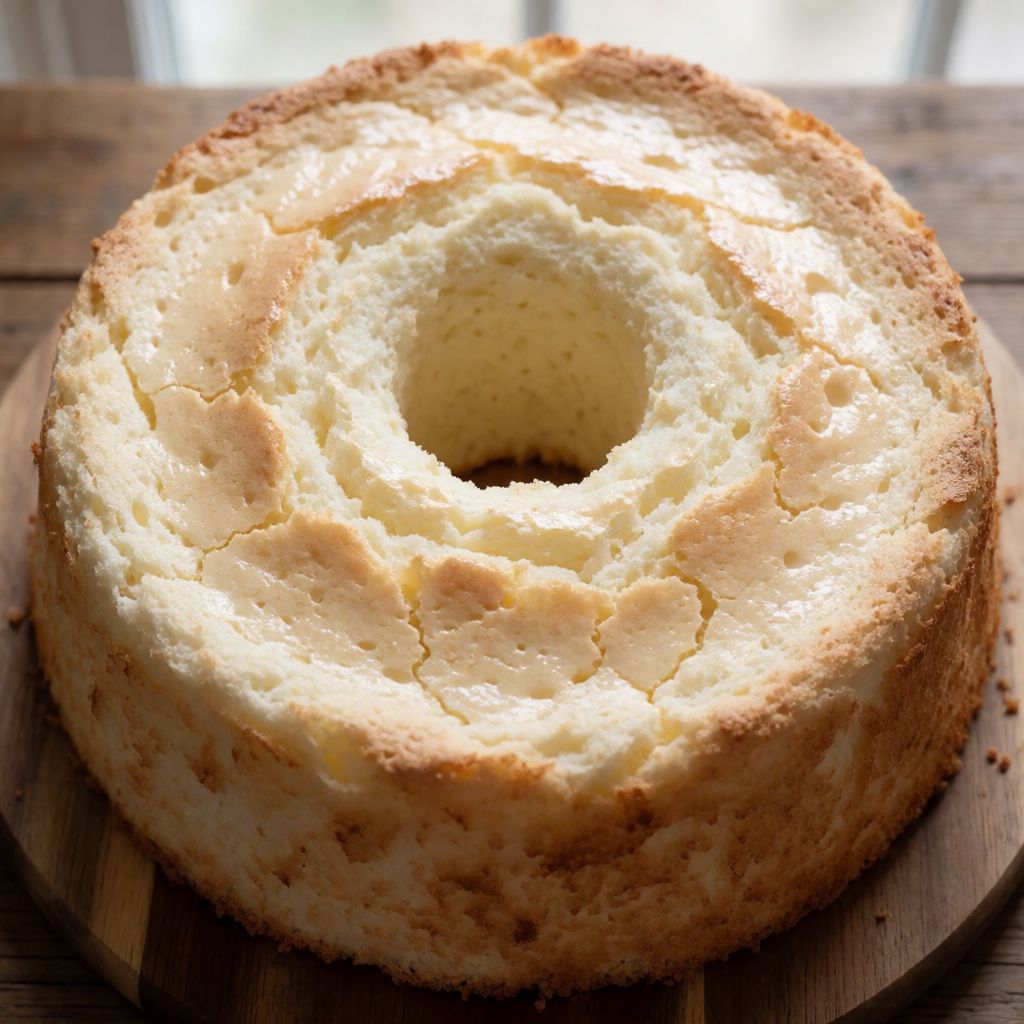
 AI photo
Angel Food Cake
A light, airy sponge made from whipped egg whites, perfect for a delicate afternoon treat.
Labels are worked out automatically from the ingredients and can be wrong. Check the packaging if it matters to you.
Ingredients
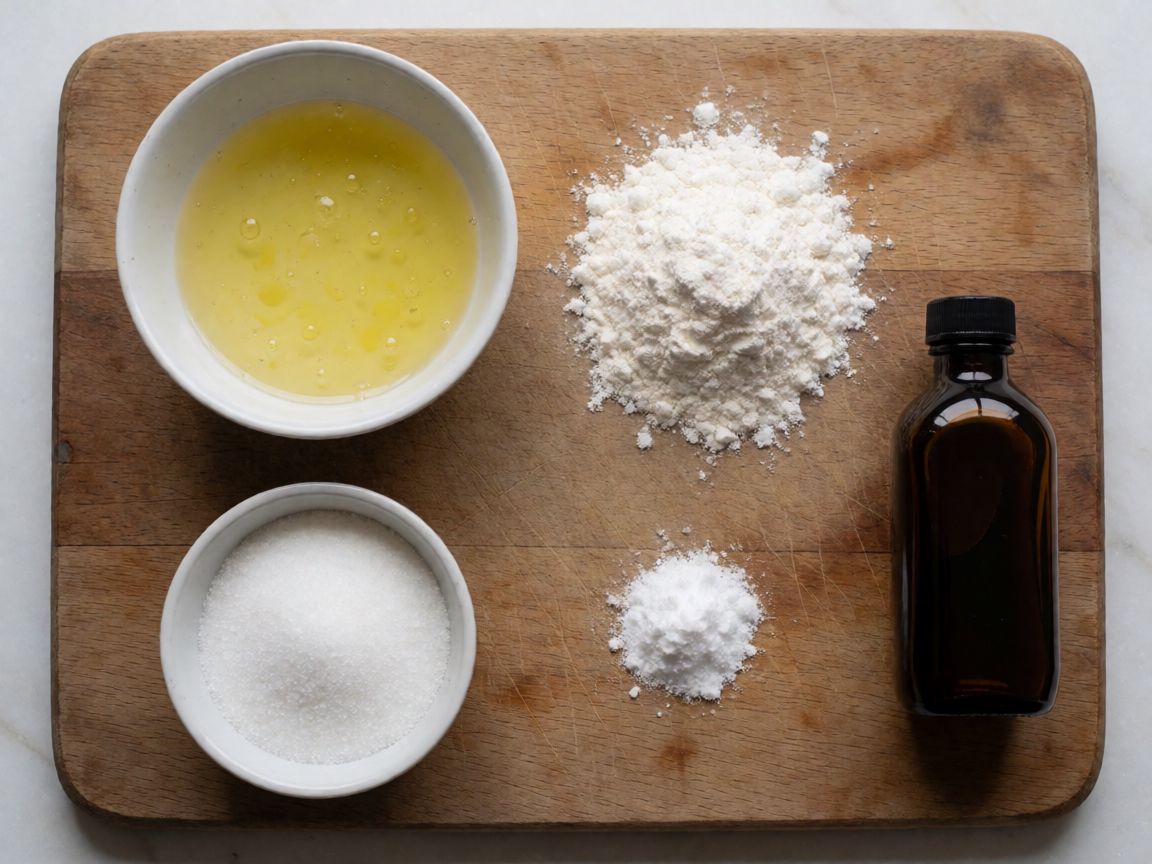
- 480 g Egg whites
- 160 g Plain flour sifted
- 250 g Caster sugar
- 5 g Salt
- 5 g Cream of tartar
- 1 tsp Vanilla extract






Steps
Pour the egg whites into the bowl of a stand mixer, add the vanilla extract and cream of tartar. Begin whisking. Gradually add half of the sugar.
Add the remaining sugar, continuing to whisk until the mixture is smooth, glossy, fluffy and white.
Gently fold in the sifted flour, folding from the bottom up with a figure-of-eight motion.
Pour the batter into an angel food cake tin (tube tin), smooth the surface and bake at 180°C.
35 minCheck it's done with a wooden skewer. Cool upside down in the tin.
This is a cake with nothing in it to carry fat — no butter, no yolks, no oil. Just whisked egg white, sugar, a little flour and air. The air is doing all the structural work here, which means the whole cake succeeds or fails at the whisking stage, long before it goes near the oven.
What you're actually doing when you whisk 480g of egg white is unfolding the proteins by force and letting them link arms around tiny bubbles of air. Add the sugar too fast and the proteins set before they've trapped enough air — you get a grainy, flat foam that never recovers. That's why the sugar goes in gradually, in two stages: it gives the proteins time to build a fine, even structure before the sugar starts doing its other job, which is slowing everything down so the foam doesn't collapse under its own weight.
Cream of tartar isn't there for flavour or colour. Some say it's just an old habit — no, it's an acid, and it lowers the pH of the egg white so the proteins coagulate more gently and evenly. Without it you can still get a foam, but it's more fragile, more likely to weep liquid at the bottom of the bowl while you're folding in the flour, which is the single most common way this cake goes dense.
Egg whites are the engine of this whole thing, so treat them properly. They whip to greater volume at room temperature — cold whites are stiffer-feeling going in but actually trap less air, because the proteins move more sluggishly. Separate them well ahead and let them sit out. And keep every trace of yolk fat out of the bowl: fat coats the protein strands and stops them bonding around air, so even a speck of yolk can mean a foam that never gets past soft and soupy. If that happens, there's no rescuing it with more whisking — start again.
Caster sugar is chosen for its grain size, not its sweetness. Fine crystals dissolve into the foam as you whisk; coarse granulated sugar sits there half-dissolved and you end up with a gritty finish and a foam that never fully smooths out. If caster isn't in the cupboard, a few seconds in a food processor with ordinary sugar gets you close enough.
Cream of tartar's job, as above, is acid and stability. If you don't have it, a teaspoon of lemon juice or white vinegar does the same work — any mild acid that nudges the pH down will do. It won't be identical, but the mechanism is the same, and the cake won't know the difference.
The flour is sifted and folded in last, gently, bottom-to-top, because at this point the foam is the finished product and the flour is just a guest. Beat it in the way you'd beat a cake batter and you knock the air straight back out — the figure-eight fold is slow on purpose, moving the flour through the foam without crushing the bubbles that got you this far. Salt and vanilla are seasoning, nothing more — adjust to taste, they don't affect structure.
On the tin: the traditional angel food tin is a tall, narrow tube pan, ungreased, often with little feet or a central tube that lets you balance it upside down over a bottle neck as it cools. If you don't own one, a plain metal bundt tin works on the same principle — tall sides, central tube, no grease — but check it will actually sit stable inverted on your worktop; if it won't balance on its own feet, rest the tube over the neck of a sturdy bottle so the cake hangs free in the air rather than touching anything.
As for doneness: 35 minutes is where to start checking, not where to stop. The top should spring back lightly when touched, the skewer should come out clean, and the cake should just be starting to pull from the sides of the tin. None of that happens on a schedule — ovens vary, and a cake this delicate punishes guessing. Patience here isn't a virtue, it's an ingredient: rushed whisking, rushed folding, or a cake pulled out early because the timer went off will all cost you the height you built from nothing but egg white and air.