
 AI photo
Eggless Apple Cake
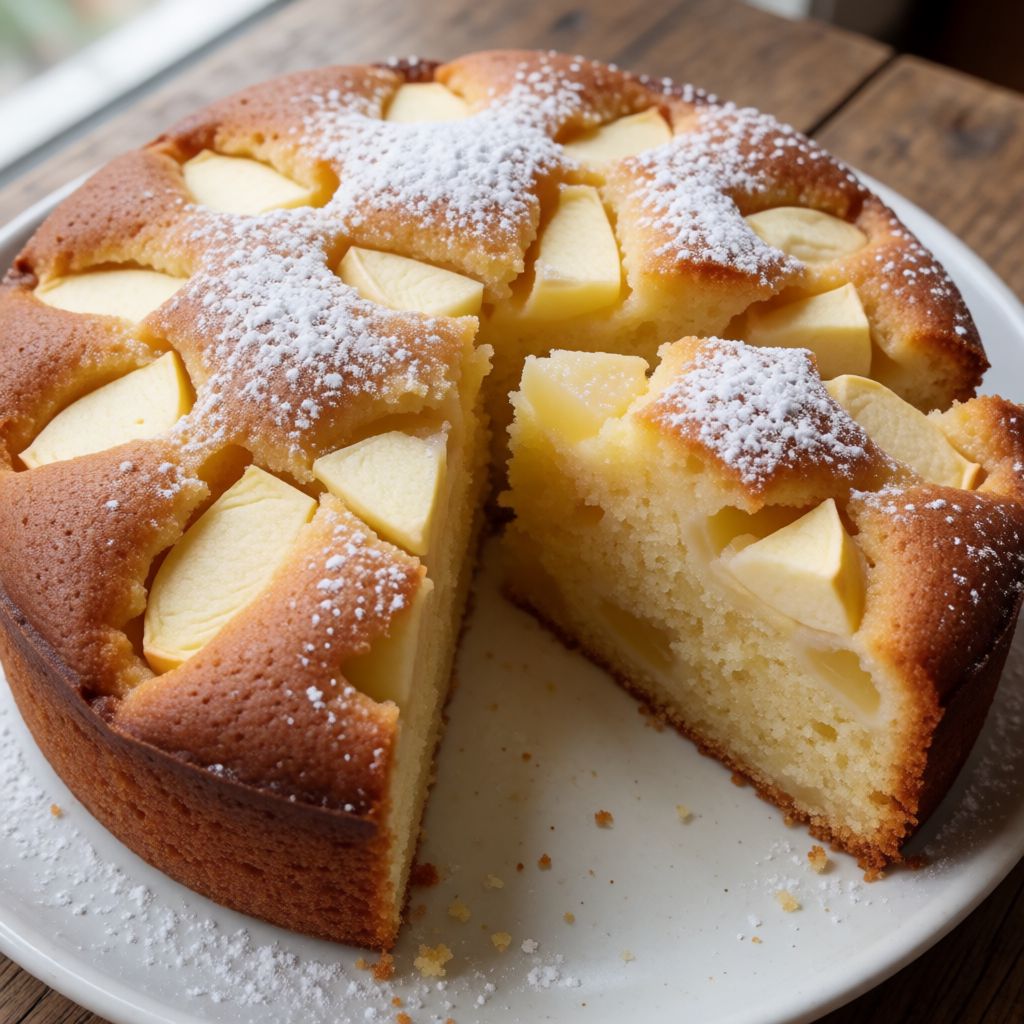
A simple eggless apple cake, topped with sliced apples and a dusting of icing sugar.
Labels are worked out automatically from the ingredients and can be wrong. Check the packaging if it matters to you.
Ingredients
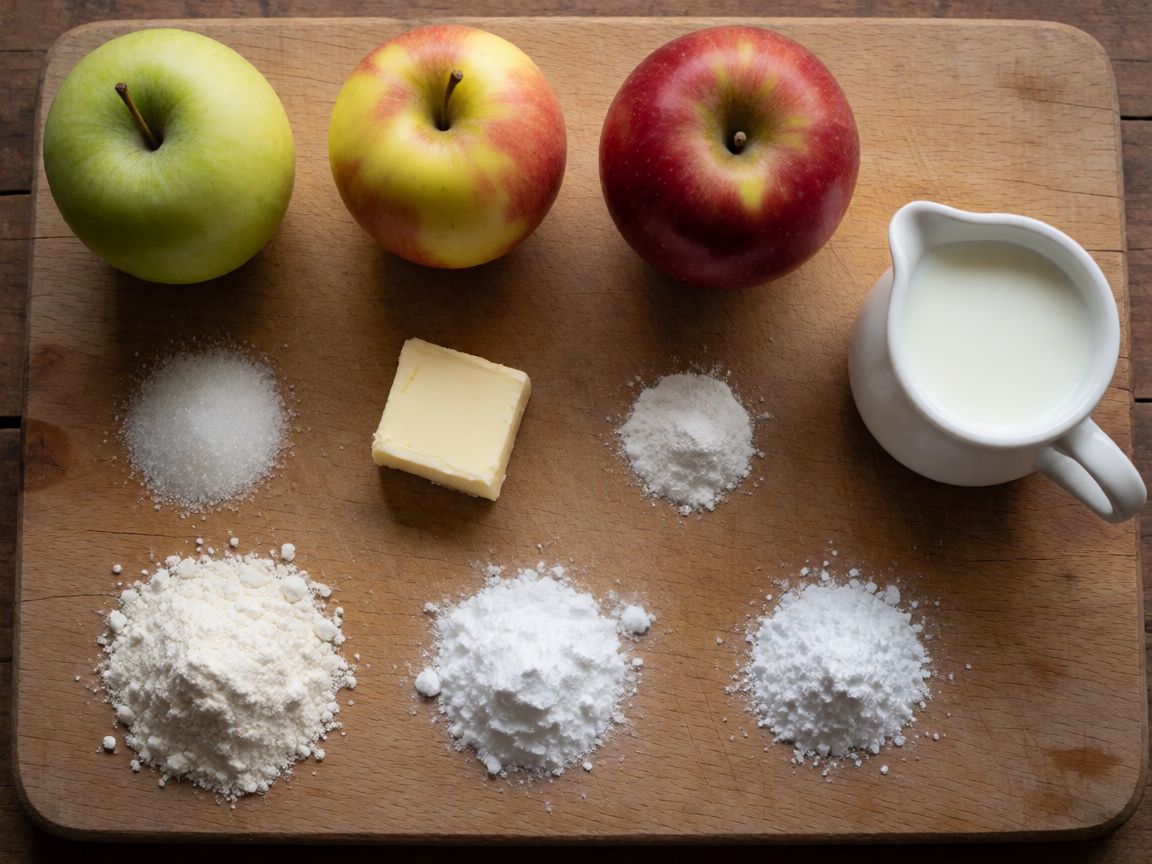
- 3 pcs Apple
- 150 g Caster sugar
- 140 g Butter
- 15 g Baking powder
- 170 g Plain flour
- 50 g Potato starch
- 200 ml Milk
- Icing sugar to taste







Steps
Melt the butter in a saucepan without letting it boil, then leave to cool.
Wash the apples, peel and core them, then cut into pieces.
Sift the flour, add the potato starch, sugar and baking powder, and mix.
Add the melted butter and milk, and mix until the batter is smooth.
Add three-quarters of the chopped apples and fold gently into the batter.
Pour the batter into a 24cm cake tin greased with butter and dusted with flour.
Arrange the remaining apples in a sunburst pattern on top of the batter.
Bake in an oven preheated to 180°C for 35–40 minutes, until cooked through.
38 minLeave the cake to cool, then dust with icing sugar before serving.
This is a cake built without eggs, and the whole trick is to replace what an egg normally does — bind, lift a little, hold the crumb together — with baking powder and potato starch instead. Eggs aren't magic; they're protein that sets and air that gets trapped. Take them out and something else has to do that job, and here it's starch plus a heavier hand of leavening than you'd normally use, enough to carry one 24cm tin into something that feeds six at tea.
What decides whether it works: how you treat the butter, how much you trust the clock, and which apples you pick. Melt the butter and let it cool before it meets the flour — not for tradition's sake, but because hot butter hitting raw flour part-cooks the starch on contact, and you get a tough patch instead of an even crumb.
Myth to break here: no eggs, no rise. No — baking powder lifts chemically, with no whisking of air required, and that's why there's 15g of it for not much flour, nearly three times what an ordinary cake recipe uses. It's doing double duty, carrying the whole lift on its own.
Doneness is not the oven timer. It's a skewer coming out dry and the apples on top gone soft, starting to colour at the edges rather than sitting raw and pale. 35–40 minutes at 180°C in a 24cm tin is where that tends to land — but check, don't just believe it.
Apples — three of them — matter more than the recipe lets on. You want a kind that holds its shape in the oven, not one that collapses into sauce, because a quarter of them sit exposed on top in a sunburst and need to still look like apple when the cake comes out. Braeburn, Cox, Jazz — anything crisp with a bit of bite works. Leave the Bramley for your crumble; it's bred to fall apart, lovely everywhere else, wrong here, it'll melt your pattern into mush.
Butter, melted and cooled, does two jobs: fat for tenderness, and liquid for the batter to come together without eggs holding it. No butter? Any oil with no smell of its own — sunflower, a mild rapeseed — binds the same way; you lose the faint dairy note but the structure doesn't care. Skip olive oil; it has opinions, and this cake isn't the place for them.
Flour and potato starch together are the backbone eggs would otherwise have given you. Starch firms as it heats — it swells in the milk, sets in the oven, and holds the crumb together without any stretch or spring to it, which is exactly what a cake wants and a dough doesn't. No potato starch to hand? Cornflour does the job, rice starch too. What you need is pure starch, no gluten, no flavour — anything labelled 'flour' on its own won't behave the same way.
Baking powder at 15g for 170g of flour is a heavy hand by ordinary standards — most cakes sit at a third of that. Deliberate: there's no whipped egg white carrying air, so the chemical lift has to do the whole job of making this rise rather than sit flat and dense. Measure it properly — too little and you get something closer to a solid apple brick, too much and you taste the metallic edge of baking powder straight through the crumb.
Milk just loosens the batter to pourable. Any milk works — whole, semi-skimmed, oat, whatever's already by the kettle for your tea. The icing sugar at the end isn't decoration for its own sake — an eggless batter like this doesn't brown the way butter-and-egg cakes do, so the crumb stays pale, and the dusting gives the eye something to land on.
One more thing about kitchen limits: grease and flour the tin properly, don't trust nonstick alone. The apples on top let go of juice as they bake, and that juice finds any gap in the coating and welds the cake to the metal exactly where you need it to lift out clean. And let it cool properly before you turn it out — warm, it's still setting, and cutting it too soon tears the crumb instead of slicing it. Patience here is an ingredient, same as the flour.