
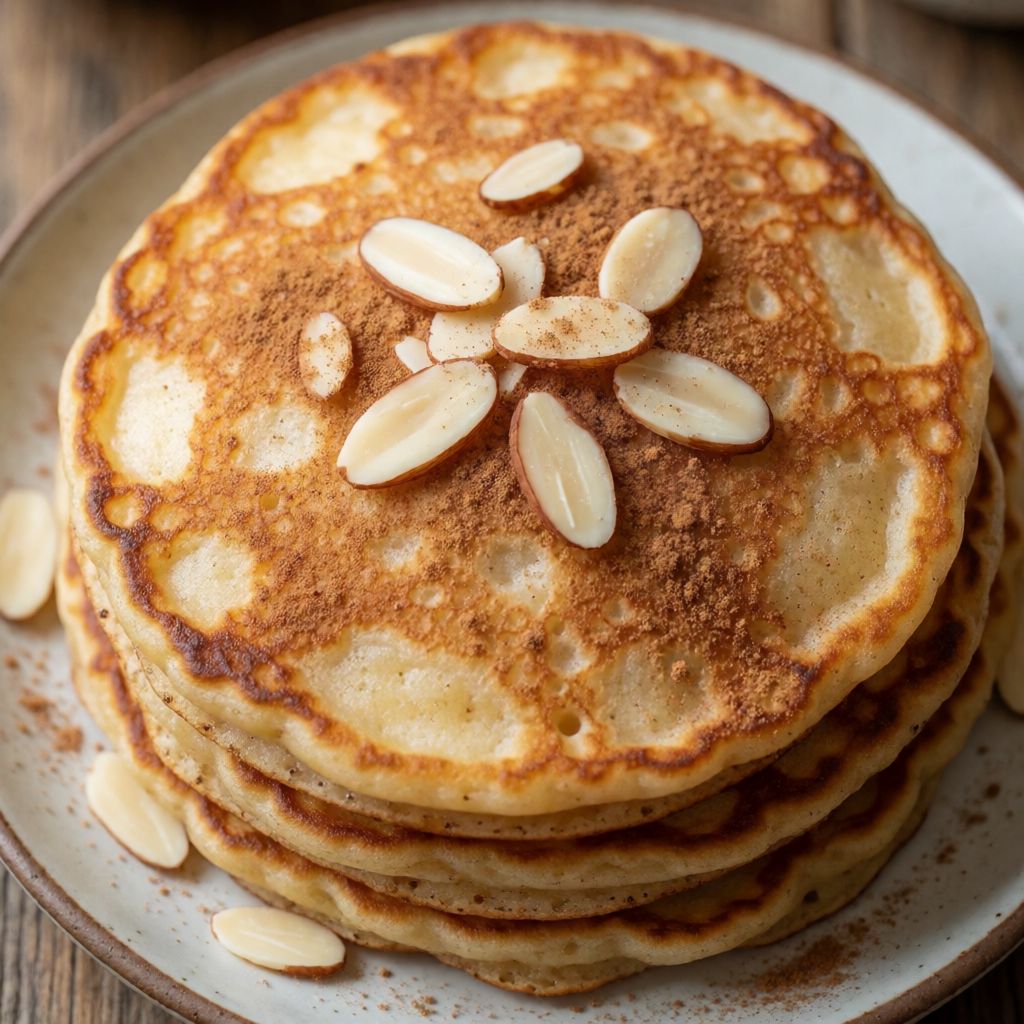
 AI photo
Apple Pancakes with Cinnamon
Blender-batter apple pancakes topped with Greek yoghurt and honey-glazed hazelnuts with cinnamon and apple.
Labels are worked out automatically from the ingredients and can be wrong. Check the packaging if it matters to you.
Ingredients




Steps
Put the eggs, bananas, almonds, oats, cinnamon and baking powder (apart from the coarsely grated apple) into a blender and blitz until smooth. Fold the coarsely grated apple into the batter.
2 minHeat a frying pan over medium-high heat and add a knob of butter. Let the butter melt until it stops foaming, then spoon the batter into the pan.
1 minFry the pancakes for 2–3 minutes on one side, flip once golden, and fry on the other side.
5 minIn another pan, warm the honey over medium heat, add the hazelnuts and cinnamon, and cook until the hazelnuts are glazed with honey.
3 minFinally, add the apple cubes to the glazed hazelnuts and stir to combine.
1 minServe the pancakes on plates with a spoonful of Greek yoghurt and the honey-glazed cinnamon hazelnuts and apple.
This isn't a pancake in the flour-and-milk sense — it's a fruit-and-nut batter held together by egg, and that difference decides everything about how you cook it. There's no gluten here to give it structure, so the whole thing stands on egg protein setting in the heat and oats soaking up the slack moisture. Treat it like a flour pancake — thin, loose, flipped fast — and it falls apart in the pan. Treat it like what it actually is — a thick, porridgy batter that needs a slower set — and it holds.
What decides success is the butter and the first few minutes undisturbed. Butter stops foaming when its water content has cooked off; push the batter in before that point and you're frying in a wet froth that sticks instead of searing. Wait for quiet butter — it tells you by sound as much as by sight, the hiss dropping to almost nothing. Once the pancake is down, leave it. The underside needs to form a proper crust before you touch it, or you tear a hole trying to flip something that isn't ready to be flipped.
The second half — honey, hazelnuts, cinnamon — is not really a sauce, it's a coating, and coatings work by evaporation, not by boiling. Warm honey loosens and spreads; once the water cooks out of it, it grips the nut instead of running off. That's the whole mechanism, and it's why you add the apple last, off any real heat — apple cubes thrown in too early just stew into honey-flavoured mush, losing the bite that's the entire point of putting them next to a soft pancake.
Start with the bananas — they need to be properly ripe, spotted-brown-skin ripe, because that's when their starch has converted to sugar and they purée into something smooth rather than something that stays gritty and raw-tasting in the blender. An underripe banana here isn't just less sweet, it's structurally wrong — it won't break down the same way, and you'll feel lumps in the batter that have nowhere nice to go once cooked.
Eggs are doing the job flour usually does: they're the binder. Three eggs for this amount of fruit and nut might sound like a lot, but there's no gluten network to hold air or shape, so the egg protein is the only thing that sets into something sliceable. Use the eggs at room temperature if you can — cold egg straight from the fridge makes a stiffer, lumpier blend, and a blender already working against banana fibre and oats doesn't need the extra resistance.
Almonds and oats together are the dry structure. Almonds, blitzed with everything else, break down into something closer to flour than nut — that's their job, bulk and a bit of fat, not crunch. Oats are different: coarse rolled oats don't dissolve, they swell, soaking up the free liquid from the banana and egg so the batter firms up rather than pooling in the pan. If you only have fine oats or quick oats, use less — they swell faster and can leave you with a batter that's gone stiff before it's even hit the heat. No almonds in the cupboard — any plain nut flour, or even more oats, does the same structural job; you're not chasing almond flavour here, you're chasing absorption.
The coarsely grated apple folded in at the end, rather than blitzed with the rest, is a texture decision, not a laziness one. Grated apple keeps its own shape and lets a bit of juice run through the pancake as it cooks, so you get pockets of actual apple rather than apple flavour smoothed into everything else. A firm, tart apple works better than a soft one — a soft apple collapses into the batter and you lose the point of adding it separately at all.
Butter for frying: the brief is "a knob," which tells you this isn't a deep-fry, it's a shallow, close-contact fry, and that matters because butter burns past a certain point and turns bitter, while the sugar in the banana and apple is already keen to catch. A neutral oil would survive the heat better but gives you none of the nutty flavour that butter's milk solids add as they brown slightly in the pan — that's the actual reason butter is specified, not tradition for its own sake. If you're avoiding dairy, a mild oil works, but expect a flatter flavour and compensate with a touch more cinnamon.
Hazelnuts and honey: the honey needs real contact with warmth to thin out, not a hot blast — a pan on the gentler side of medium, enough that the honey loosens to a pourable consistency without starting to caramelise and go bitter at the edges. Hazelnuts go in once it's loosened, so they get coated rather than fried in sugar. Greek yoghurt at the end is there for a reason beyond garnish — it's cold and sharp against a warm, sweet pancake, cutting through rather than piling sweetness on sweetness, which is the usual failure of fruit-heavy puddings. Full-fat yoghurt works just as well if that's what's in the fridge; thinner yoghurt will just slide off the plate instead of sitting where you want it.