
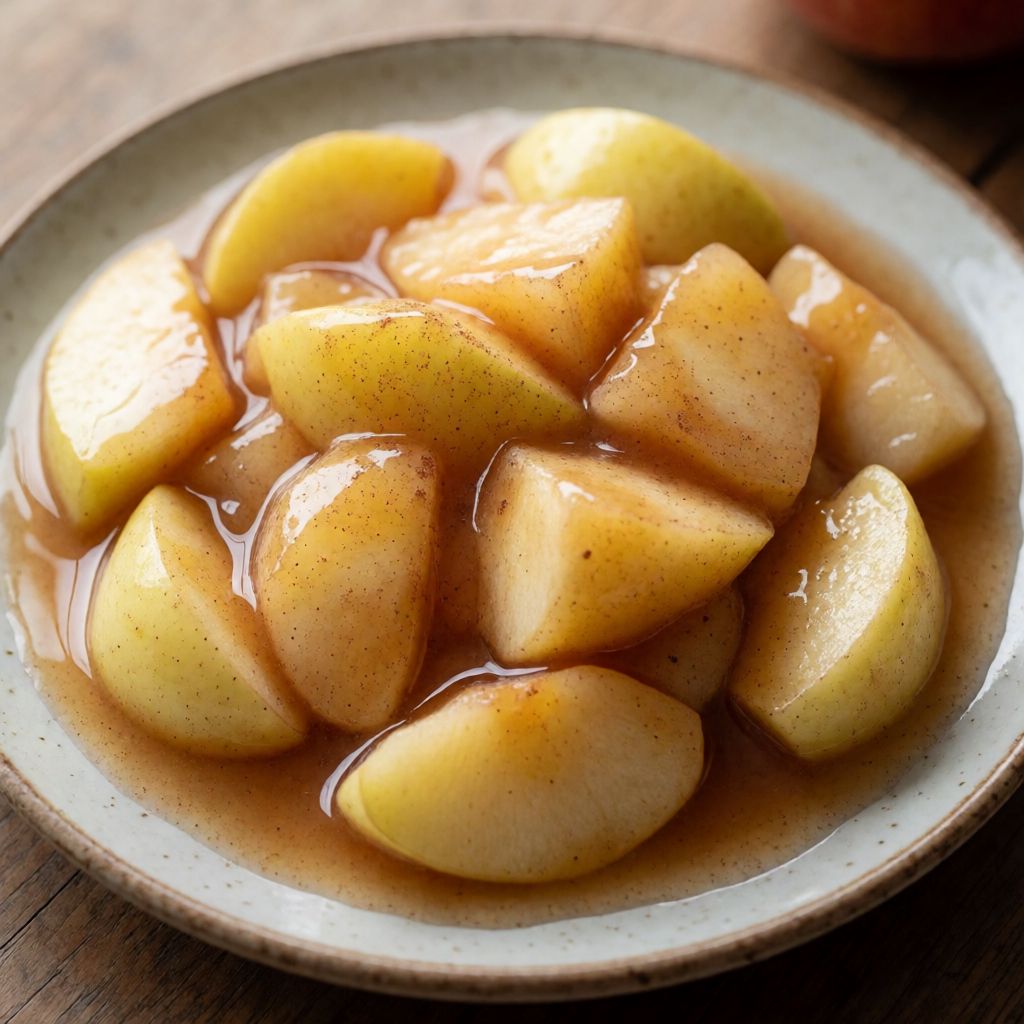
 AI photo
Old-Fashioned Apple Dessert
A comforting old-fashioned apple dessert with spiced apple purée, a buttery sweet crumb, macaroons and whipped cream.
Labels are worked out automatically from the ingredients and can be wrong. Check the packaging if it matters to you.
Ingredients
- 800 g Apple peeled and cut into small cubes
- 100 ml Water
- ½ pcs Vanilla pod
- 1 pinch Cinnamon
- 1 pinch Cardamom
- 110 g Sugar
- 25 g Butter
- 75 g Breadcrumbs dried
- 15 g Sugar
- 300 g Amaretti biscuits crushed
- 200 ml Whipping cream










Steps
Put the apple cubes, water, spices and sugar into a saucepan, bring to the boil and simmer uncovered for 15 minutes, stirring a few times
5 minPut the purée in the fridge and let it cool completely
30 minMelt the butter in a frying pan and toast the breadcrumbs with the sugar, stirring constantly for a few minutes until the sugar dissolves
4 minLet the sweet crumb cool on a sheet of baking paper
5 minLightly crush the amaretti biscuits to the right size and mix them with the sweet breadcrumb mixture
2 minWhip the cream until light and fluffy
3 minSpoon the cooled apple purée into a large bowl or individual glasses, sprinkle with a layer of the biscuit crumb and top with whipped cream
3 min
What was changed
Pasta was replaced with Amaretti biscuits, since the original calls for crumbled amaretti biscuits, not actual pasta.
This is a stewed-apple trifle in disguise — layers of soft fruit, a crunchy sugared crumb, and whipped cream stacked in a glass, no baking involved. It's kin to an English apple crumble, except the "crumble" here is made on the hob in a frying pan, not in the oven on top of the fruit. That's the whole trick of the dish: it separates what a crumble forces together — hot fruit under a baked topping — into three components you build cold, so nothing goes soggy and nothing dries out.
What decides whether it works is restraint in three places: don't overcook the apples into jam, don't over-sweeten the crumb past "toasted", and don't whip the cream past "holds a soft peak." The apple should break down but still have body — spoonable, not a sauce you could pour. You get there by sight: the cubes go from opaque white to translucent, and when you press one against the side of the pan with a spoon it collapses without resistance. Fifteen minutes is the lower bound stated in the recipe; some batches of apple, drier or riper, will need less.
Some say apple desserts need to be made hot and eaten hot, straight from the oven. No — because what you're building here is a cold dessert with a crisp layer inside it, and heat is the enemy of crisp. The purée goes into the fridge precisely so the crumb, when it meets it, stays separate and crunchy for as long as the dessert sits in the glass, instead of melting into mush within minutes.
Apples: 800 g sounds like a lot until you remember you're peeling and cutting away a third of that weight in core and skin, and the rest cooks down hard. Pick a variety that holds some shape under heat rather than one that turns to foam — a firm, tart apple (Bramley is the obvious English choice, or Granny Smith) gives you purée with texture instead of baby food. A sweeter, softer apple isn't wrong, just reduce the sugar a little, because the dish is building its sweetness from the fruit up, not masking a bland apple with sugar syrup.
The spices — vanilla pod, cinnamon, cardamom — are there in pinches, not spoonfuls, because their job is to lift the apple's own smell, not replace it. Split the vanilla pod and scrape a little of the paste in if you want more than the pod alone gives sitting in the water; a few drops of vanilla extract do the same job if a pod isn't in the cupboard, though you lose the little black flecks that tell you it's the real thing. Cardamom is the one most households will be missing — leave it out rather than substitute nutmeg wildly; cinnamon alone, a slightly heavier pinch, carries the dish fine.
The butter-toasted breadcrumb with sugar is an old trick from frugal kitchens — using dried-out bread instead of flour and oats, because breadcrumbs were free and flour, in some houses and eras, was not. Any dried, plain breadcrumb works; what matters is that it's dry to start with, because wet crumb just steams in the butter instead of toasting, and you get soft clumps instead of crisp grains. Butter is there for flavour and for carrying the heat evenly — a neutral oil would toast the crumb too but lose the dairy note that matches the cream later.
Amaretti biscuits bring the almond edge and their own crunch, crushed but not pulverised — you want pieces with some bite left, not biscuit dust that disappears into the breadcrumb. If you can't get amaretti, any plain, crisp almond biscuit or even digestive biscuits with a few drops of almond extract stirred through the crumb will get you close; you're replacing a flavour and a texture, so match both, not just one.
The cream is whipped to soft peaks only — stop as soon as it holds its shape on the spoon, because overwhipped cream turns grainy and starts separating, and there's no rescuing it short of starting again with more cream. On a domestic hob with no stand mixer, do it by hand or with an electric whisk in short bursts, checking often; it goes from loose to right to overdone faster than people expect, especially in a warm kitchen.
Patience here is mostly the cooling, not the cooking — the half hour in the fridge is what keeps the layers as layers instead of a single sweet mush by the time it reaches the table. Build the glasses close to serving, not hours ahead, because even cold crumb will soften against cream and purée eventually; this isn't a make-and-forget trifle, it rewards assembling it not long before anyone's eating it.