
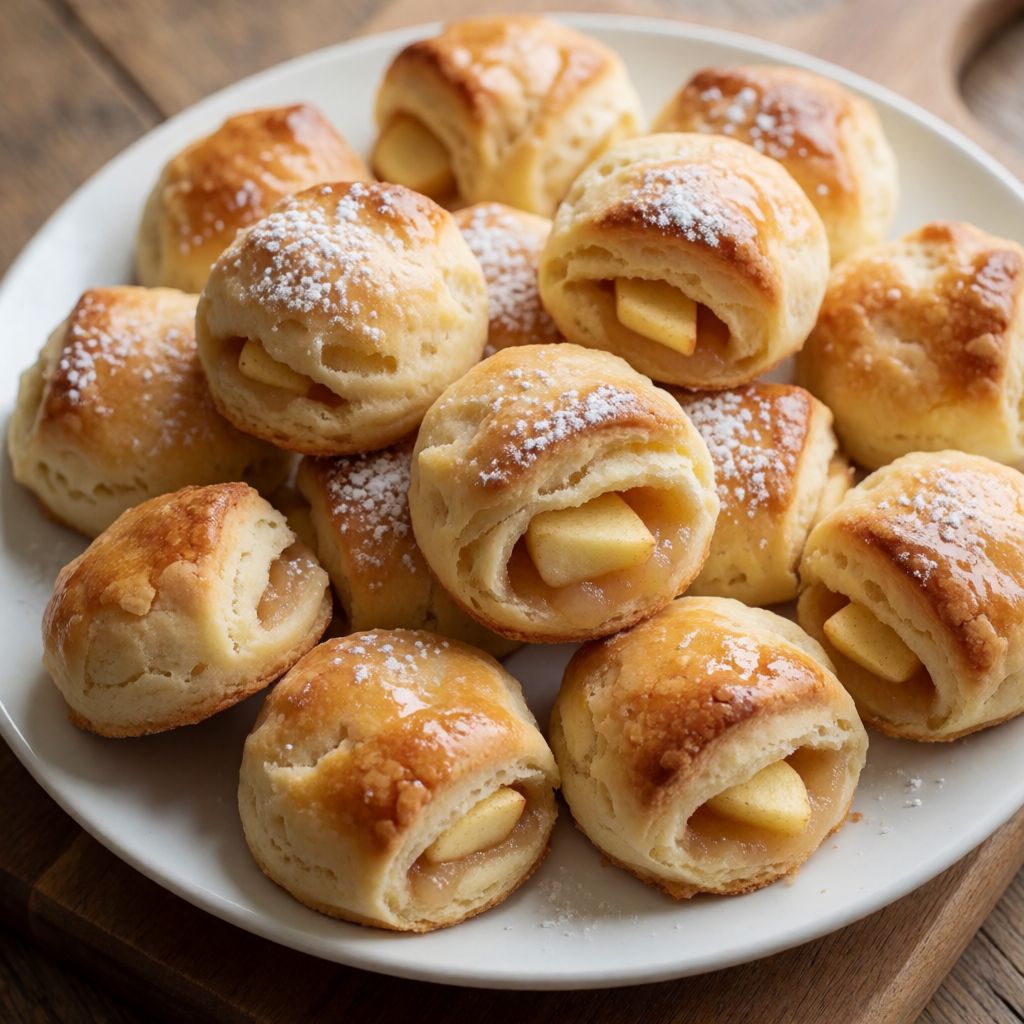
 AI photo
Apple-Filled Biscuits
Delicate shortcrust biscuits filled with spiced apple and peach jam, dusted with icing sugar.
Labels are worked out automatically from the ingredients and can be wrong. Check the packaging if it matters to you.
Ingredients
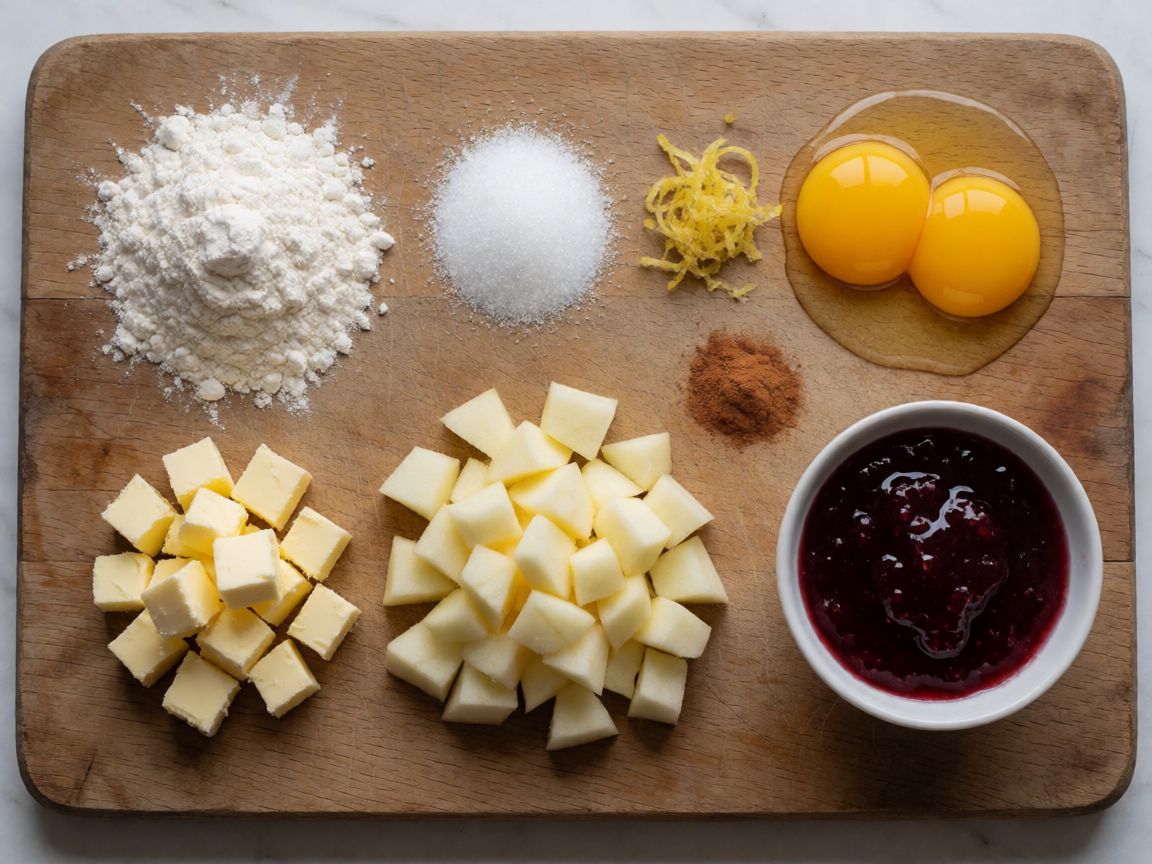
- 150 g Plain flour
- 75 g Caster sugar
- 2 pcs Egg yolk cold, straight from the fridge
- 1 pcs Lemon zest grated, from one lemon
- 90 g Butter cut into small pieces, cold
- 1 pcs Apple peeled and cut into small pieces
- 200 g Peach jam
- 1 pinch Cinnamon
- 20 g Icing sugar for dusting









Steps
Pile the flour onto a surface, make a well in the centre, add the egg yolks and sugar, and mix in with your fingers; then add the lemon zest and the diced butter.
Knead the dough briskly into a smooth ball, wrap it in cling film and chill in the fridge.
30 minIn a saucepan, mix the peach jam with the diced apple, cook for a few minutes, then stir in the cinnamon.
Roll out the chilled dough to a thickness of 3-4 mm, cut into rounds with a 5-6 cm round cutter, and place them on a parchment-lined baking tray.
Spoon the apple filling onto half of the rounds, cover with a second round of dough, and press the edges together firmly.
Bake the biscuits in a fan oven preheated to 180°C.
10 minLet the biscuits cool before serving, dusted with icing sugar.
This is pasta frolla doing double duty as a biscuit and as a tiny ravioli: two rounds of a shortbread-type dough, a spoonful of cooked apple-and-jam between them, ten minutes in a hot oven. It's a pie shrunk to tea-table size, and that's exactly why it bakes in minutes rather than the better part of an hour a real pie needs — there's far less mass to heat through, and the filling arrives already cooked.
What decides whether it works is two separate discipline problems, one in the dough and one in the filling, and both are about water and heat timing. The butter and egg yolks go in cold, straight from the fridge, and stay cold until the shaped dough goes back in to chill — because warm butter doesn't stay as butter, it smears into the flour and coats it evenly, and an evenly-coated flour develops gluten the moment you add liquid, giving you something chewy instead of short. The resting isn't laziness either: thirty minutes lets the gluten you did build while kneading "briskly" relax again, so the dough rolls out without springing back and tearing, and it lets the butter firm back up so it doesn't stick to the pin.
The filling gets its own cooking for the same reason you don't put raw potato in a pie and expect it tender in ten minutes: small diced apple still holds its water, and 180°C for ten minutes is nowhere near long enough to cook that out from inside a sealed parcel of dough. Cook the apple into the jam first and you're not baking it to doneness anymore, you're just warming it through and setting the pastry around it — which is a job ten minutes can actually do.
Flour, plain and nothing stronger: you want low protein here, because every gram of protein is a gram of potential gluten, and gluten is the enemy of a short, crumbly biscuit. If you only have bread flour or strong flour in the house, it will still work, but expect a slightly tougher bite — knead it even more briefly than the recipe asks, and don't be tempted to add extra liquid to loosen it.
Butter, cold and cut small, so it stays as distinct lumps of fat for as long as possible while you rub it in — that's what gives the finished biscuit its short, sandy crumble rather than an elastic chew. The criterion for substitution is simple: any solid fat that stays firm at room temperature and carries no flavour of its own strong enough to fight the lemon and jam. A good block margarine will do it, though check the water content on the pack — the higher it is, the more steam escapes while baking, and steam pushes dough apart rather than holding it together, which is the whole mechanism flaky pastry relies on and this dough deliberately doesn't. Don't reach for a spreadable tub butter — too much water, too little structure.
Egg yolks, two, cold. Separating them yourself costs nothing and gives you two whites spare for a quick meringue or to brush over something else later — nothing here goes to waste, which is really the whole economic logic behind a filled biscuit like this one: a way to stretch a spoonful of good jam, at the point in the year when fresh fruit is thinning out, into something that looks and feels like more than a spoonful of jam.
Lemon zest for aroma only — it's the oil in the zest you're after, not acidity, so grate it directly over the bowl and work it in with the sugar and yolks so the oils release into the fat rather than sitting on top. No zest to hand, no lemon in the fruit bowl — a few drops of vanilla extract does a similar lifting job, though it changes the character slightly.
Apple, peeled and diced small, then cooked into the peach jam rather than left raw: any firm eating apple that holds some shape under heat will do — a Cox, a Braeburn, a Gala. If all you've got is a soft cooking apple like a Bramley, it will collapse faster into the jam, which isn't a failure, just a smoother filling — keep the pan time short so you don't end up with runny jam-apple soup that leaks out the seams when you press them. The jam itself can be any well-set jam with a flavour that won't fight apple and cinnamon — apricot is the classic stand-in for peach, and it's often easier to find.
On the sealing: press the edges together properly, with your fingers or the back of a fork, and don't overfill. A thin seal or a heavy spoonful of filling is the direct cause of biscuits that split open and weep jam onto the parchment in the oven — the filling scorches on contact with the hot tray, and you lose the biscuit that split along with it. A fan oven at 180°C circulates air evenly around small items like these, which is exactly why it suits them better than a top-and-bottom oven at the same dial setting — judge doneness by colour at the edges, a pale gold, not by the clock; ovens run hot or cool by ten, fifteen degrees more often than people admit. And let them cool properly before dusting with icing sugar — hot pastry melts sugar into wet, glassy patches instead of a dry white dusting, and that's not a flaw in the sugar, it's just physics you can avoid by being patient for another few minutes.