
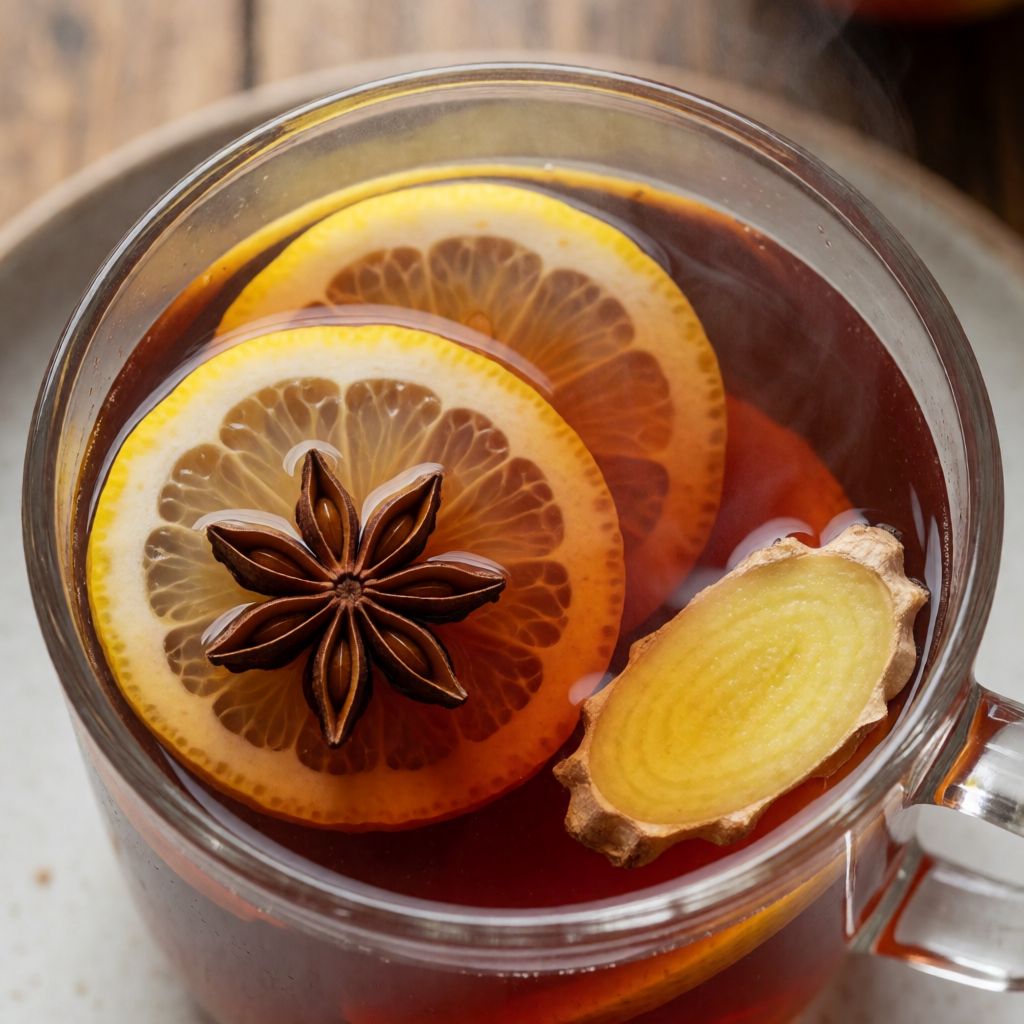
 AI photo
Non-Alcoholic Apple Mulled Wine
A warming spiced apple drink, perfect for a cosy evening without the alcohol.
Labels are worked out automatically from the ingredients and can be wrong. Check the packaging if it matters to you.
Ingredients
- 1 l Apple Juice
- 300 ml Orange Juice
- 3 pcs Lemon freshly squeezed
- 6 pcs Ginger thin slices, fresh root
- 6 pcs Star Anise whole pods
- 90 g Caster Sugar
- 10 pcs Cardamom pods
- 2 pcs Cinnamon Stick
- 1 pcs Vanilla Pod
- 2 l Apple Juice or orange juice or elderberry juice









Steps
Put the apple juice, orange juice, lemon juice, sugar and spices in a saucepan and bring to the boil.
10 minCover the pan and let it infuse over low heat for 30 minutes.
30 minPour everything, including the spices, into a jar with a lid and leave to infuse for 1–3 days.
Strain out the spices through a sieve or muslin cloth and pour the drink into bottles.
5 minBefore serving, heat the apple juice, orange juice or elderberry juice in a saucepan until almost boiling, allowing 200 ml per glass.
5 minTake the pan off the heat and stir in the spiced apple concentrate.
2 min
This isn't one drink made in one go — it's two stages wearing one name. First you build a spiced concentrate: apple, orange and lemon juice boiled with whole spices and sugar, then left to sit in a jar for one to three days. Second, every time you actually want a glass, you heat plain juice and stir that concentrate into it off the heat. So the thing that decides whether this works isn't the 30-minute simmer on the hob — it's whether the concentrate stage was given enough patience and strained cleanly before it went into bottles.
Some say mulled drinks need alcohol to earn the name "mulled" — no, because alcohol in the original Glühwein was never doing the flavouring work, it was just the warm carrier. Spices, sugar and time do the mulling. Swap the wine for apple-orange-lemon juice and the mechanism doesn't change at all, which is exactly why UK Christmas markets now sell a non-alcoholic version alongside the real one: same stall, same pot, caters to drivers, kids, and anyone who's had enough wine already — and it's cheap to make in bulk and keep.
What actually builds the flavour is the one-to-three-day steep in the jar, not the half-hour on the stove. The simmer only gets the spices hot enough to start releasing their oils; the slow, cold sitting afterwards is where cinnamon, cardamom, star anise, ginger and vanilla actually hand over what they've got. Rush this part and you get a thin, one-note apple drink with spice dust floating in it rather than spice flavour running through it.
The two apple juices do different jobs, so don't confuse them. The 1 litre goes into the concentrate and gets cooked with spices — for this one, pick anything clear and pulp-free, pressed or from concentrate, it doesn't matter, because it's the carrier, not the flavour. The 2 litres is what you heat fresh at serving time, diluting the concentrate glass by glass; here too, clear juice is easier to work with because cloudy, pulpy versions settle in the bottle and need a stir before they go back on the heat.
Orange juice brings sweetness and a rounder acid than lemon; lemon brings the sharp top note that keeps the whole thing from tasting like warm apple squash. Use real squeezed lemons if you can — bottled lemon juice is more concentrated and can tip bitter fast, so if that's what's in the cupboard, use less than the recipe says and taste before you commit the rest.
Every spice here is whole or sliced, never ground, and that's not fussiness — it's so you can fish them back out. Ground cinnamon or cardamom would leave grit in the drink that no sieve catches; whole pods and sticks let you extract for days and then lift them straight out with a slotted spoon or strain through muslin. If you're missing cardamom pods, crush a few you do have slightly to expose more surface rather than hunting for a pre-ground substitute that you then can't remove. Short on vanilla pods — expensive, often the hardest thing in this list to find — a spoon of vanilla extract works, but stir it in after you've finished boiling and strained, off the heat, the same way you add the concentrate later: extract is mostly volatile aromatics suspended in alcohol, and boiling just burns that off before it does any good.
Caster sugar is chosen because the fine grain dissolves fast once the liquid's hot — that matters because undissolved sugar sitting at the bottom of the pan is what scorches and turns bitter-burnt rather than sweet. Granulated sugar works fine too, it just needs more stirring and more attention to the base of the pan while it comes up to the boil.
About the lid for the 30-minute simmer: its only job is to slow evaporation and send some steam back down into the liquid, not to seal anything shut. If your lids never quite fit your pans — a common enough mismatch in most kitchens — a plate balanced over the top does the same work. No need to buy anything for this.
On quantities: eight glasses at 200 ml comes to 1.6 litres of serving liquid, but the concentrate recipe makes rather more flavour than that single batch needs — which is the actual point of making it this way. You make the spiced concentrate once, keep it bottled, and draw on it over several days or several pots of fresh juice, which is exactly how the market stalls run it and exactly why the long steep is worth the wait rather than something to shortcut by boiling harder.