
 AI photo
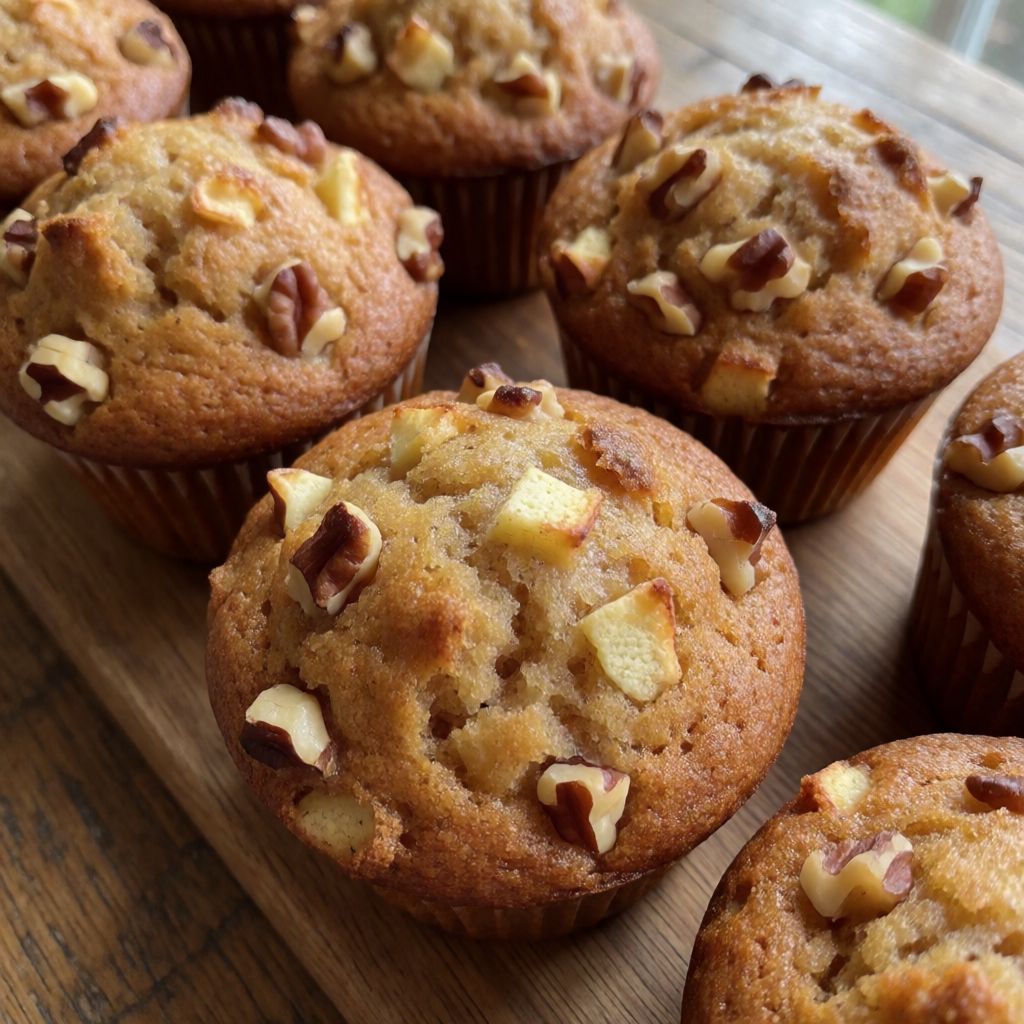
Apple and Walnut Muffins
Soft apple and walnut muffins, dusted with icing sugar after baking.
Labels are worked out automatically from the ingredients and can be wrong. Check the packaging if it matters to you.
Ingredients
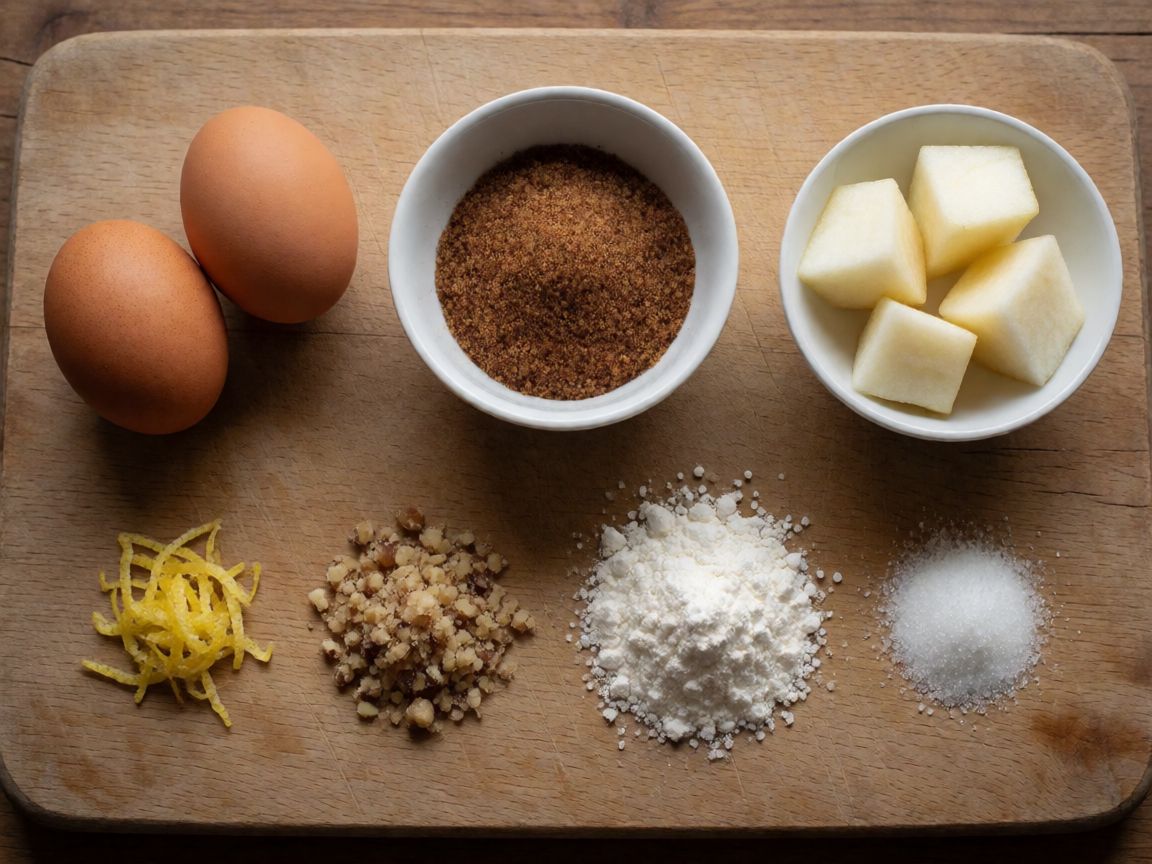
- 2 pcs Eggs
- 120 g Brown sugar
- 3 pcs Apples peeled and diced
- 1 pinch Salt
- 1 pcs Lemon zest zest of 1 lemon
- 80 g Walnuts chopped
- 50 g Vegetable oil
- 150 g Plain flour
- 8 g Baking powder
- 1 tbsp Pearl sugar to taste, for sprinkling
- 1 tbsp Icing sugar for dusting











Steps
Crack the eggs into a bowl, add the brown sugar and a pinch of salt, then whisk with an electric mixer for 5 minutes until light and creamy.
5 minAdd the finely diced apples and stir until evenly distributed.
Add the chopped walnuts, vegetable oil, lemon zest and the baking powder mixed with the flour, and combine well.
Grease the muffin tins with a little oil and fill with the batter to about 1 cm from the top.
Sprinkle with pearl sugar and bake for 30 minutes at 170°C in a preheated oven.
30 minRemove the muffins from the tins, decorate with redcurrants and dust with icing sugar.
This is a muffin without a creaming step — there's no butter beaten with sugar until pale, because the fat here is oil, liquid from the start. So the lift has to come from somewhere else: five minutes of whisking eggs and brown sugar together, until the mixture thickens, pales, and trails off the whisk in a ribbon. That's not decoration, it's the only place in this recipe where air gets trapped. Don't shorten that five minutes out of impatience — it's the one patience this method asks of you, and the whole rise depends on it. Once the oil and flour go in, stop whisking for luck: you're protecting bubbles you already made, not making new ones.
The apples are both flavour and a liquid problem. Diced raw, they carry their own water into the oven, and that water has to be taken up by the flour and driven off as steam, or the centre of the muffin turns gummy. A firm apple — one that keeps its shape under heat rather than collapsing into puree — keeps that water in distinct pockets instead of flooding the batter. Reach for whatever's very soft and juicy and it'll dissolve, leaving you wet craters instead of crumb.
Filling the cases to about a centimetre from the rim isn't caution, it's arithmetic. The baking powder makes gas, the gas needs somewhere to push the batter, and that gap is the somewhere. Fill flush to the top and the muffins either spill over the tin or fuse into one cake with a few domes showing.
Brown sugar rather than white isn't a style choice, it's a moisture one — the molasses in it holds water in the crumb longer than white sugar does, which is why these muffins stay soft a day later instead of going dry and sandy. The pinch of salt in the egg mix does no leavening work at all; it's there to wake the sweetness up, the way a little salt in a dessert stops it tasting flat.
Lemon zest, not juice — you want the aromatic oils that sit in the coloured skin, not the acid underneath. Scrub the lemon first; a lot of UK supermarket lemons carry a thin wax coat to stop them shrivelling in transit, and you don't want that in the batter. Grate only the yellow — the white pith beneath is bitter, and once it's in, it's in.
Walnuts oxidise the moment they're cracked and exposed to air, and pre-chopped bags that have sat on a shelf for weeks taste faintly of cardboard or worse, bitter. Buy them whole if you can, chop just before you fold them in, and taste one raw first — a rancid walnut will ruin a whole batch of otherwise good muffins, and no amount of sugar hides it.
The oil wants no smell of its own — sunflower or rapeseed, both standard in a British cupboard, do the job without comment. Olive oil has its own voice and it argues with the apple and the walnut rather than sitting behind them. Mixing the baking powder into the flour before it meets the wet batter matters for the same reason you don't dump salt straight onto one side of a dish — undistributed, it gives you a bitter pocket in one bite and a flat muffin two cases along. Stir the batter until the flour just disappears, then stop; beating on develops gluten out of the flour's own proteins meeting all that liquid, and that's what gives you tough, tunnelled muffins instead of tender ones. Overmixing is the real cause there, not some fault in the recipe.
Pearl sugar survives the oven because its grains are large and low in surface moisture — they don't melt at 170°C the way ordinary granulated sugar would, which just dissolves into syrup and vanishes. If you haven't got pearl sugar, demerara is the nearest thing in a British cupboard — coarse enough to hold some bite, though it will melt a little more than the real thing. Icing sugar goes on only once the muffins are cool; dust it over something warm and it melts straight into the crumb instead of sitting as a visible layer. The method mentions redcurrants for decoration though they're not on the ingredient list — they're there for sharpness against all that sugar, and any tart berry in season, a few blackcurrants or raspberries, does the same job.
Ten muffins, modest-sized, is a round of Sunday afternoon tea for a family rather than a show of abundance — warm from the tin with milky tea is where these are meant to end up, not on a cooling rack admired from a distance.