
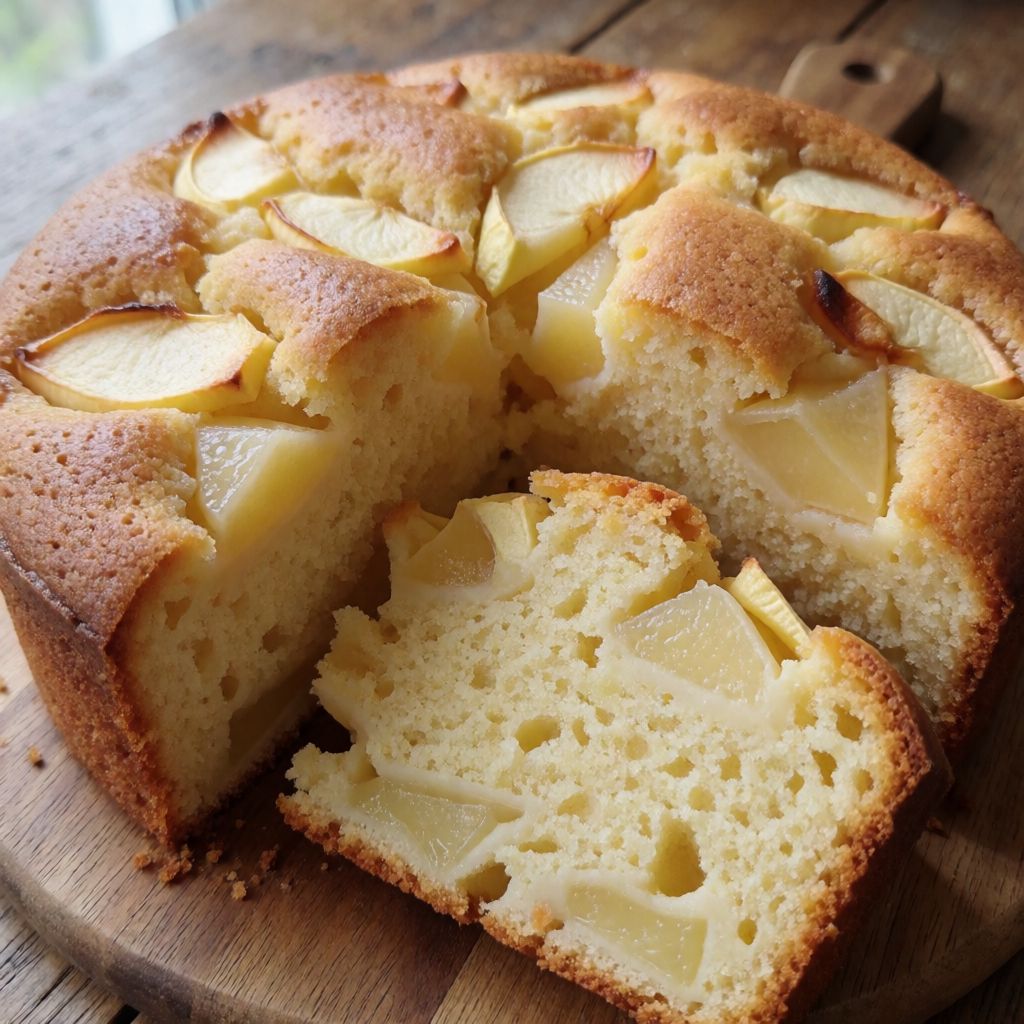
 AI photo
Butter-Free Apple and Yogurt Cake
A simple butter-free apple and yogurt cake, light and fragrant with lemon zest.
Labels are worked out automatically from the ingredients and can be wrong. Check the packaging if it matters to you.
Ingredients
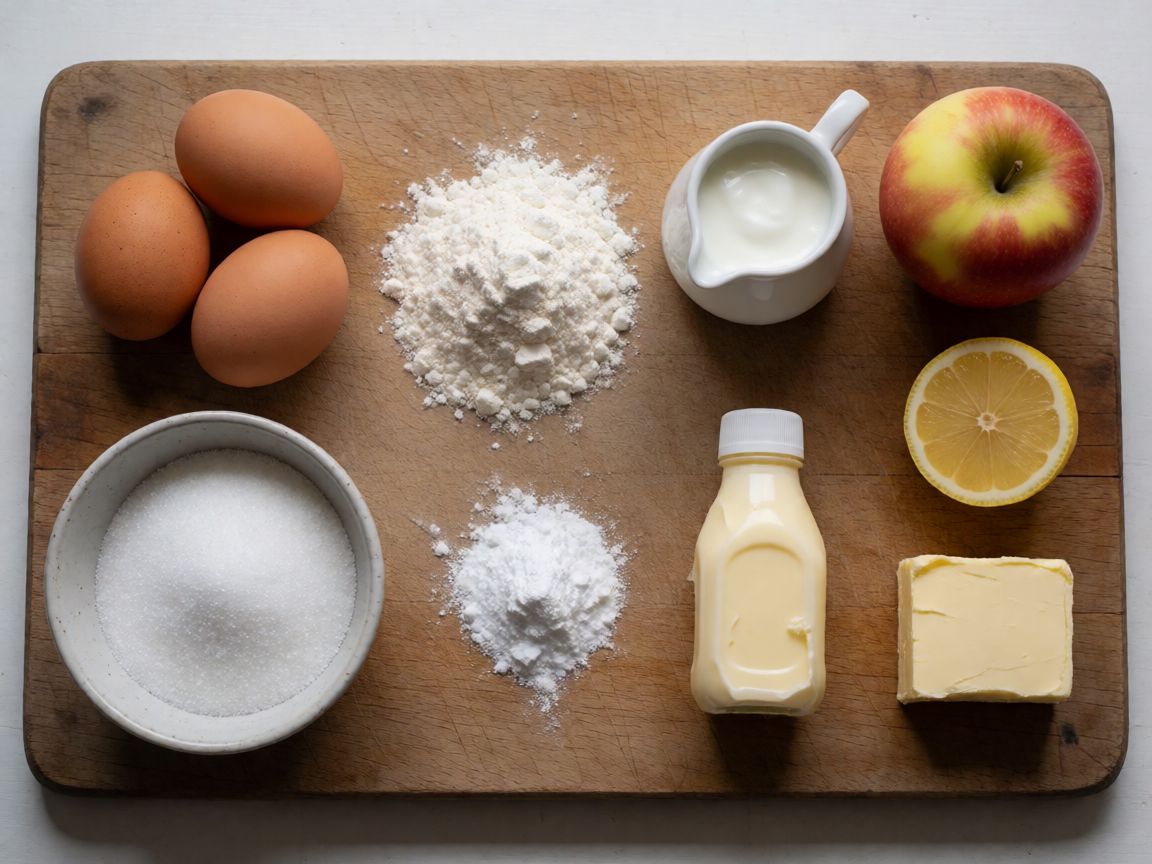
- 3 pcs Eggs
- 240 g Caster sugar
- 300 g Plain flour sifted
- 100 ml Yogurt
- 15 g Baking powder
- 1 kg Apples
- 0.5 pcs Lemon
- Butter for greasing the tin
- Plain flour for dusting the tin







Steps
In a bowl, whisk the eggs with the sugar using a hand whisk until smooth.
Add the yogurt, sifted flour and baking powder, and mix well into a batter.
Flavour the batter with the zest of half a lemon.
Peel the apples, cut into pieces and fold into the batter.
Pour the batter into a 24 cm tin, greased with butter and dusted with flour, and smooth with a spatula.
Arrange a few apple slices on top.
Sprinkle the surface with sugar.
Bake in a fan oven preheated to 170°C.
55 minLet the cake cool before serving.
What was changed
The baking temperature was set to , the nearest step for a British fan oven.
This is not a buttery sponge with apple thrown in — it's the other way round. You've got a kilo of apple carried by a thin scaffold of egg, sugar, yogurt and flour, no fat creamed in at all. The cake works or doesn't depending on two things: whether your egg-and-sugar foam is strong enough to hold up that much fruit, and whether the apple lets go of its water at the right moment — during the bake, not before it, and not so much that the crumb drowns.
Some say a cake without butter has to be dry. No — because the fat that butter usually brings is simply moved elsewhere: into the egg yolks, into the milkfat of the yogurt, and the apple adds its own juice as it cooks. If this cake fails, it almost never fails dry. It fails wet and gummy, because the apple released more liquid than the batter could carry.
That's also why the baking powder here is heavy-handed — 15g against 300g of flour is roughly three times the usual ratio. It isn't there to make the crumb fluffy in the ordinary sense. It's insurance against a kilo of dead, wet fruit sitting on top of a thin batter. Without that extra lift, you get a pancake with apples embedded in it, not a cake.
Doneness isn't a clock question. Push a skewer through the thickest part, near the centre where the apple sits deepest — it should come out clean, not coated in raw batter. The apple slices on top should have gone soft and slightly translucent at the edges, and the smell in the kitchen shifts from raw apple to something closer to baked fruit and caramel. The 55 minutes is where to start checking, not where to stop.
Whisking the eggs and sugar isn't a formality before you add the rest — it's the only place in this recipe where air gets beaten in. There's no creamed butter doing that job, so the foam has to be properly built: pale, thickened, holding a ribbon off the whisk, strong enough in structure to keep a kilo of apple pieces suspended rather than all sinking to the bottom as one wet layer. Caster sugar earns its place here rather than granulated — the crystals are finer and dissolve into the egg faster, so you spend less time whisking before you risk knocking the air back out.
The yogurt does two jobs: it's the fat (standing in for the butter this cake deliberately leaves out) and it's an acid, which works with the baking powder to get a cleaner, faster lift. Any thick, plain, soured dairy will do the same work — Greek yogurt, soured cream, even a reduced buttermilk. What you don't want is a sweetened or fruit-flavoured one; it throws off the sugar balance and adds nothing structurally useful.
The lemon goes in as zest, not juice, and that's deliberate. Zest carries the aromatic oil from the skin without adding any liquid or acid to a batter that's already got exactly the amount of moisture it can handle. Juice would thin it and sharpen it in ways the recipe isn't built for. If you've no fresh lemon, a few drops of a neutral citrus extract will carry the scent without the risk — but skip it rather than use bottled juice.
Apples are the real ingredient of this cake, not flour, and the variety you choose decides the texture you end up with. You want one that softens under heat but doesn't collapse entirely — a Bramley, which is what most UK kitchens reach for, breaks down almost to a puree and gives you a moist, almost custardy interior with less visible apple shape. An eating apple like a Cox or a Gala holds its edges better and gives you distinct soft chunks. Neither is wrong; just know which cake you're making.
Greasing the tin with butter and dusting it with flour isn't a leftover habit from richer cakes — it does real work here. The sugar sprinkled on top and the juice that seeps out at the edges will want to caramelise against hot metal, and that's exactly what glues a cake to a tin. The grease-and-flour layer gives it something to let go of when you turn it out, instead of tearing the base off.
Fan ovens circulate air, which means the heat sits more evenly around the tin than it would in a conventional oven — useful here because a kilo of apple creates an uneven mass to heat through. But don't trust the dial blindly; domestic ovens routinely read five, ten degrees off true, especially older ones. Lean on the skewer and the smell in the last ten minutes, not the timer.
And then you have to leave it alone. The crumb is still setting as it cools — starches finishing their work, steam finding its way out around the apple pockets. Cut it warm and you'll get a slice that looks fine on the plate and turns gummy in the middle where the apple sat. That wait is not wasted time; it's the last ingredient in the recipe, and it's free.