
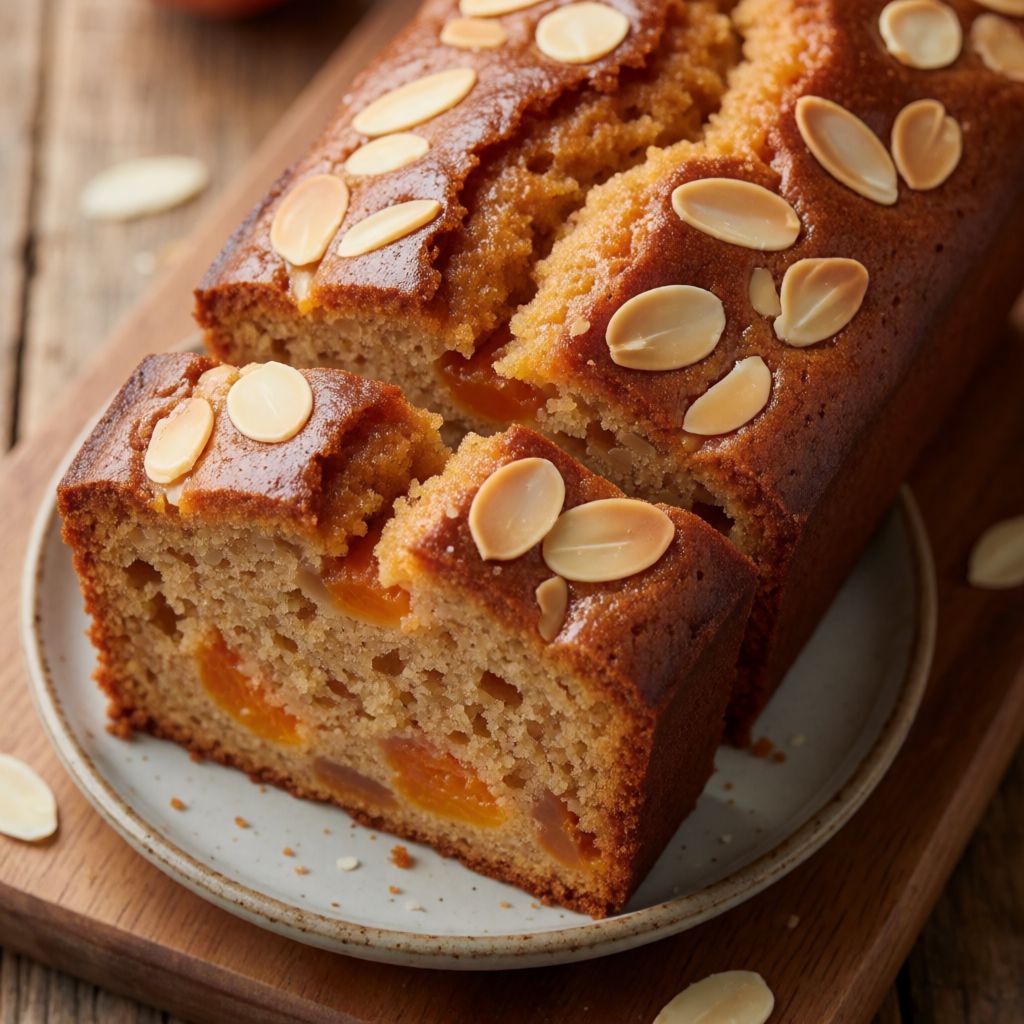
 AI photo
Apricot Loaf Cake
A soft, buttery loaf cake studded with fresh apricot slices and finished with toasted flaked almonds.
Labels are worked out automatically from the ingredients and can be wrong. Check the packaging if it matters to you.
Ingredients
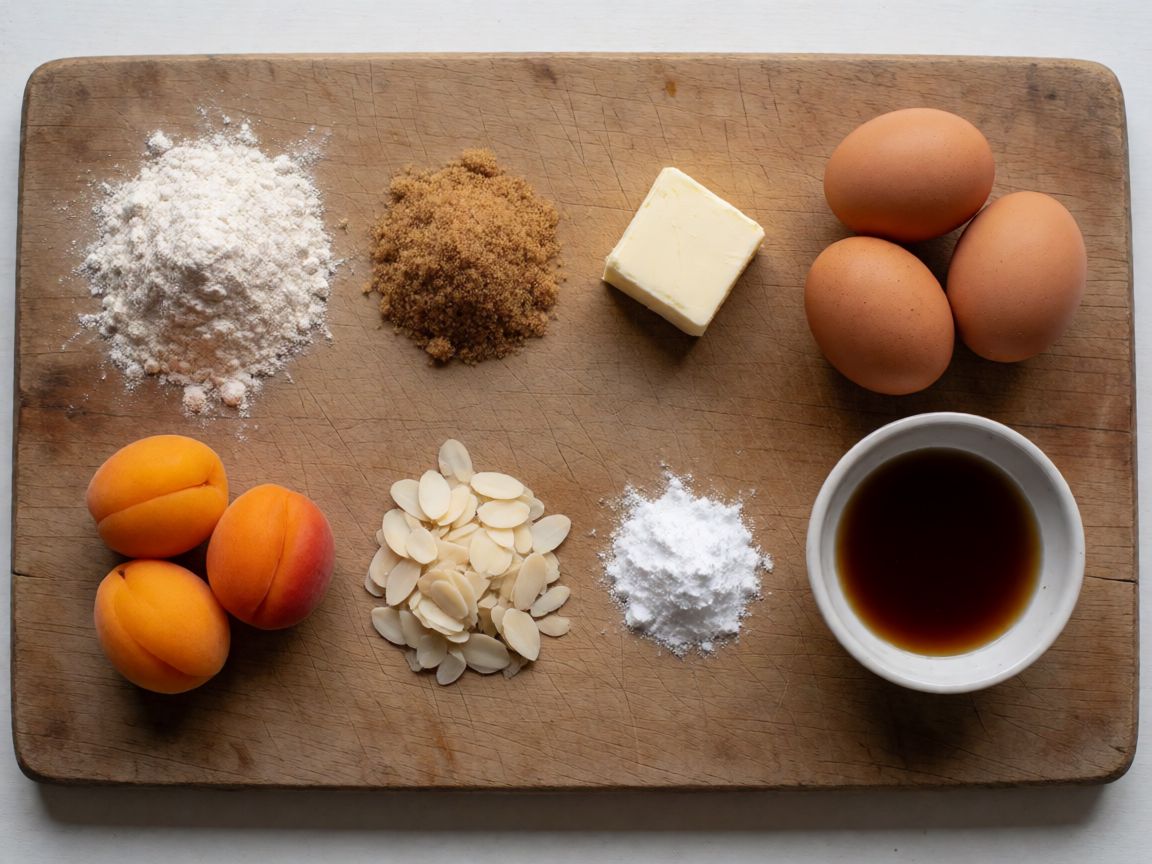
- 180 g Wholemeal flour
- 180 g Brown sugar
- 180 g Butter
- 3 pcs Eggs
- 200 g Apricot
- 30 g Flaked almonds
- 8 g Baking powder
- 1 tsp Vanilla extract
- 1 pinch Salt









Steps
Take the butter and eggs out of the fridge to come to room temperature.
Cut the soft butter into cubes and beat it together with the brown sugar using a mixer.
Add the eggs and beat the mixture with the mixer.
Add a pinch of salt and the wholemeal flour mixed with the baking powder. Fold in with a spoon.
Wash the apricots, remove the stones and slice thinly. Fold into the batter, saving a few slices for decoration.
Stir the batter so the apricots are evenly distributed.
Pour the batter into a loaf tin greased with butter and dusted with flour.
Decorate the top of the cake with apricot slices and flaked almonds.
Bake in a preheated oven at 180°C for 50 minutes.
50 minCheck if done by inserting a wooden skewer — it should come out dry.
Leave the cake to cool slightly before removing it from the tin.
This is a pound cake wearing wholemeal flour and summer fruit, baked in a loaf tin because that shape — tall, narrow — is what lets a dense batter cook through before the outside turns to leather. What decides whether it works is the butter and sugar at the start: beaten together until pale and fluffy, not just mixed, because that's where the air comes from. There's no raising agent doing the heavy lifting here — the baking powder is a top-up, not the engine.
Some say creaming butter and sugar is just "to combine them" — no, because the real job is mechanical: the sugar crystals are cutting tiny air pockets into the fat as you beat, and those pockets are what expand in the oven and hold the crumb open. Skip that stage, or rush it with cold butter straight from the fridge, and you get a cake that's heavy and close-grained no matter how much baking powder you threw in afterwards.
The apricots are the other half of the deal. Fresh, sliced thin, folded through raw, they release juice as they bake and that juice has to go somewhere — it either steams off through a loaf shape with plenty of surface-to-volume, or it pools and gives you a soggy middle. This is also why a few slices go on top instead of all of them inside: decoration, yes, but also drainage, so the fruit on the surface can lose moisture to the air of the oven rather than trap it under the crust.
Butter, 180 g, needs to be genuinely soft — not melted, not half-frozen with a warm outside and a cold core. Melted butter can't hold air when you beat it; it just slides past the sugar instead of being cut by it. Leave it out an hour before you start, longer if your kitchen's cold, which in a British flat in winter it probably is. If you forget and it's still hard, do not microwave it to rescue time — that's trading structure for speed, and you lose.
Brown sugar, also 180 g, isn't just sweetness — it's moisture and a faint caramel note from the molasses still clinging to the crystals, which white sugar doesn't carry. It also browns the crust a shade darker and keeps the crumb a little moister day two, useful if this is going in a lunchbox rather than eaten warm. If you've only got white sugar in the cupboard, use it — the cake will be paler and slightly drier, not ruined.
Eggs, 3, at room temperature for the same reason as the butter: a cold egg dropped into warm, fluffy creamed butter will seize the fat into little hard lumps, and that beaten-in air you worked for starts collapsing. Take them out when you take the butter out — ten minutes of forethought saves you fighting the mixer later.
Wholemeal flour, 180 g, mixed with the baking powder (8 g) before it goes in — not because tradition says so, but because baking powder needs to be distributed evenly through the dry mass, not dropped in one spot where it'll make one part of the cake rise and another sit flat. Any wholemeal flour works here; if you only have plain white, use it and the cake will rise a touch more and taste blander — fine, just a different cake, not a failure.
Apricots, 200 g, fresh and stoned — dried apricots are a different ingredient entirely, concentrated sugar and chew, and would throw off the moisture balance this recipe is built on. No apricots, no problem: any stone fruit that holds its shape sliced thin and isn't watery when raw — plum, nectarine — does the same job. Avoid anything that weeps a lot of juice raw, like very ripe peach, unless you want a damper centre.
Flaked almonds, 30 g, on top do two things: they toast and go nutty and golden in the oven's dry heat, and they shield a stripe of the apricot slices from drying out completely before everything else is cooked through — a small insurance policy for the fruit on display. Any thin-cut nut will do the same shielding job; walnuts or pistachio, roughly chopped, if that's what's in the tin.
On the oven: 180°C is where this kind of batter sets at the edges fast enough to hold its shape but slow enough in the middle that the apricots' juice has time to cook off rather than stay trapped. A fan oven will run hotter than that number suggests — knock it down by about 20°C or just watch the top colour, because glass ovens and British gas ovens can lie to you about their own number. Fifty minutes is where to start checking, not where to stop — the skewer coming out dry is the actual finish line, and a domestic oven with no steam injection and uneven hot spots will get there a little early or late depending on where the tin sits.
Letting the cake sit in the tin before turning it out is patience doing structural work: straight from the oven, the crumb is still mostly steam held in a soft web, and turning it out too soon collapses that web under its own weight, giving you a cake that's sunk in the middle despite baking perfectly. Ten, fifteen minutes of doing nothing is the cheapest insurance in the whole recipe.