
 AI photo
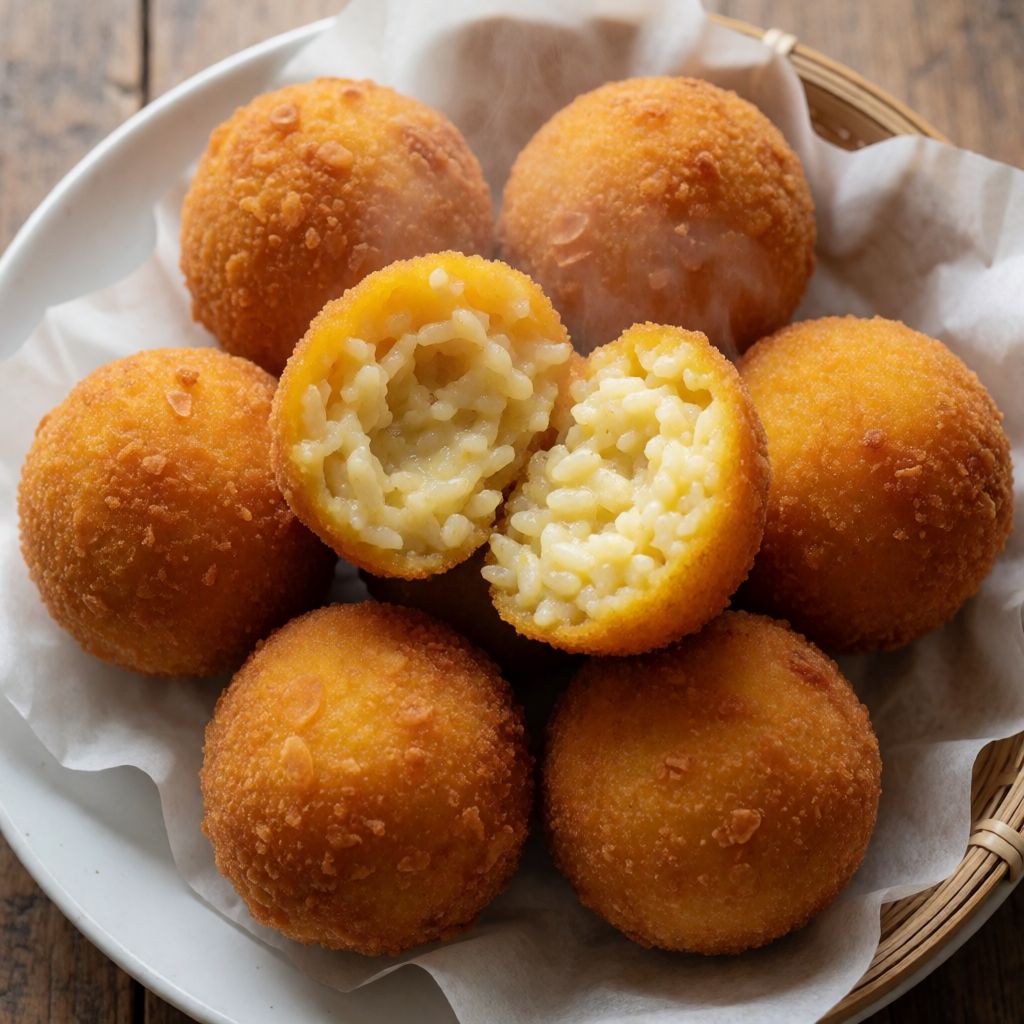
Sicilian Arancini
Crisp Sicilian rice balls filled with a rich meat and tomato ragù, with a melting caciocavallo centre.
Labels are worked out automatically from the ingredients and can be wrong. Check the packaging if it matters to you.
Ingredients
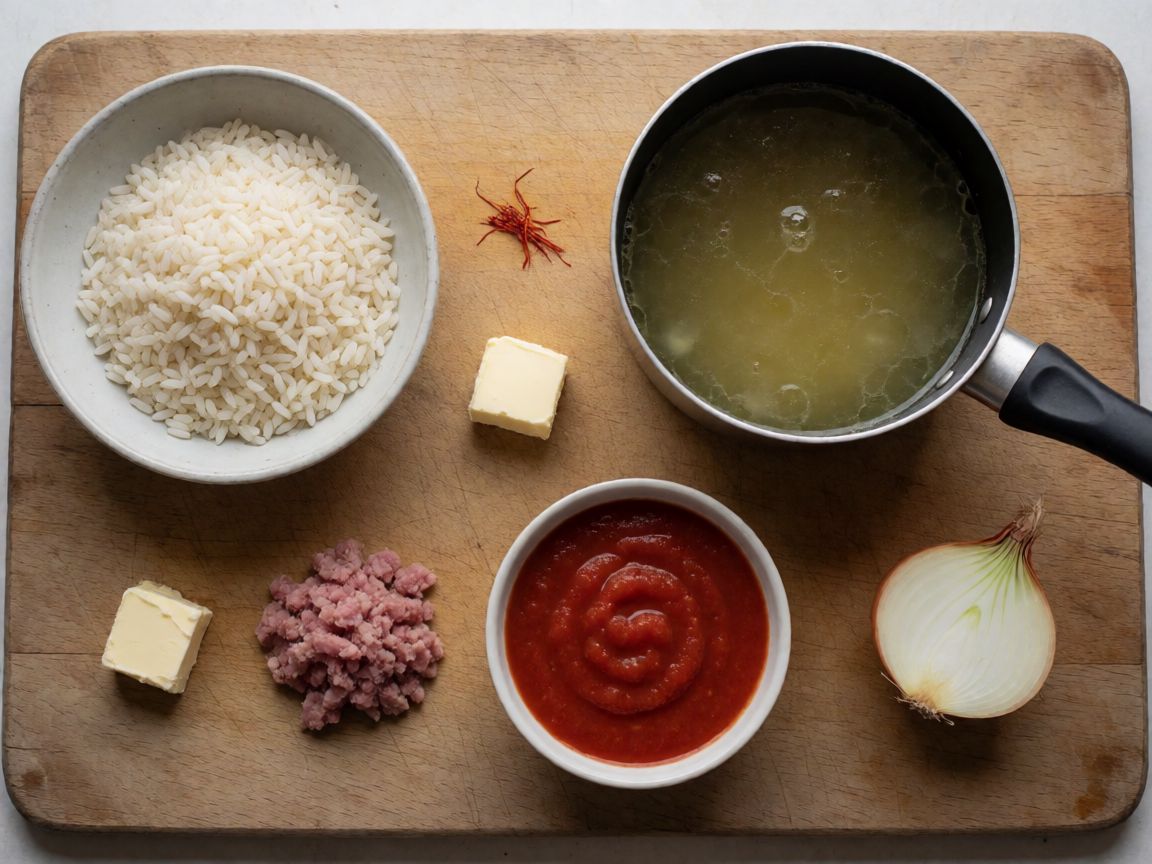
- 500 g Arborio rice
- 1.2 l Vegetable stock
- 100 g Butter
- 1 pcs Saffron
- 1 tsp Salt
- 1 pcs Butter
- 150 g Minced pork
- 200 g Tomato sauce
- 1/2 pcs Onion
- 100 g Peas
- 60 ml Red wine
- Olive oil to taste
- 25 g Butter
- 50 g Caciocavallo
- Black pepper to taste
- 300 ml Water
- 200 g Plain flour
- Breadcrumbs to taste, dried













Steps
Bring the vegetable stock to the boil with the butter, add the rice, salt and saffron, and cook over medium heat until the liquid is absorbed.
Remove from the heat, stir in the butter until the rice is creamy, spread onto a plate, cover with film and leave to cool.
Heat olive oil in a pan, add butter and fry the onion, then add the minced pork and cook for a few minutes.
Add the wine, then the tomato sauce, salt and pepper, and simmer for at least 1 hour until the mixture reaches 71°C.
60 minHalfway through cooking, stir in the peas, adding hot water as needed so the ragù does not become too dry.
Leave the ragù to cool completely.
Wet your hands with water and shape rice balls filled with the ragù and caciocavallo.
Mix the flour with a pinch of salt and water, whisking to a thick batter.
Coat each ball first in the batter, then in the breadcrumbs.
Fry the arancini in hot olive oil, 1-2 at a time, for 6-7 minutes until golden and crisp.
7 minDrain on paper towel to remove excess oil and serve hot.
Arancini are a leftovers dish dressed up as a project. Sicily didn't invent them because someone dreamed of fried rice balls — they invented them because a family had cooked rice from yesterday's broth, a bit of ragù, and no fridge worth trusting. Stuffing and frying both yesterday's rice and yesterday's sauce into a crust was a way of making two separate pots disappear safely. That's the logic, and it still decides whether yours work: everything inside has to be already cooked, already cold, already firm. This is not a dish you can rush through in one evening and expect to get right — the rice needs to sit and set, the ragù needs to sit and set, and only then do you touch them with your hands.
What decides success is temperature at three different moments, not one. First, the rice has to cool to a stiff, sticky mass — warm rice won't hold a ball shape, it'll ooze through your fingers and the stuffing will leak straight into the frying oil, which is how you get an arancino that explodes. Second, the ragù has to be cold and thick, almost a paste, for the same reason — a wet filling steams the rice from inside during frying before the crust has set, and you get a soggy, pale ball instead of a crisp one. Third, the frying oil has to be hot enough to seal the crust in seconds, not slowly warm it through — go in cool oil and the batter and breadcrumbs soak it like a sponge instead of crisping.
Start with the rice. Arborio is used here not for its usual job — releasing starch slowly to make a risotto creamy — but almost the opposite: you want it cooked until the stock is gone, then deliberately overworked with butter off the heat so it turns gluey and cohesive, then chilled so that glue sets solid. That stickiness is structural, not a flavour choice. If you've only got short-grain pudding rice or another sticky variety in the cupboard, it'll do the same job; a long-grain basmati won't — it stays separate and loose and your balls will crumble apart in the fryer.
The saffron is there because arancini are a Palermo dish, and Palermo, like most of Sicily, had saffron coming through its ports from centuries of Arab and Mediterranean trade — it's a spice that arrived by economics, not magic, and it stayed because a few threads colour and perfume a whole pot cheaply. If you don't have it, leave it out rather than substitute turmeric for colour — turmeric brings its own flavour and no aroma worth the swap, and a plain golden rice is a smaller loss than a rice that tastes of the wrong spice.
The ragù is a small, separate braise, and the instruction to take it to 71°C and keep it there for the best part of an hour is really about the pork, not the tomato — that's the range where tough connective tissue starts breaking down into something tender rather than staying chewy, and where the flavours of wine, tomato and onion have time to actually marry rather than just sit next to each other. Rushing this is the single most common way to ruin the filling: a 15-minute "ragù" tastes of raw tomato and raw wine, two separate things, not one sauce. The peas go in halfway so they keep some bite and colour rather than dissolving into mush over the full hour — add them at the start and you'll be fishing out pea skins from a brown sludge.
Caciocavallo is a stretched-curd cheese, firm enough to hold a solid dice at the centre of the ball and still melt to a stringy pull once fried — that's the specific thing you're looking for in a substitute, not just "any strong cheese." A mild mozzarella melts too wet and leaks; a hard, dry pecorino won't melt enough to give you that pull. If caciocavallo isn't on the shelf, a firm, low-moisture scamorza or even a mature provolone gets you closer than most supermarket options.
The batter-then-breadcrumb coating is doing one job: giving the frying oil a barrier to attack instead of attacking the rice directly. The flour-and-water slurry is a crude, eggless version of a tempura batter, and it's eggless on purpose — egg sets too firm and can crack under the heat, whereas a flour paste stays slightly flexible and grips the breadcrumbs evenly. Use dried, fine breadcrumbs, not fresh soft ones — fresh breadcrumbs hold moisture and go leathery instead of crisp, dried ones brown cleanly and quickly, which matters a great deal in a pan that's fighting to keep its heat up.
On oil: pick anything neutral and stable at frying temperature — a bland vegetable or sunflower oil, which is standard in most UK kitchens, does the job without fighting the dish for flavour the way a strong extra virgin olive oil would. Save your good olive oil, the one with a flavour of its own, for finishing a salad, not for a pan you're using as a deep fryer. And once they're out, let them sit on paper towel properly — not because the recipe says so for show, but because a crust that's still sealed in surface oil goes soft as it cools, and the whole point of the frying stage was to avoid exactly that.