
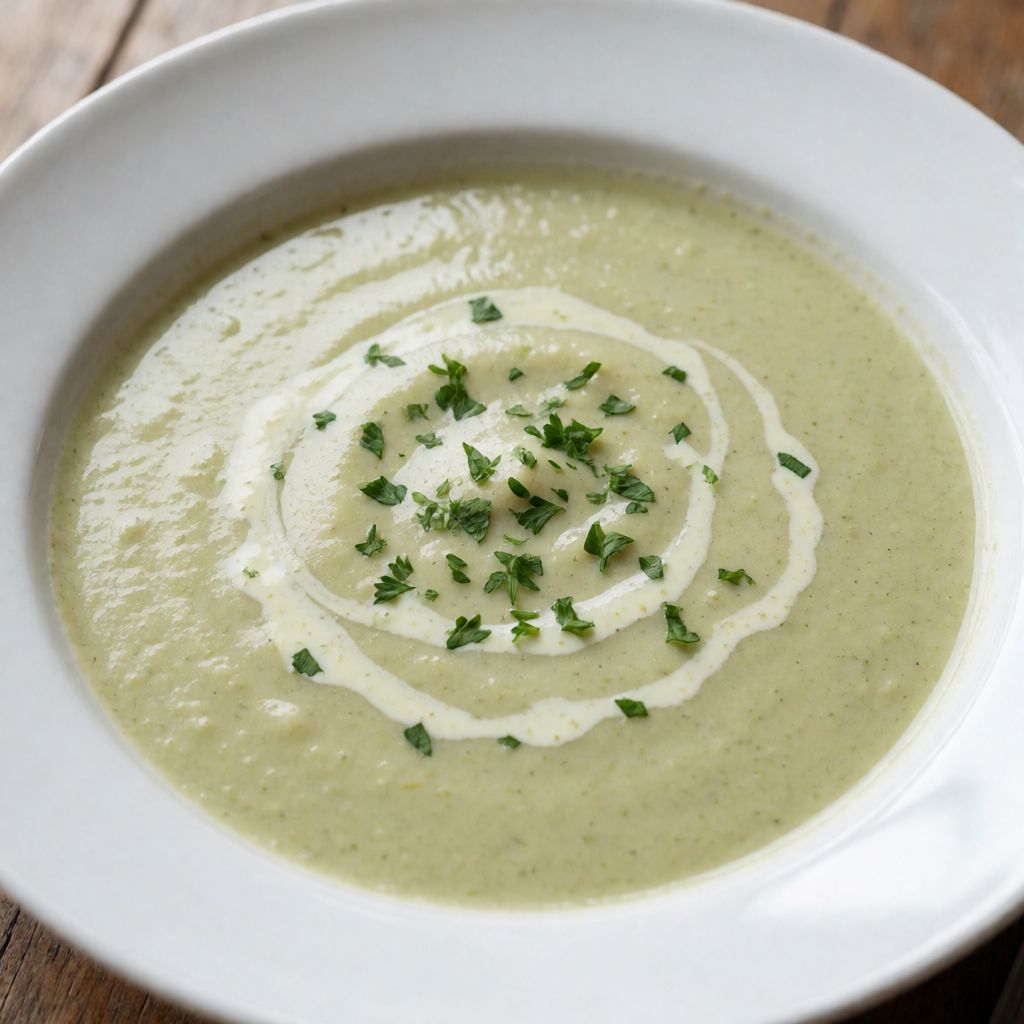
 AI photo
Cream of Artichoke Soup
A velvety artichoke and potato soup, simmered slowly and blended to a smooth, creamy consistency.
Labels are worked out automatically from the ingredients and can be wrong. Check the packaging if it matters to you.
Ingredients
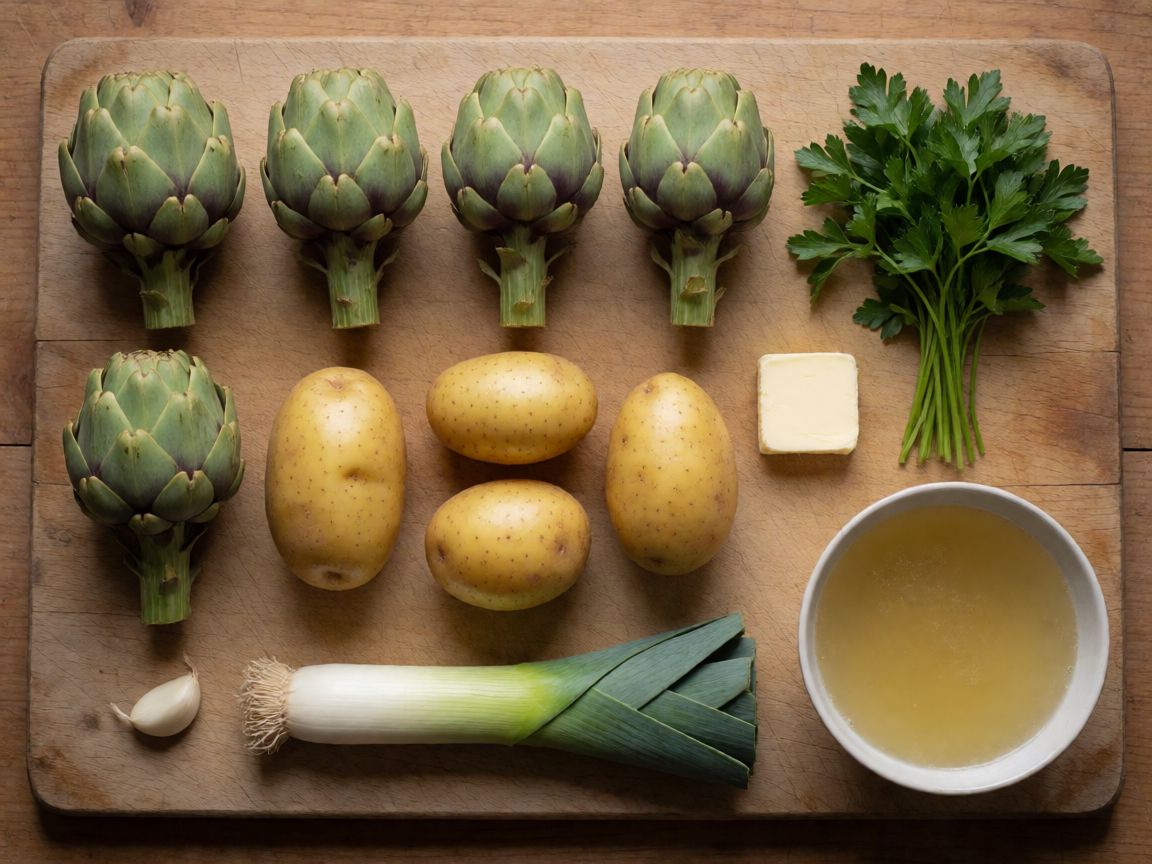
- 8 pcs Artichoke
- 4 pcs Potato
- 1 bunch Parsley
- 1 pcs Butter a knob
- 1 clove Garlic
- 1 pcs Leek
- Salt to taste
- Black Pepper to taste
- 30 g Olive Oil
- 1 l vegetable stock










Steps
Rinse the artichokes under running water, remove the tough outer leaves down to the heart and trim away the spiky tips with a sharp knife.
Slice the cleaned artichokes thinly and place them in a bowl.
Peel the potatoes, rinse and cut into small pieces, then add to the artichokes.
Rinse the parsley and chop it finely on a board.
In a large pot, melt the butter together with the olive oil, add the sliced leek and garlic, and sauté for a few minutes, stirring.
Remove the garlic, add the artichokes and potatoes, and sauté a little longer.
Season with salt and pepper to taste.
Pour in the vegetable stock and simmer over medium heat until the vegetables are tender.
55 minLet the soup cool slightly, then blend with a hand blender until smooth.
Pour the soup back into the pot and warm it gently before serving.
Serve, sprinkling each bowl with a pinch of parsley.
This is a soup that makes a virtue of a vegetable most people find too much work to bother with. Eight artichokes is a serious commitment — you'll see why by the time you're down to the hearts, surrounded by a small mountain of discarded leaves. That labour is the price of the flavour: artichoke has a faint bitterness and a strange sweetness at once, and cream of artichoke soup exists because someone decided the reward was worth the knife work.
What decides whether it works is not the blending, it's the base. Butter and olive oil together — not one or the other — because butter alone scorches before the leek softens, and oil alone gives you no depth, no roundness on the tongue. The garlic goes in to perfume the fat, then comes straight back out before it browns and turns bitter. Garlic cooked a minute too long is not garlic flavour, it's an acrid flavour that no amount of stock will wash out. That's the one spot in this recipe where a few seconds either way changes the whole pot.
Forget "medium heat" as an instruction — your hob doesn't know what that means and neither do I without seeing your pan. What you're watching for with the leek is colour: translucent and soft, going toward pale gold, not brown. Brown here means burnt sugars fighting with a delicate vegetable, and you'll taste the fight. The 55 minutes of simmering is not a countdown, it's a lower bound — the real test is whether a potato piece gives when pressed against the side of the pot, no resistance, no crunch at the core.
Artichokes themselves: look for ones that feel heavy and tight-leaved, not papery or splayed open — an artichoke that's gone soft and loose has lost moisture and will give you less heart for the same work. The outer leaves and spiky tips come off because they're fibrous and sharp, nothing to do with flavour, everything to do with not blending a thorn into your soup. If fresh ones are hard to find or you want to skip the trimming entirely, tinned or jarred artichoke hearts in water (not oil, not vinegar marinade) will work — you lose some of the grassy edge but save real time, and nobody at the table will accuse you of cheating.
Potato is there for body as much as taste — it's the thing that turns a thin vegetable broth into something that sits on a spoon properly once blended. Any floury potato does the job; a waxy salad potato breaks down less and leaves you with a thinner result, so if that's what's in the cupboard, blend a little longer and don't expect quite the same hug-in-a-bowl texture.
Leek gives the onion-family sweetness without onion's sharper bite — it cooks down gently and doesn't fight the artichoke for attention. No leek, use a mild onion and go easier on the heat, since onion catches and browns faster than leek's higher water content allows.
The fat: "any oil with no smell of its own" is the real brief if you don't have olive oil — a flavourless vegetable or sunflower oil works, though you lose a little of the roundness olive oil brings. The butter knob is not optional in spirit even if it's small in grams — it's there for the slight nuttiness fat only gets from milk solids, which oil alone can't give you.
Stock should taste of something before it goes in — a weak vegetable stock gives you a weak soup, blending fixes texture, not flavour. If you're making your own, any stock without a strong single vegetable shouting over the others (no heavy celery, no tomato) keeps the artichoke as the lead rather than a supporting act.
The hand blender stage is where a domestic kitchen shows its limits honestly — a jug blender gives a smoother result if you have one and the patience to do it in batches, letting the soup cool enough first that hot liquid doesn't blow the lid off. Either way, let it cool slightly before you blend, not because the recipe is fussy, but because hot soup under pressure in a sealed blender is a genuine way to burn yourself, and artichoke soup isn't worth a trip to A&E.
Parsley at the end is freshness against all that long, soft-cooked vegetable — a contrast in texture and brightness, not a garnish for looks. Patience is the real ingredient here: rushing the trimming leaves spikes in the bowl, rushing the simmer leaves raw potato at the centre, and rushing the garlic leaves bitterness you can't blend away. None of that is fixable once it's in the pot.