
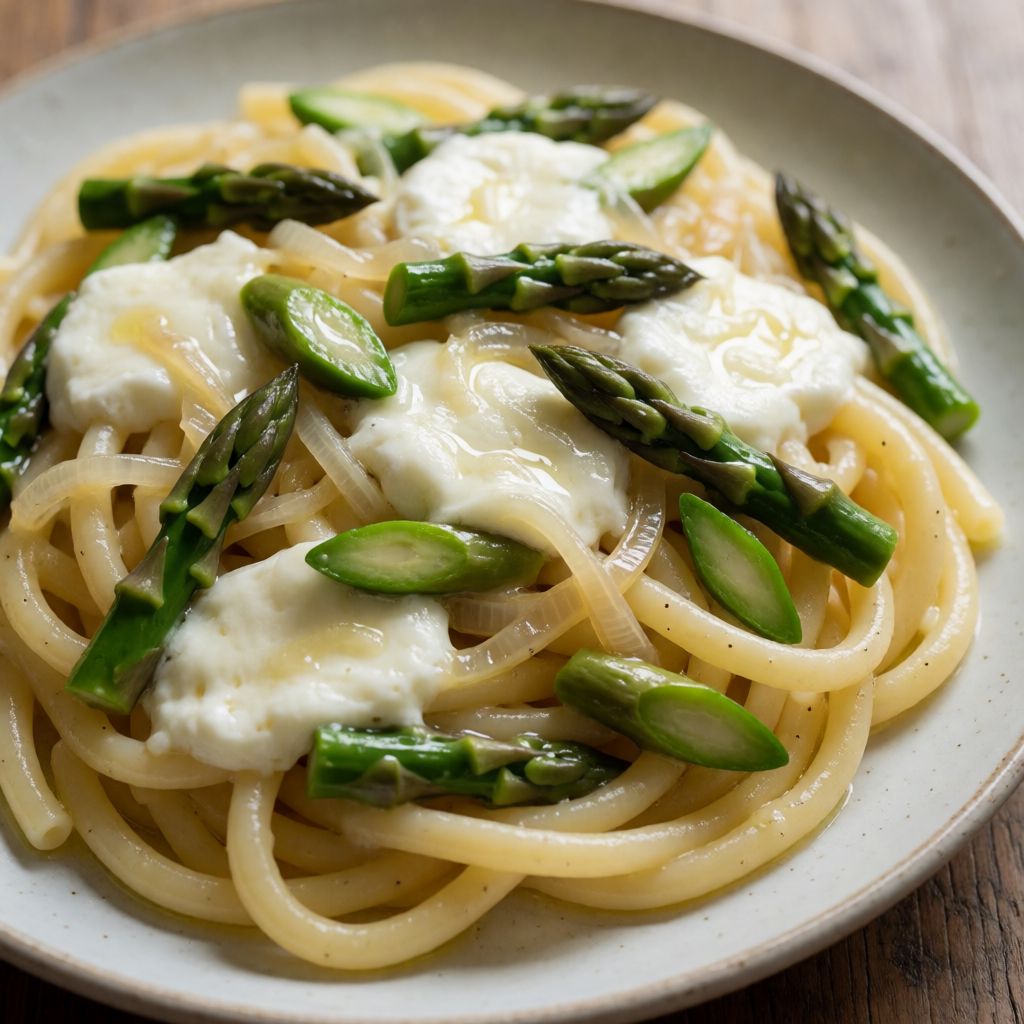
 AI photo
Pasta with Asparagus and Mozzarella
A simple pasta dish with asparagus and mozzarella, finished with parmesan.
Labels are worked out automatically from the ingredients and can be wrong. Check the packaging if it matters to you.
Ingredients
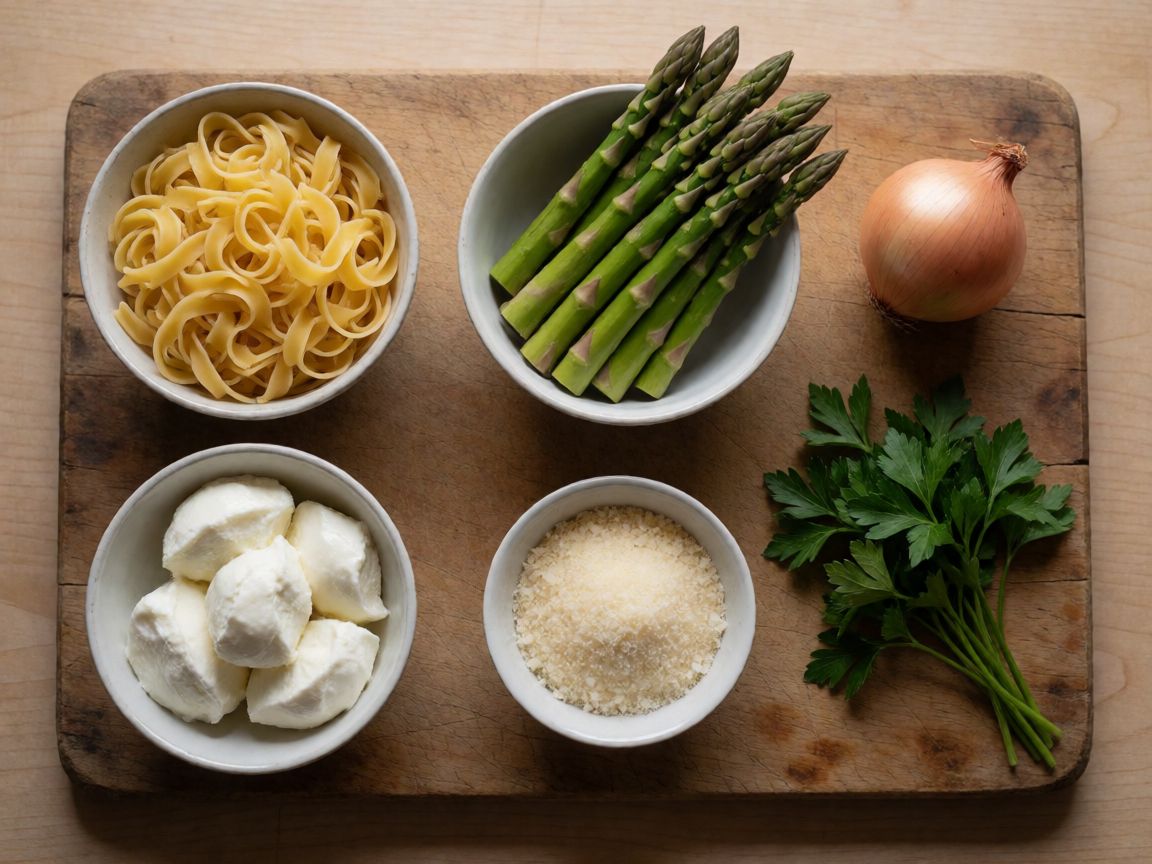
- 400 g Pasta
- 500 g Asparagus
- 250 g Mozzarella
- 1 pcs Onion
- Olive Oil to taste
- Parsley to taste
- 1 pinch Black Pepper
- 1 pinch Salt
- Parmesan optional









Steps
Wash the asparagus and remove the tough lower ends. Steam for a few minutes, then cut into 2cm pieces, keeping the tips whole.
Peel and finely chop the onion. Heat the olive oil in a pan and add the onion.
When the onion turns golden, add the asparagus and parsley. Season with salt and pepper and stir for a few minutes.
Cut the mozzarella into small cubes.
Fill a large pot with water and bring to a high heat. Add coarse salt and wait for it to boil.
Add the pasta and cook for a few minutes less than the packet instructions, so it stays al dente.
Toss the pasta with the sauce in the pan and add another handful of parsley.
Before serving, add the mozzarella cubes so they have time to soften and stretch.
Optionally, grate parmesan over the top.
This dish runs on a small war between two timings pulling in opposite directions. Asparagus wants heat, fast and short, or it turns to green string. Mozzarella wants almost no heat at all — just enough borrowed warmth to go soft and slightly stretchy, never enough to turn rubbery. Everything else in the pan — onion, pasta, parsley — exists to buy time for those two to meet in the right state.
The asparagus gets cooked twice on purpose, and that's not fuss, it's damage control. Steam it first, because the base of the stalk is fibrous and the tip is tender — put it straight into a hot pan and you'll either burn the tips waiting for the base to give, or leave the base woody chasing soft tips. Steaming softens the fibre gently, no direct contact, no scorching. Then a short turn in the pan with onion is just to pick up fat and a bit of colour — you're finishing, not cooking from scratch.
Doneness here is a bend, not a clock. The asparagus is right when it folds instead of snapping. The onion is right somewhere between gold and the first hint of ginger — stop there, because past that line sugar turns bitter and there's no walking it back. Pasta is right a shade before the packet says, because it keeps cooking once it hits the hot pan and sauce — that's carryover heat, not a suggestion, and ignoring it is exactly how people end up with soft, gluey pasta despite following the box to the minute.
Asparagus: look for a stalk that's firm enough to stand up on its own and a tip that's closed tight, not splayed. Give it a gentle bend before cooking — where it wants to snap naturally is where the tough end actually is, cut there rather than guessing. Thin stalks cook almost as fast as the tips and don't need much steaming at all; thick ones need the head start. If asparagus is out of season or the price makes you wince, tenderstem broccoli or green beans will take the same two-stage treatment, though you lose the particular bitterness asparagus brings, which is half the point of pairing it with mild cheese.
Onion: a plain white or yellow one, sliced thin so it cooks through on domestic heat before the asparagus needs the pan. This isn't a dish built on deep caramelisation — the onion is support, softening and sweetening the oil, not announcing itself. That's the whole reason to stop it at gold.
Mozzarella: use the fresh kind sitting in its own liquid, not the dense block sold for grating onto pizza. The block is made to survive an oven's dry heat without weeping too much water, which means its protein is wound tighter — put it through gentle warmth expecting a soft melt and it goes chewy instead. Fresh mozzarella is looser, wetter, forgiving. That's also why it goes in last, off any direct heat — the residual warmth of the pasta and pan is doing the melting, not a flame, so the proteins never get the chance to tighten up. If you want more character, scamorza will do the same trick with a bit of smoke behind it; the rule for a stand-in is mild, moist, and willing to go soft rather than oily.
Olive oil here is just the fat the onion needs to start softening and the thing that carries everything else — it isn't being asked to be the flavour of the dish. Any oil with no strong character of its own works for the pan; save a good extra-virgin, if you have one, for a last drizzle at the table rather than cooking with it. Parsley goes in twice for a reason: early, with the onion, so some of its aroma cooks into the oil, and again raw at the end, because that sharp, green smell doesn't survive heat — it just evaporates. Dried parsley by the time it reaches a jar has mostly lost that smell too, so if you're out, reach for another soft fresh herb rather than a dried substitute.
Parmesan is marked optional because the dish already has fat and salt from the mozzarella — parmesan's job, if you add it, is to bring a sharper, saltier edge against the softness of everything else. Leave it out and you get a cleaner, milder plate; put it on and you get contrast. Neither is more correct, it's just a different dish by a few grams of cheese.
On the pot: salt the pasta water properly, enough that it tastes like the sea, because pasta only gets one chance to take up salt, while it's cooking, not after. And if the pasta looks dry once tossed with the sauce — which can happen on a domestic hob where the pan loses heat fast — a splash of the water it cooked in will loosen things without turning the dish watery; that starchy water is what makes oil and cheese cling to pasta instead of pooling at the bottom of the bowl. None of this is fast food exactly, but none of it is slow cooking either — the only patience required is the kind that stops you rushing the onion past gold and stops you leaving the mozzarella on the heat a minute too long.