
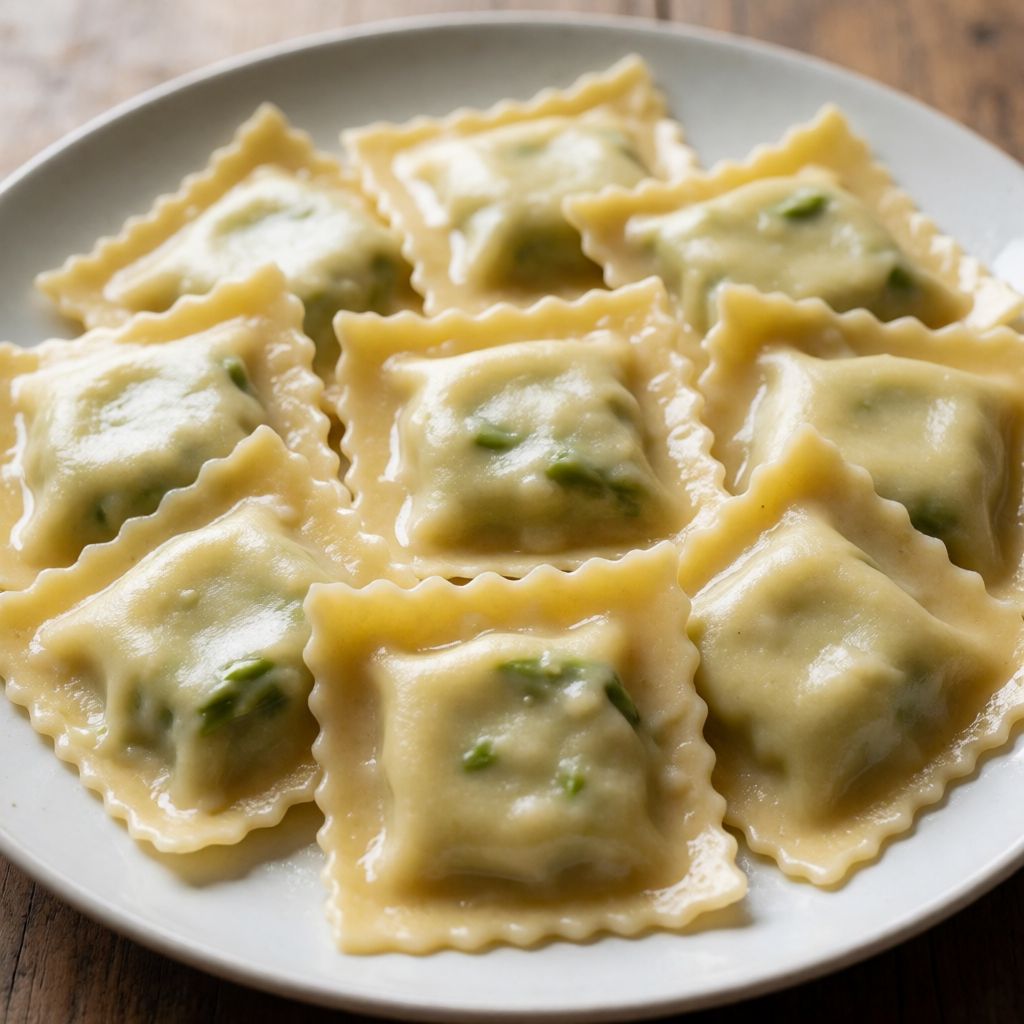
 AI photo
Asparagus Ravioli
Fresh ravioli filled with asparagus and ricotta, finished with a buttery cream sauce.
Labels are worked out automatically from the ingredients and can be wrong. Check the packaging if it matters to you.
Ingredients
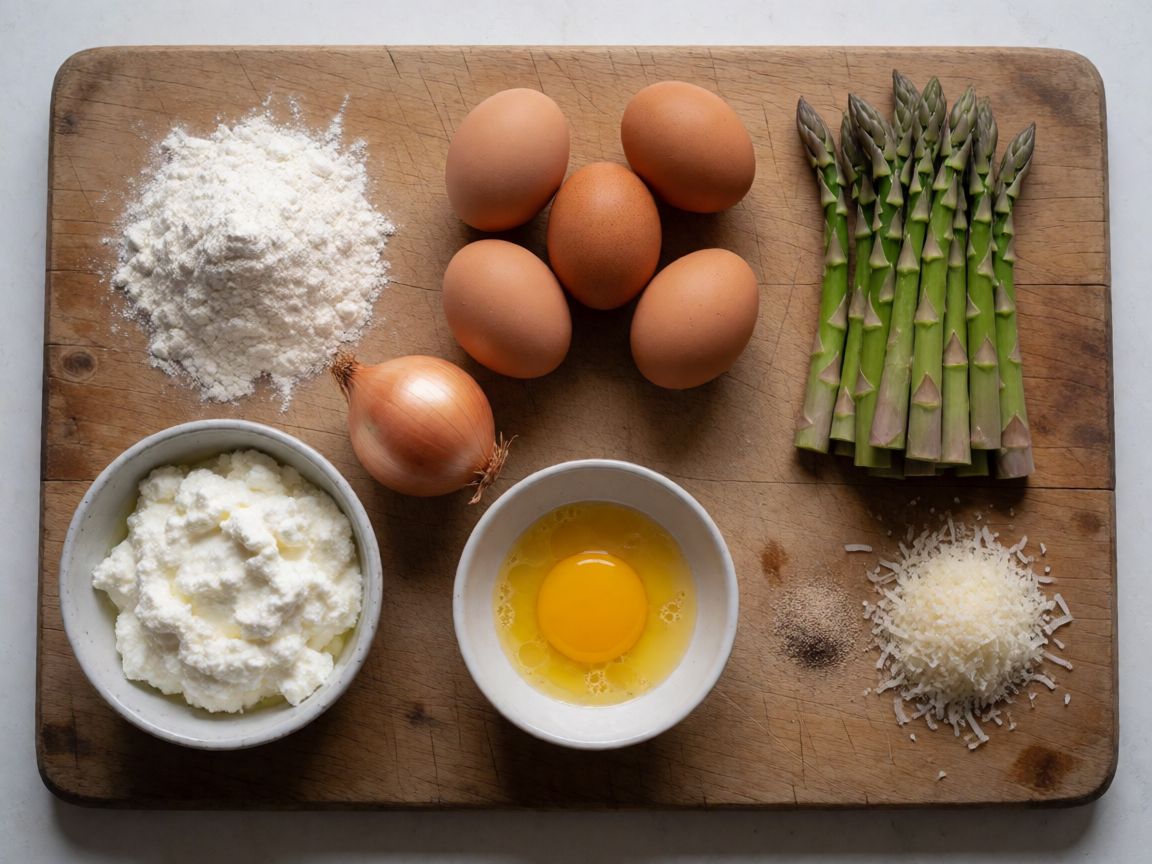
- 500 g Plain flour
- 5 g Salt
- 5 pcs Eggs
- 750 g Asparagus
- 250 g Ricotta well drained
- 1 pcs Onion
- 1 pcs Egg yolk beaten
- 3 tbsp Olive oil
- 4 tbsp Grana Padano half for the filling
- 1 pinch Nutmeg
- 40 g Butter
- Parmesan to taste
- Black pepper to taste
- 200 ml Double cream
- Olive oil to taste













Steps
Tip the flour onto the worktop in a mound, make a well in the centre, add the salt and eggs. Knead into a dough.
Wrap the dough in cling film and place it in the fridge.
60 minWash the asparagus, trim off the tougher parts, and thinly slice the stalks. Finely chop the onion.
Heat olive oil in a pan, add the onion and asparagus, pour in a little water and cook covered.
In a bowl mix the ricotta, cooled asparagus, egg yolk, Grana Padano and nutmeg.
Take out the dough, flatten it and pass it through a pasta machine several times.
Cut out two rectangles, brush one with water, and arrange the filling at even intervals.
Lay the second sheet of dough on top, press firmly and seal the edges.
Using a fluted cutter, shape the edges and cut the ravioli.
Melt the butter, add the asparagus tips, and cook for 5 minutes.
5 minPut a pot of water on the stove, bring to the boil and add salt.
Ravioli is just pasta solving a storage problem: you can't keep a filling fresh inside a plate of food, so you keep it fresh inside a sealed envelope of dough instead, and the dough does two jobs at once — it's the pasta course and the packaging. What decides whether these work isn't the folding, it's the water content on both sides of the seal. The ricotta must be genuinely drained, not just scooped from the tub — if it weeps whey into the parcel, the dough goes soggy from inside before it's even hit the pot, and you get a burst seam, not a ravioli. Equally the asparagus-and-onion filling has to be cooked down and properly cooled before it meets the dough; warm filling softens the sheet, and wet filling is the single most common reason home-made ravioli split at the pinch.
The dough itself is the plain egg-pasta ratio — roughly equal parts flour and whole egg by weight once you count the yolk-rich eggs here, nothing exotic. Some say pasta dough needs olive oil kneaded in for elasticity — no, because the elasticity comes from gluten development (the kneading, the rest in the fridge), and oil in the dough actually works against the sheets bonding to each other later, which is exactly what you need when you press two rectangles together to seal a parcel. The rest in the fridge isn't optional comfort, it's the gluten relaxing so the dough doesn't spring back and fight you when you roll it thin — skip it and you'll be wrestling a sheet that shrinks the moment you cut it.
On the flour: plain flour (00 if your shop stocks it, but ordinary plain flour works — this isn't a dish that needs semolina's chew, since you want a sheet that folds and seals, not one that fights back). The eggs do double duty, binding the dough and giving it that pale yellow colour and slight richness; if you're short an egg, a splash of water will bring the dough together but you lose a little of that silkiness, so don't make a habit of it.
Asparagus: buy it with tight, closed tips and stalks that snap rather than bend when fresh — a stalk that bends like rubber has been sitting too long and will taste of water, not of itself. Trimming "the tougher parts" means snapping off the woody base by hand rather than cutting with a knife; the stalk will naturally break where the fibre turns tender, which a blade can't judge for you. Out of season, good frozen asparagus tips are a fair substitute for the filling, though you'll want to pat them properly dry after thawing — back to that same water problem.
Ricotta is there for lightness and a neutral dairy base that lets the asparagus taste of itself rather than of cheese; "well drained" is doing real work in this recipe, not a throwaway instruction — tip it into a sieve lined with kitchen paper and let it sit while you do everything else, and you'll save yourself a burst seam later. If ricotta isn't to hand, a well-drained cottage cheese blitzed smooth, or curd cheese, does the same structural job, though the flavour shifts slightly tangier.
Grana Padano and Parmesan are both hard, aged, salty cheeses and here they're interchangeable in spirit — Grana Padano is simply the cheaper cousin, aged less long, which is exactly why Italian households default to it for everyday cooking and save Parmesan for where it's the star. Use whichever you have; the nutmeg pinch is the traditional partner to ricotta-and-greens fillings specifically because it cuts the slight flatness that dairy and asparagus together can have — a small amount, it should be felt rather than tasted.
The butter-and-asparagus-tip finish at the end is a plain emulsified sauce, not a reduction — melted butter clinging to the pasta water that comes off the ravioli as you transfer them is what gives it a gloss rather than a greasy slick, so don't fully drain the ravioli before they go into that pan. Any neutral oil with no smell of its own can stand in for the olive oil used to soften the onion and asparagus in step four, but butter at the end is worth keeping as butter — it's there for its dairy flavour and its ability to cling to pasta, which a flavourless oil won't do.
On the rolling: a pasta machine does the job a mattarello and an Italian grandmother's forearm used to do by hand, and there's no shame in the machine — it exists precisely because hand-rolling pasta this thin, evenly, across a whole batch, is genuinely hard graft, and the machine is just an industrial-age shortcut to the same physics of stretching gluten. Pass the dough through several times, folding it back on itself between the wider settings, because that's what actually builds the elasticity — jumping straight to the thinnest setting just tears a dough that hasn't been worked enough.
A plate with a damp tea towel over it, in place of the lid your pan doesn't have, keeps the cut ravioli from drying and cracking at the edges while you work through the rest of the dough — a dry edge won't seal, however hard you press it. And patience is the real ingredient in the whole exercise: the dough resting, the filling cooling, working through the sheets steadily rather than rushing to get dinner on sooner than the dough is ready to behave. Rush any one of those three and you'll taste it in a split seam, not in the finished plate.