
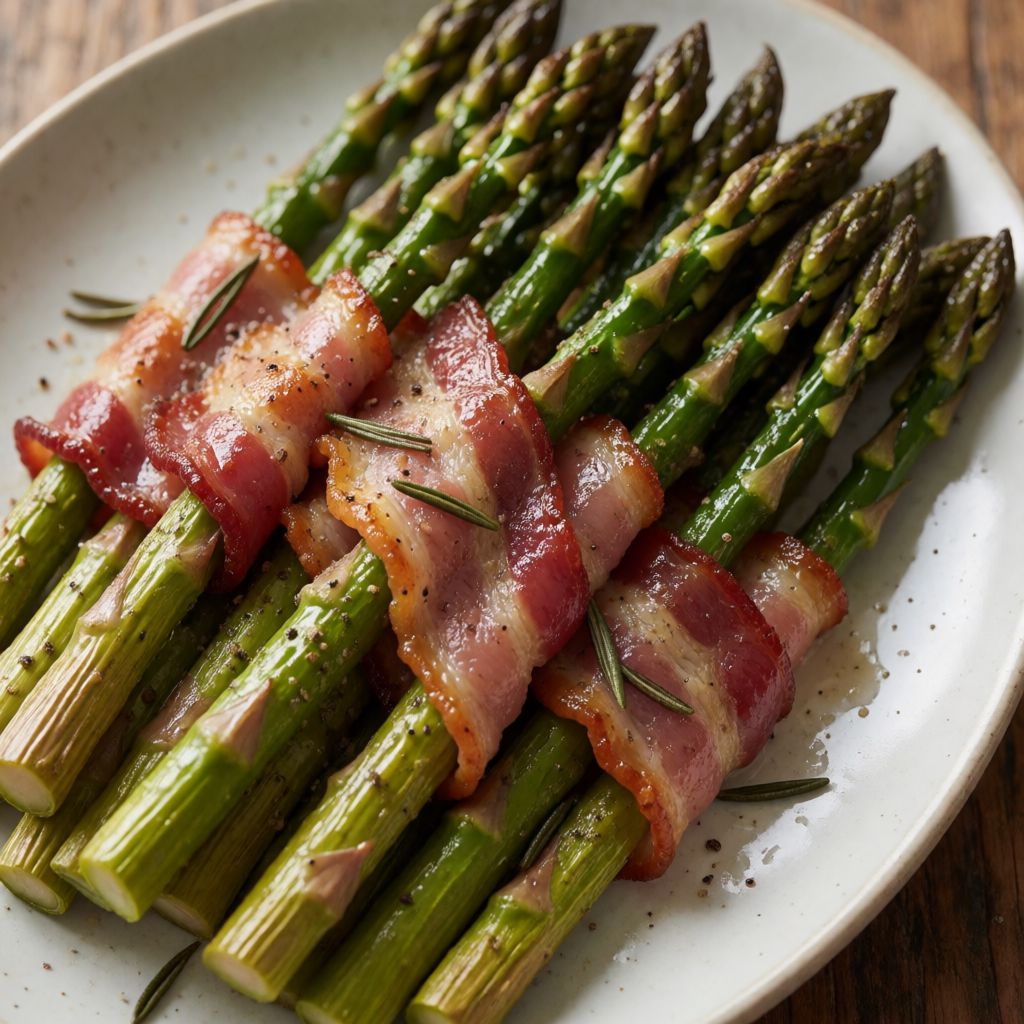
 AI photo
Oven-Baked Asparagus with Bacon
Asparagus spears wrapped in bacon and roasted until golden, a simple savoury side.
Labels are worked out automatically from the ingredients and can be wrong. Check the packaging if it matters to you.
Ingredients
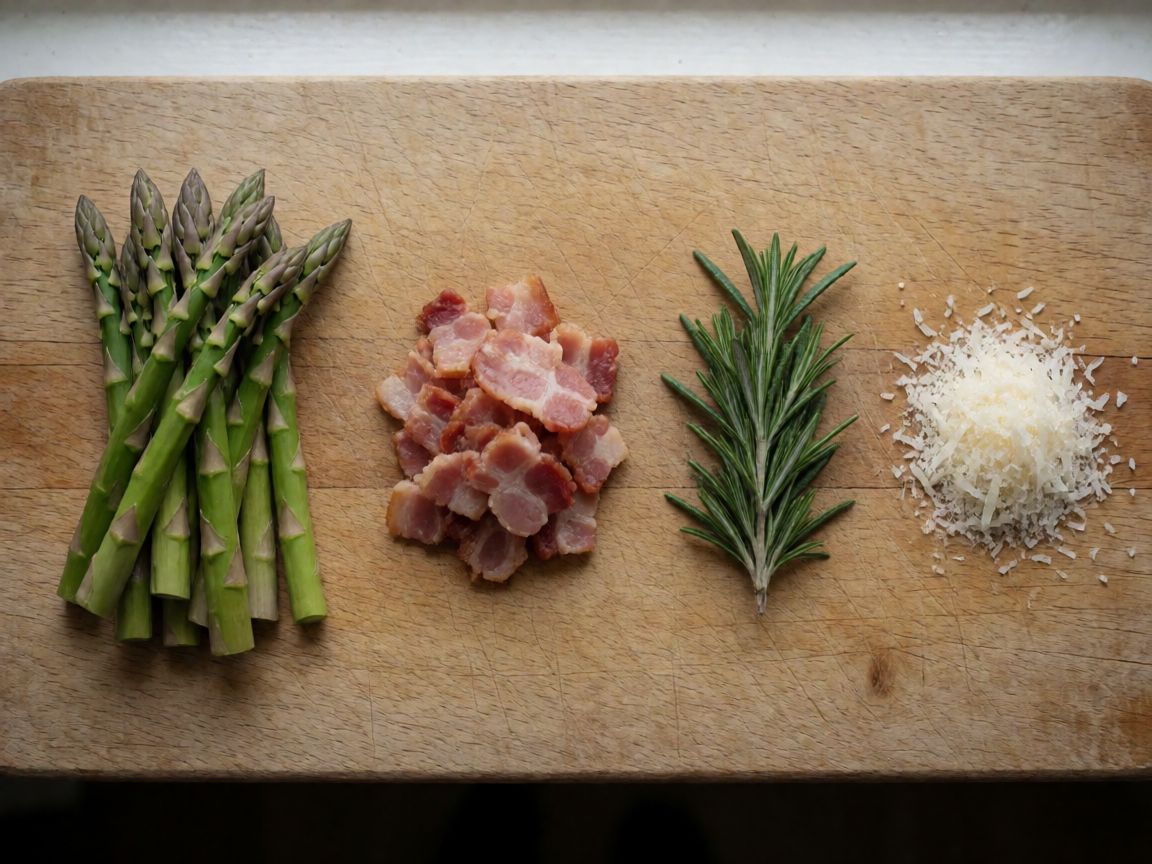






Steps
Wash the asparagus thoroughly, removing any traces of soil, and trim the tough ends of the stalks.
Boil the asparagus whole in salted boiling water.
15 minDrain the asparagus and lay it on a clean tea towel to dry.
Take 4-5 stalks at a time and carefully wrap each bundle in a slice of bacon.
Line a baking tray with parchment paper and place the wrapped asparagus bundles on it.
Season with a pinch of black pepper, finely chopped rosemary, and sprinkle with parmesan if you like.
Drizzle with olive oil and bake at 180°C for at least 10 minutes.
10 minLet cool slightly, then transfer to a plate and serve.
This isn't just asparagus wearing a bacon coat for decoration. It's two ingredients with opposite needs, solved by doing them in the wrong order on purpose. Asparagus wants water and heat to lose its snap and its woody bottom — that's a job for a pot of boiling water, fast and done in minutes. Bacon wants dry heat, time, and air to render its fat and go from flabby to crisp — that's a job for the oven, and it's slower than the asparagus needs. Boil first, bake second: each ingredient gets the treatment it actually wants, instead of compromising and doing neither job properly.
What decides whether it works is how dry the asparagus is when the bacon goes round it. Straight off the boil, wet, it sweats inside the wrap. That moisture turns to steam between bacon and stalk, and steam is bacon's enemy — it keeps the fat from rendering out, so the bacon stays pale and rubbery instead of crisping. The towel isn't a formality; it's the step that lets the oven actually do dry heat instead of a stealth second boil.
Some cooks wrap one stalk per rasher, thinking it looks neater on the plate. Don't — a single thin stalk gives the bacon nothing to grip and no bulk to protect it, so the rasher curls, thins out, and burns at the edges before the fat underneath has rendered. Bundle four or five stalks together and you've built a fatter cylinder: more surface for the bacon to cling to, more time before any one spot overheats, fat with somewhere to run as it melts instead of pooling and scorching.
Asparagus first. British supermarket bunches tend to run thicker than the thin French stalks you see in photos, so don't trust a fixed trimming length — bend the stalk near the base instead. It snaps cleanly where the lignified, woody part ends and the cookable fibre begins. Cut by eye at a set length and you'll either waste good stalk or leave a woody stub that no amount of boiling softens, because lignin doesn't soften, full stop. Boiling itself is short because asparagus is mostly water already — you're not cooking it so much as relaxing it, taking it from crunchy-raw to pliable before the oven even sees it.
Bacon: in a UK shop that means choosing streaky over back. Streaky is the fatty, striped one, and fat is the whole point here — it's what renders out, bastes the asparagus as it goes, and crisps at the edges once it's spent. Back bacon is leaner and tears when you try to wrap it round a bundle; it dries out under oven heat rather than crisping, because there's less fat to render and more lean muscle to simply toughen. If bacon isn't available, pancetta or a thin, fatty cured ham does the same job — the criterion is fat content and thinness, not the name on the pack.
Olive oil here isn't carrying much weight — it's keeping the exposed top of the bundle from drying out in the oven air and helping the rosemary's oil spread onto the bacon fat rather than sit on top of it. If you don't want its flavour, any oil with no smell of its own does the same physical job — sunflower, for instance. But olive oil, rosemary and parmesan come from the same culinary family, so there's a reason to keep it rather than a rule forcing you to.
Rosemary should be fresh and chopped fine if you can get it — the needles are tough and resinous, and left whole they just sit on the surface rather than flavouring anything, or worse, char and turn bitter in the short bake. Dried rosemary scorches easily at this heat for the same reason. No rosemary — thyme does the same economic job: a sturdy Mediterranean herb whose oils hold up under dry heat instead of evaporating in the first few minutes.
Parmesan is marked optional for a real reason, not politeness — the bacon is already cured, which means already salted. Add parmesan generously and you're salting the dish twice without meaning to. Use it where it touches direct heat and goes lightly golden, as a bit of extra crust and savour, not as a seasoning you're relying on.
And patience earns its place as an ingredient here, same as anywhere: don't rush the trim, because a missed woody bit ruins one mouthful in four; don't skip the towel, because that's the difference between crisp bacon and sweated bacon; and don't pull the tray at the ten-minute mark out of habit — go by the colour you can see, not the number on the timer.