
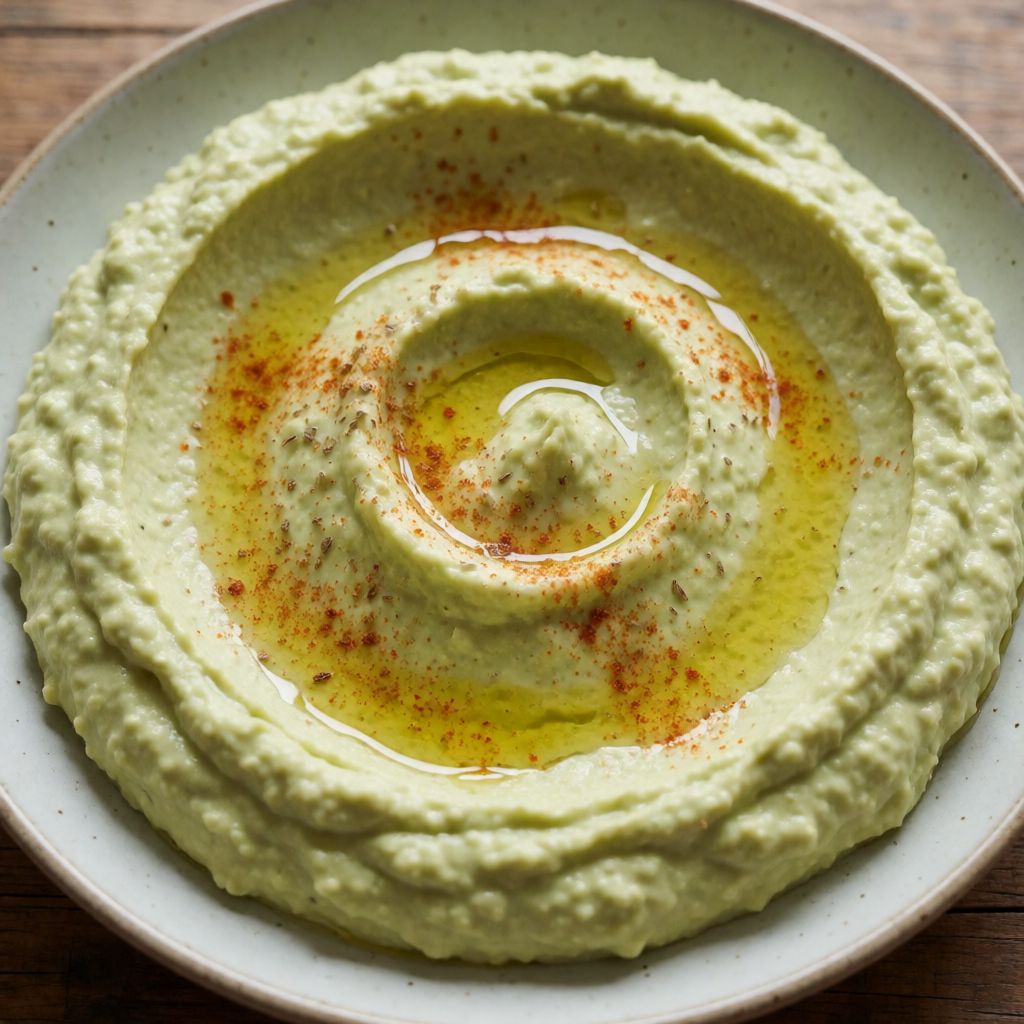
 AI photo
Avocado Hummus
A smooth blend of chickpeas and avocado, flavoured with tahini, lemon and cumin, finished with pistachios.
Labels are worked out automatically from the ingredients and can be wrong. Check the packaging if it matters to you.
Ingredients
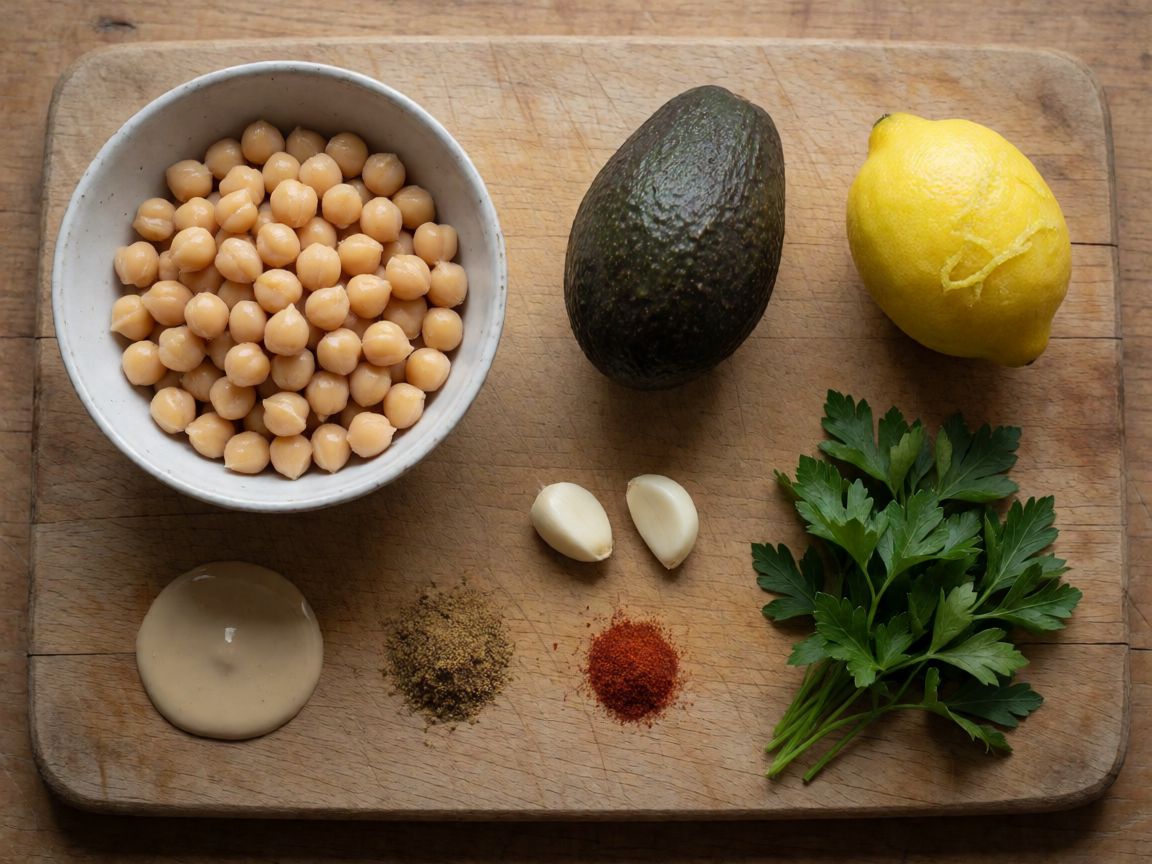
- 1 can Chickpeas drained and rinsed
- 1 pcs Avocado
- 2 tbsp Tahini
- 2 clove Garlic
- 1 tsp Cumin ground
- 1 pinch Cayenne pepper
- 2 tbsp Olive oil
- Water as needed
- 1 pcs Lemon organic, juice and a little finely grated zest
- 1 bunch Parsley or fresh coriander
- Salt to taste
- Black pepper freshly ground
- 25 g Pistachios for sprinkling











Steps
Put all the ingredients into a blender or food processor and blitz for about 5 minutes until smooth and creamy.
5 minTaste and adjust the seasoning with salt, pepper, lemon juice and a little finely grated lemon zest.
Serve in a bowl, sprinkled with finely chopped pistachios.
This is hummus bent sideways. Chickpeas are still the body of it, but half the usual oil and water gets replaced by a ripe avocado, so instead of a stiff paste you get something looser, greener, almost a mousse. Chickpeas come from a tin here, not soaked overnight and simmered for an hour — that's not laziness, that's the whole point of a five-minute antipasti.
What decides whether this works isn't the chickpeas or the tahini. It's the avocado. Underripe, and the flesh is still starchy and fibrous — it won't melt into the mix, it'll leave grainy green threads no amount of blending fixes, because the fat in it hasn't softened enough to behave like fat. Overripe, with brown stringy flesh near the stone, and that bitterness goes straight into the bowl; lemon juice won't argue it away.
Some say a food processor needs to run for ten minutes to get hummus properly silky. No — it needs just long enough for the chickpea skins to break down and the fats (tahini, oil, avocado — three of them, note) to emulsify with the liquid. Past that point you're not making it smoother, you're warming it up, and warm starch and fat turn gluey, not creamy. Five minutes is a floor, not a finish line — stop when it moves like thick cream off the blade, not when the timer says so.
Lemon is the only acid in a bowl that's otherwise all fat and starch — avocado, tahini, olive oil, stacked on top of each other. Without it the dip tastes flat and heavy no matter how much salt you throw at it. That's the balance to chase, not a particular shade of green.
Chickpeas from a tin are not a compromise here, they're a decision. They're already fully cooked and soft — all that's left to do is drain and rinse off the canning liquid, which carries a slightly tinny, bitter edge you don't want in a dip this pale. The myth that tinned chickpeas make worse hummus than dried ones doesn't hold for a smooth dip like this — the texture after blending is identical, you've only skipped the soak and the simmer, and for something going straight into a blender that saving costs you nothing.
Avocado: choose it by feel, not colour — skins vary hugely between varieties and tell you little. Press gently near the stem end with the heel of your hand; it should give without turning mushy. If the ones in the shop are hard, buy them a few days ahead and leave them on the counter, not the fridge — cold stops ripening dead. There's no real substitute for a good one in this recipe: cooked, cooled courgette or extra tahini and oil will get you back to an ordinary hummus, but it won't be this one, and it's worth saying so plainly rather than dressing it up.
Tahini separates in the jar — oil floats, paste sinks. Stir it back into one before you measure it out, or your two tablespoons will be one oily spoonful and one dry, chalky one, and the dip won't emulsify evenly. If sesame is off the table, any ground seed or nut paste with a bitter-nutty edge will stand in — sunflower seed paste is the usual one — but say goodbye to the sesame flavour, because that's what you're actually trading away.
Garlic, cumin, a pinch of cayenne: the raw garlic is sharp straight out of the blender and mellows if you let the finished dip sit even twenty minutes before serving — the salt in it slowly draws moisture through the mixture and rounds the bite off. That waiting is not dead time, it's doing work, which is the whole case for treating patience as an ingredient rather than an inconvenience.
Lemon: use both the zest and the juice, because they do different jobs. The zest carries the fragrant oils — that's where the actual smell of lemon lives; the juice on its own is mostly acid and sugar with very little scent. Buy an unwaxed or organic one since you're eating the skin; if you can't, scrub it under hot water first to cut the wax and spray residue.
Olive oil earns its place here for its own flavour, not just for slickness, so don't swap it for a neutral oil the way you might elsewhere — that's the one note tying the whole pale-green mixture back to something Mediterranean rather than tasting like plain mashed avocado. Parsley or coriander, either one, cuts through the fat with freshness; coriander pulls the whole dip toward something more citrus-forward, so pick based on what you're serving alongside. The pistachios are there purely for crunch and colour against a soft, pale dip — buy them raw and unsalted and toast them yourself in a dry pan for a couple of minutes until they smell nutty, rather than reaching for the ready-salted roasted bag, where the salt level is already decided for you and usually wrong. Serves four as a starter — a bowl, some flatbread or crudités, nothing more is asked of it.