
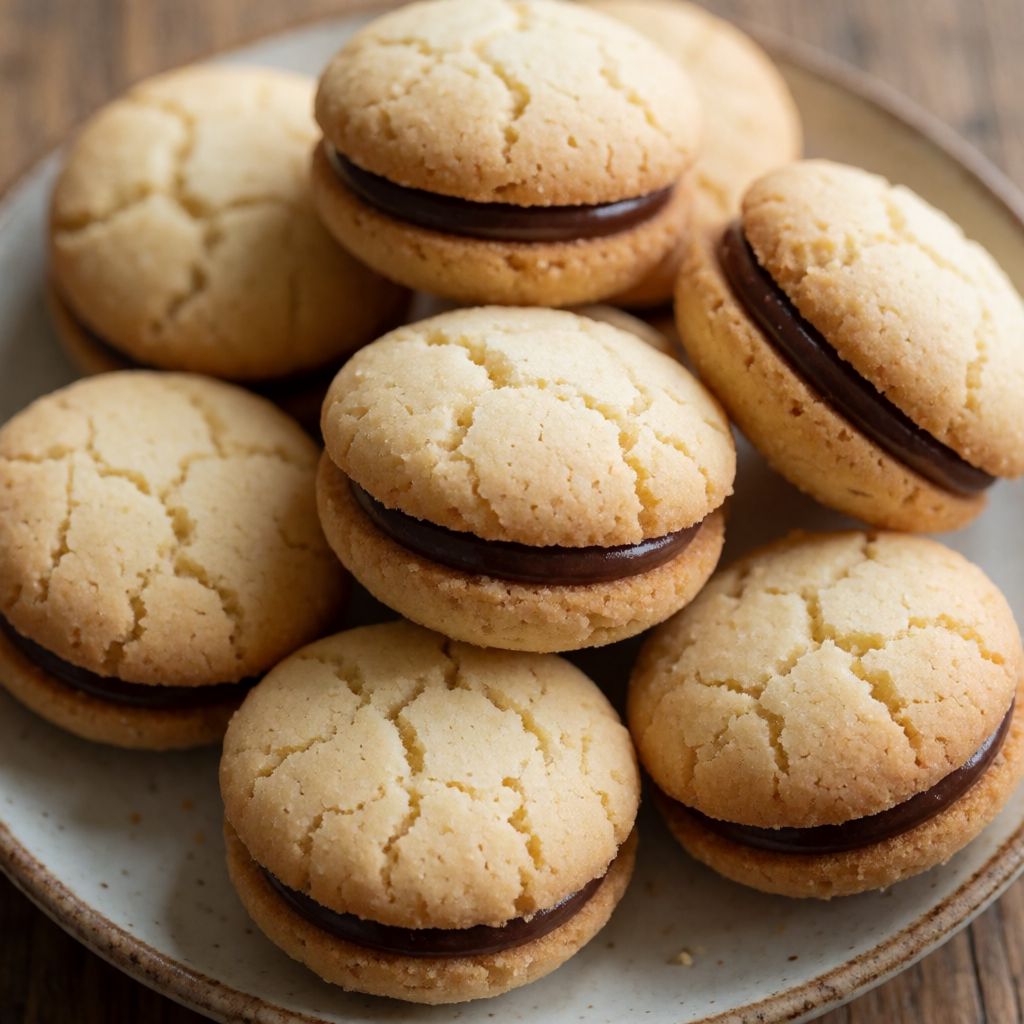
 AI photo
Baci di Dama with Almonds
Italian almond shortbread biscuits sandwiched with melted dark chocolate.
Labels are worked out automatically from the ingredients and can be wrong. Check the packaging if it matters to you.
Ingredients
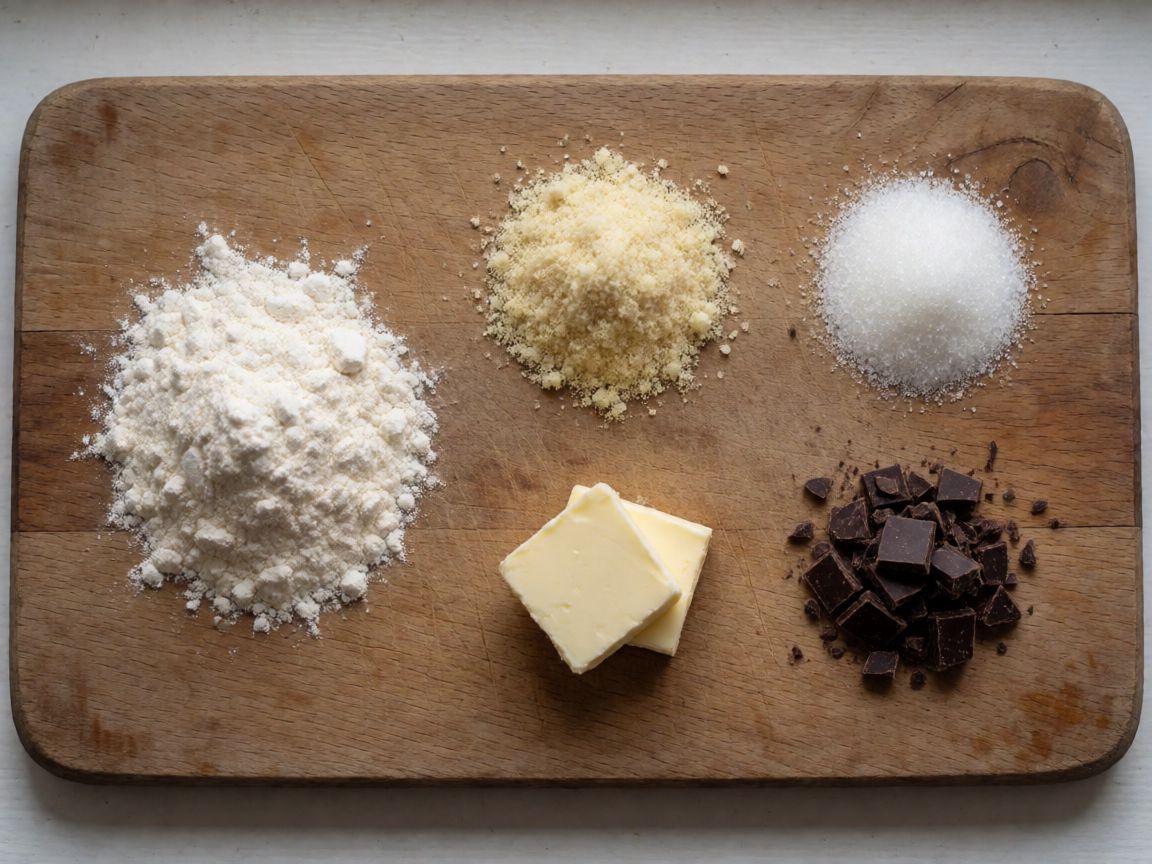
- 120 g Plain Flour
- 100 g Almond Flour
- 100 g Butter
- 100 g Caster Sugar
- Dark Chocolate to taste





Steps
Sift the flour into a bowl and add the sugar, mixing lightly. Add the almond flour and butter.
Knead by hand into a smooth ball of dough, cover and leave in the refrigerator for 1 hour.
60 minRoll out the dough with a rolling pin, use a small round cutter to divide it and shape balls weighing 5-10 g each.
Place the balls on a baking tray lined with parchment paper and leave in the freezer for 20 minutes.
20 minBake in a preheated fan oven at 160°C for 10-12 minutes.
11 minMelt the dark chocolate in a bain-marie.
Pipe the dark chocolate onto the halves of the biscuits using a piping bag and sandwich them together in pairs.
Baci di dama — "lady's kisses" — are Piedmontese, from Tortona, where almonds grew easily and chocolate arrived early, because trade through Turin and the House of Savoy brought cocoa into that corner of Italy well before it reached most of Europe. Two small almond-shortbread domes, kissed together with dark chocolate — that's the whole idea. The whole challenge is keeping those domes small and round while everything about handling warm dough conspires to flatten them.
What decides if it works is cold butter, and nothing warming it up before the oven does. There's no egg here, no liquid at all — this dough is held together purely by fat, the way shortbread is. The flour isn't building structure through gluten; there's not much of it, and you're not kneading for elasticity. Almond flour, which nearly matches it gram for gram, is doing the real work — its own oil contributes to the "glue", and it's why these biscuits are sandy and fragile rather than crisp and sweet like an ordinary butter cookie. Roll the dough too long in warm hands and the butter softens past the point of holding a ball's shape in the oven — you get a puddle with a chocolate filling, not a kiss.
That's also why the shaped balls go into the freezer before baking. You've just spent ten minutes rolling them between your palms, warming the fat the whole time, and the freezer resets it solid fast — so the dome holds as the oven's heat hits it, instead of slumping in the first minute.
Bake low, 160°C, and resist the urge to push it hotter — almond flour browns fast on the surface once its own sugars and oils start to caramelise. Push the heat and you get an exterior gone bitter before the centre has even set. Some think a hotter oven just means a quicker, crisper biscuit — no, because with almond flour you get burnt-nut flavour first, not crispness, while the inside stays underbaked and crumbly. Judge doneness by eye: the surface should look matte, barely coloured, maybe a shade golden where it touches the tray, and the tops often crack slightly as they set around trapped air — that crack is normal, not a fault.
For the almond flour, look for something finely and evenly ground, pale, smelling of nothing sharp — rancid almond flour smells a bit like nail varnish, and in a biscuit this plain, chocolate won't hide it. If you haven't got any, hazelnut flour is an honest swap, not a compromise — Piedmont uses both, and a hazelnut version with gianduja-style chocolate is arguably closer to the region's own habits, since Turin's chocolate industry grew up precisely because hazelnuts were cheap locally and cocoa was dear, so bulking chocolate with ground hazelnuts became a thrift that turned into a flavour everyone now chases on purpose.
Butter should be something you'd happily eat on bread, unsalted if you want the sugar unclouded by anything else — salted works too, just go easier on it mentally, since there's no other savoury note here to balance against. The plain flour, by contrast, is scaffolding rather than flavour: pure almond flour and butter alone would be too oily to roll into a ball that keeps its edges, so a little gluten-bearing flour gives the dough something to hold onto. You can't leave it out, but you don't need to think about it past sifting out any lumps.
Melt the chocolate over simmering, not boiling, water, with the bowl kept clear of any splash or steam — direct contact with water is what turns melted chocolate grainy and unpipeable, called seizing, and once it's happened there's no undoing it. "Dark chocolate, to taste" is the right instruction, because this layer carries the one bitter note an otherwise sweet, nutty biscuit needs — pick something you'd eat a square of on its own, well past 60%, so it reads as chocolate and not just sugar.
You don't need a proper piping bag — a sandwich bag with a corner snipped off does the job, which matters in a flat kitchen already short on single-use equipment. Match the biscuit halves by size before you pipe, so the sandwiches sit level rather than lopsided; it's a small thing, but it's the difference between looking made with care and looking rushed.
From this quantity you'll get a few dozen small balls — more biscuits than "four servings" suggests, because these are two-bite things meant for sharing round a pot of tea, which is exactly where they belong on a British table. The whole process runs an hour of chilling, twenty minutes of freezing, and twelve of baking before you've even touched the chocolate — none of it hard, but skipping the resting stages is the one reliable way to turn a kiss back into a flat, forgettable biscuit.