
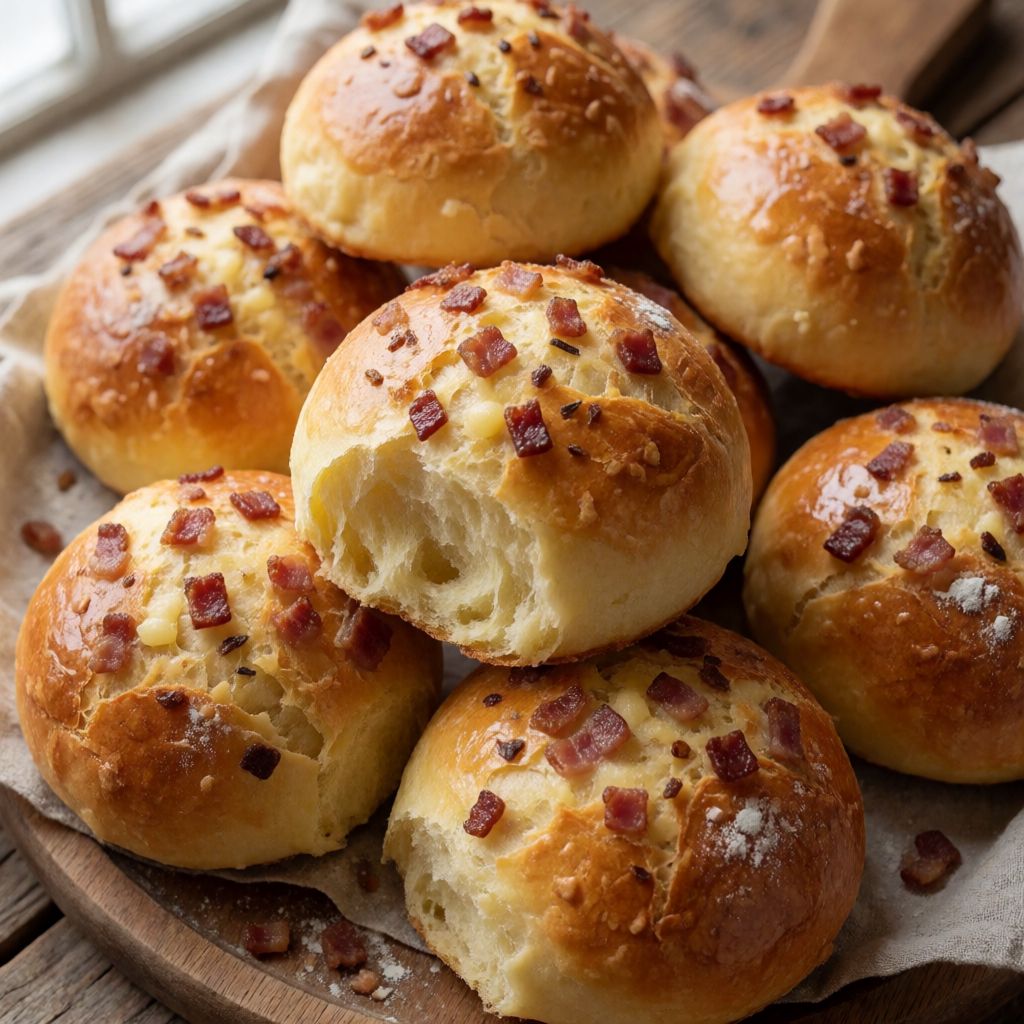
 AI photo
Bacon and Parmesan Buns
Savoury buns made with diced bacon and parmesan, lovely warm from the oven for breakfast or a snack.
Labels are worked out automatically from the ingredients and can be wrong. Check the packaging if it matters to you.
Ingredients
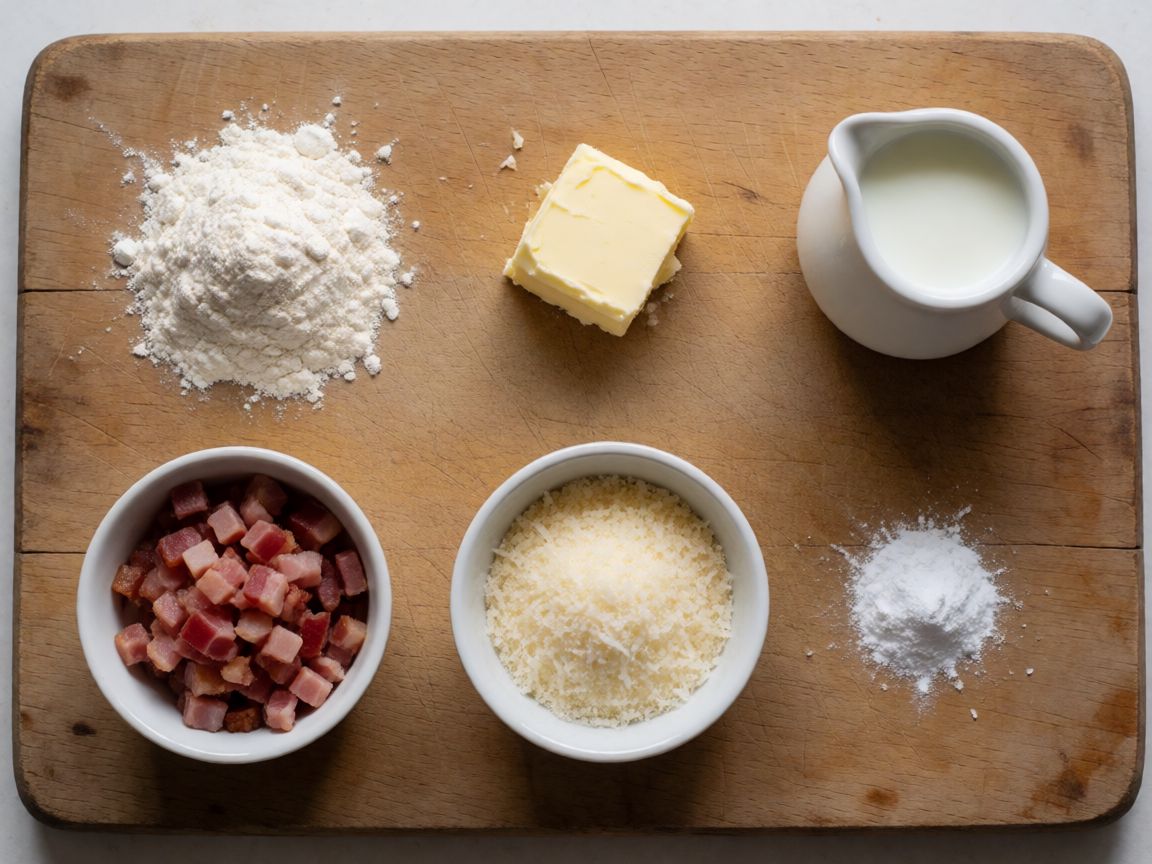
- 220 g Plain Flour
- 40 g Butter softened
- 1 pinch Salt
- 150 ml Milk
- 100 g Bacon diced
- 30 g Parmesan grated
- 10 g Baking Powder






Steps
In a bowl, whisk together the flour, salt and baking powder.
Add the milk and mix.
Add the softened butter, cut into cubes, and knead the dough by hand, working in the butter well until fully combined.
Add the parmesan and diced bacon, then knead vigorously so all the ingredients are evenly combined.
Cover the dough with cling film and refrigerate.
30 minShape the buns: pinch off pieces a little bigger than a walnut, roll into balls and place on a baking tray lined with baking paper.
Bake in a fan oven preheated to 200°C.
18 minLet the buns cool slightly before serving.
These are savoury quick-bread rolls, not true scones and not yeast bread either — they sit in between. No egg, no sugar, nothing proved overnight: flour, milk and baking powder do the lifting, and bacon and parmesan do the talking. Walnut-sized balls of dough that come out the size of a fist, split warm with butter, or set in a basket next to a roast where normally you'd put bread rolls.
What decides whether they rise tall and short-textured, or spread flat and greasy, is the butter — and specifically its temperature at two separate moments, not one. You fold it in soft, because soft butter is the only way your hand can actually work it through an already-wet dough without tearing everything to shreds. Then you chill the whole mass for half an hour, because by the time you've kneaded in bacon and cheese, that butter has gone warm and loose in your palms again. If it goes into the oven already soft, it melts out before the crumb has set around it — you get an oily disc, not a bun. The fridge rest isn't there to 'let the flavours rest'. It's there to give the butter back its job: melting inside the oven, not inside your hands.
Some say you must always rub cold butter into the flour before any liquid touches it, or you'll never get a light, short crumb. Not here. This dough does it backwards on purpose — wet dough first, soft butter worked in after — and it still turns out short, because the shortness is earned later, in the fridge, not at the mixing bowl. Method and moment matter more than which order the textbook insists on.
Plain flour, not bread flour or self-raising. You want some gluten, enough to trap gas and hold bacon and cheese suspended without the dough tearing when you knead it 'vigorously' at the end — but not the long, elastic strands a loaf needs, which would make these chewy instead of short. If plain flour isn't in the cupboard, self-raising will work in a pinch, but drop the baking powder right down, because self-raising already carries its own.
Baking powder here is a genuinely generous amount for the flour — nearly double what a plain scone dough would use. That's not a typo, it's compensation: bacon and parmesan add weight, fat and moisture that would otherwise sit heavy and flatten the crumb, so the lift has to work harder to carry that load. Baking powder is double-acting — it fizzes once the moment it meets the milk, and fizzes again once it meets oven heat. The first reaction is spent by the time you've kneaded and chilled the dough; the second one is what actually happens in the oven and is the one doing the real work of pushing these buns up rather than out.
Milk brings fat as much as liquid — whole milk gives a noticeably more tender crumb than skimmed, because that fat gets between gluten strands the same way butter does, just more thinly spread. Use whatever's in the fridge for your tea; just know skimmed will give you a slightly tighter, drier bun, not a disaster.
Butter: softened, because you need to spread it by hand through an already-mixed dough, not cut it into dry flour with a knife as you would for pastry. Any dairy butter will do this; a hard baking margarine works at a push but brings nothing to the flavour, only the fat — butter is doing double duty here, structure and taste both.
Bacon: streaky, diced small — pea to small-walnut-pip size, never matchsticks. Streaky is the common British cure, with enough fat running through it to render properly in that short bake and season the dough from inside. Pancetta or lardons work the same way, same logic. If you want these without meat, you lose that internal basting fat, so compensate with a touch more butter and perhaps a few drops of something smoky, or just accept a slightly drier, purely cheese-forward bun — it's a different thing, not a failed version of this one.
Parmesan's job is salt and savoury depth, and a little surface crisping where bits of it sit exposed and brown rather than bake inside the crumb. The criterion for a substitute is low moisture and real age — a hard cheese that grates dry, not one that goes gluey when it melts. Mature cheddar, pecorino, Grana Padano all qualify; a young, wet cheese will just weep into the dough and heavy it. And go easy on that single pinch of salt — bacon and parmesan are both already salty, and the dough doesn't need a third voice shouting the same note.
This makes roughly a dozen walnut-sized buns, which is a side for six at a Sunday roast table, or fewer if everyone's reaching for seconds — they're small on purpose, which is also what keeps the raw bacon safe to bake through. A fan oven at 200°C moves hot air across every bun evenly, which is why you don't need to turn the tray halfway; a conventional oven runs cooler at the same dial number and less even, so give it a touch longer and keep an eye on the tray nearest the back wall. Doneness isn't the clock — it's colour: the tops going from pale to a proper gold, the cheese at the surface turning from matte to a thin brown lace, the bottoms firm when you lift one with a spatula rather than soft and pale. Let them sit a few minutes once they're out — that's not politeness, it's the crumb finishing its set with the last of the heat, so the inside doesn't collapse the second you tear one open.