
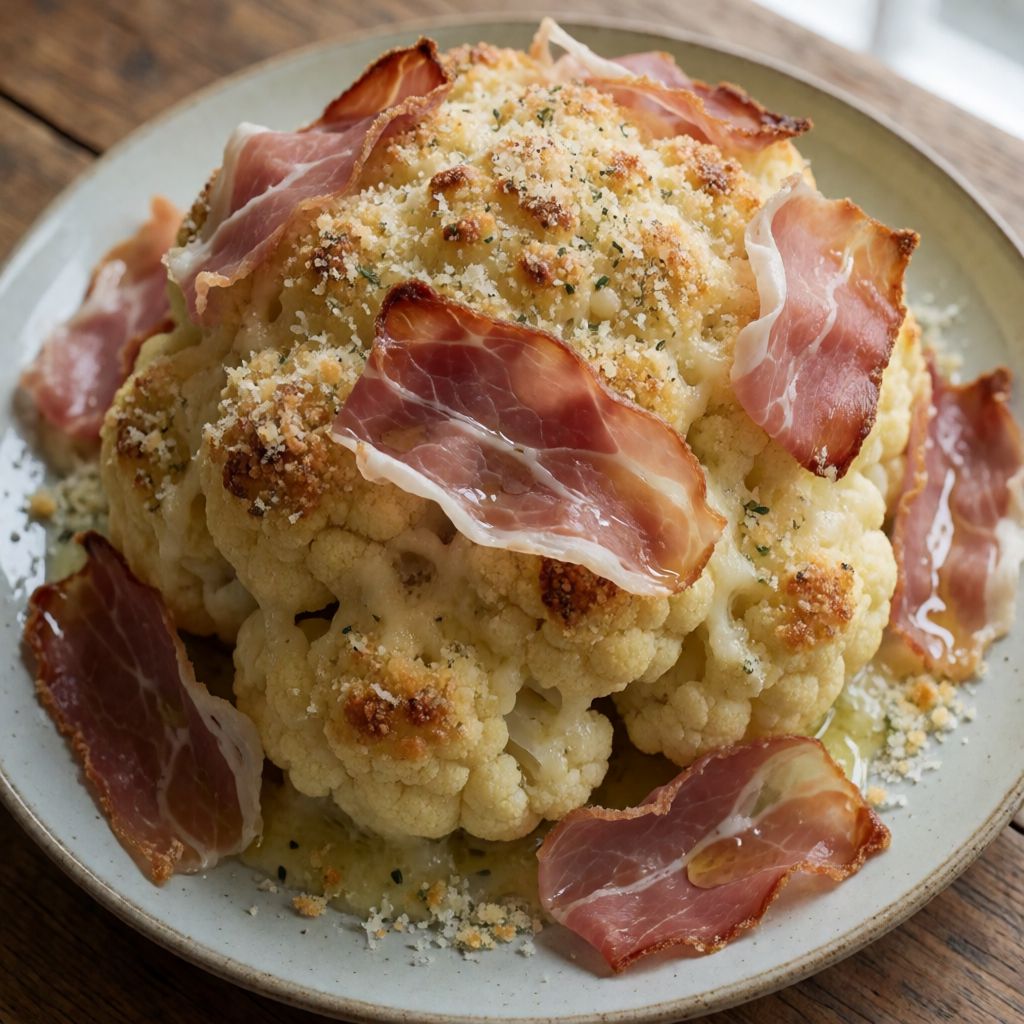
 AI photo
Appetising Baked Cauliflower
A simple baked cauliflower dish with buffalo mozzarella, prosciutto, breadcrumbs and parmesan.
Labels are worked out automatically from the ingredients and can be wrong. Check the packaging if it matters to you.
Ingredients
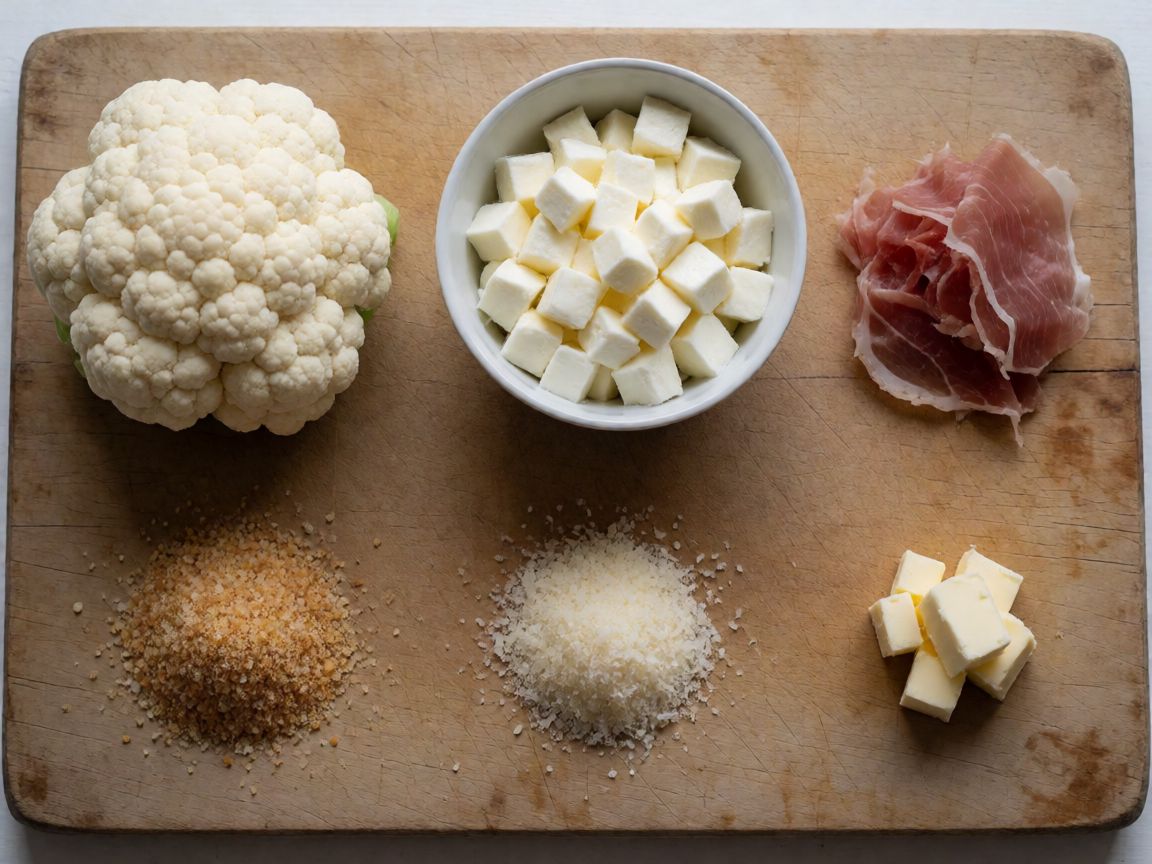
- 1 pcs Cauliflower
- 200 g Buffalo Mozzarella diced
- 80 g Prosciutto
- Breadcrumbs to taste
- Parmesan to taste
- 1 tbsp Olive Oil
- Salt to taste
- Black Pepper to taste
- 20 g Butter








Steps
Blanch the cauliflower florets for 8 minutes in salted boiling water.
8 minDrain in a colander and leave to cool.
In a bowl, toss the cauliflower with 1 tbsp of olive oil, then add the diced buffalo mozzarella and prosciutto.
Season with pepper, transfer everything into a non-stick baking dish and sprinkle with a mixture of breadcrumbs and parmesan.
Scatter pieces of butter on top and bake in a preheated oven at 200°C for 20 minutes, then switch to the grill function.
20 minServe warm.
This is cauliflower pretending to be a main course. Blanched florets get dressed in diced buffalo mozzarella and ribbons of prosciutto, then buried under a crumb-and-parmesan crust and sent to the oven until the top goes gold and sputters. Think of it as a gratin where the vegetable does the work a potato usually does — it just needs more help getting there, because cauliflower has no starch to hold it together and no fat of its own.
What decides whether this works is moisture, not time. Cauliflower is mostly water packed into a tight structure. Blanch it eight minutes and you're not cooking it through — you're softening the dense core just enough that twenty more minutes in the oven finishes the job without turning the outside to mush. Check it with a knife tip: it should give with a little resistance, like a carrot that bends before it snaps. Some say raw cauliflower goes straight into the dish, no blanching needed — no, because twenty minutes at 200°C isn't enough to cook a raw floret through to the stalk, you'd get a crust on top and a crunch where you want tenderness.
The other hinge is the cheese. Buffalo mozzarella carries a lot of whey — that's what makes it taste so good eaten cold with tomatoes, and what makes it treacherous in an oven. Dice it, don't shred it, and let the cauliflower cool fully before you toss everything together. Warm cauliflower plus mozzarella means the cheese starts weeping and melting before it's even near heat, and you get a flooded dish instead of pockets of molten cheese holding their shape.
Cauliflower: buy one head, compact, white, no grey patches, no spreading smell — cauliflower announces when it's past its best, trust your nose. Break it into florets roughly the same size, because an uneven dice means some pieces are done at minute six and others need ten, and you can't blanch to two different outcomes in one pot. If you only have broccoli or Romanesco, either works the same way: dense brassica, same blanch-then-bake logic.
Buffalo mozzarella: the point of it here isn't the taste so much as the behaviour — it holds a soft shape and melts into pockets rather than spreading flat the way a drier cheese would. If buffalo mozzarella isn't to hand or the price puts you off, fior di latte (cow's milk mozzarella) does the same job and is usually cheaper and a little less wet, which if anything makes your life easier in this dish. Whatever you use, pat the diced cheese dry on kitchen paper first — that's the fix for a watery gratin, cheaper than buying a more expensive cheese and hoping.
Prosciutto: this is doing two jobs — salt, and fat that renders out under heat and bastes the dish from the inside. Any dry-cured ham works on the same principle: Parma ham, Serrano, even a good bacon crisped first in a pan if that's what's in the fridge, though bacon changes the character — smokier, chewier, less of that sweet cured-fat melt. Don't add extra salt before you've tasted the finished dish; prosciutto and parmesan both bring plenty, and the usual beginner's mistake with gratins is seasoning for a bland base that was never going to be bland.
Breadcrumbs and parmesan: this pairing is doing what flour and fat do in pastry — breadcrumbs alone would just dry out and go sandy under the grill, parmesan alone would just melt into a slick. Together, the parmesan's fat carries the crumbs into a crust that actually crisps rather than burns. Use dry, fine breadcrumbs, not fresh soft ones — fresh breadcrumbs hold too much water and steam instead of browning. Any hard, aged, low-moisture cheese stands in for parmesan: grana padano, pecorino if you want more bite, even a mature cheddar grated fine, though that pulls the dish toward British gratin territory rather than Italian, no harm in that.
Butter on top: this is the fat the breadcrumbs don't have. Scattered in small pieces rather than melted and poured, it melts unevenly on purpose — some crumbs get rich and golden, others stay drier and crisper, and that unevenness is what makes a good crust interesting rather than uniform. Unsalted is the sensible choice given how salty the rest already is. Olive oil drizzled instead will crisp the crumbs too, just without the same depth — butter browns with a nutty note olive oil doesn't have, that's the one thing it does that nothing else quite does.
One more thing worth saying plainly: let the dish sit a few minutes once it's out from under the grill before you serve it. The cheese is molten and the whole structure is loose straight out of the oven — a short rest lets it set just enough to hold together on a plate instead of running everywhere. Patience here costs you nothing and saves you a stringy mess on the fork.