
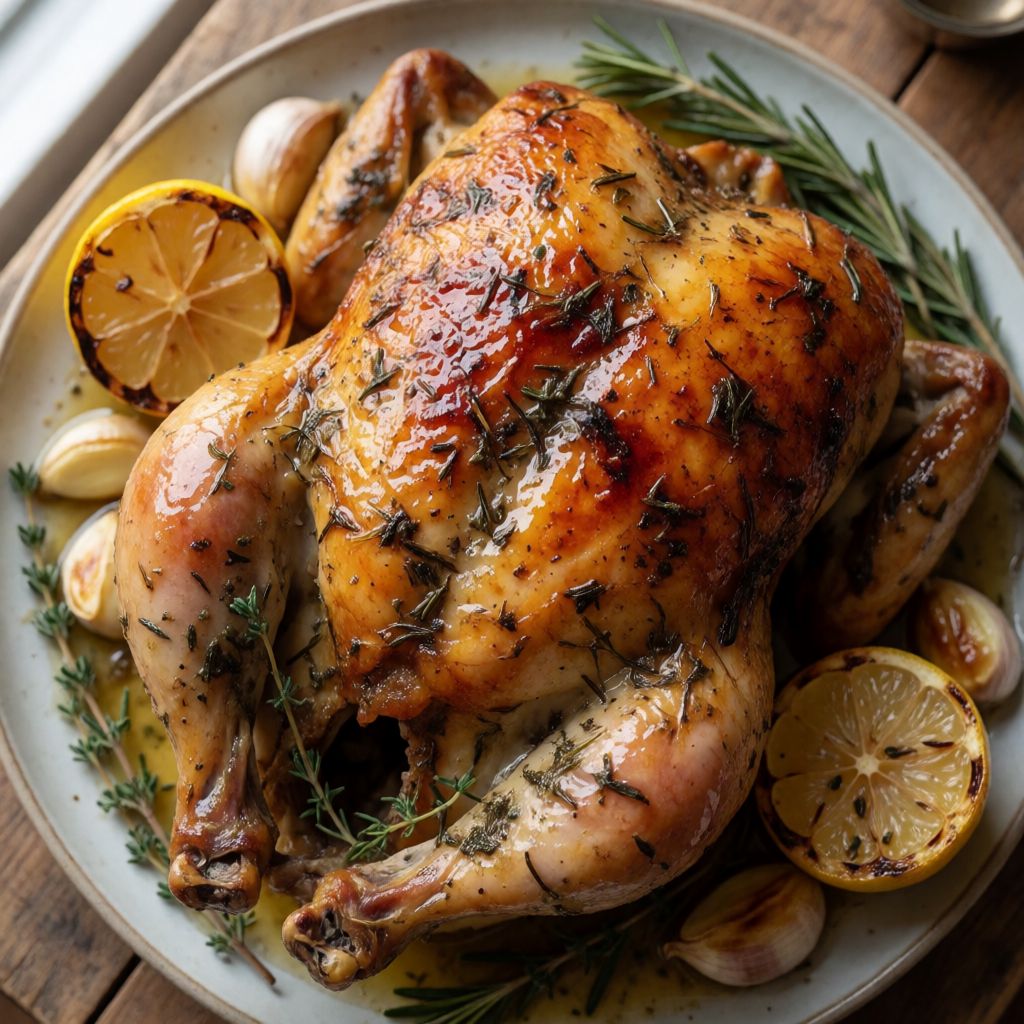
 AI photo
Roast Chicken with Herbs and Lemon
A whole chicken roasted with lemon, garlic and fresh herbs for a simple family roast.
Labels are worked out automatically from the ingredients and can be wrong. Check the packaging if it matters to you.
Ingredients








Steps
Cut the lemons in half and thoroughly wash the herbs. Crush the garlic cloves.
Separate the skin from the chicken breast by sliding your fingers between the skin and the meat near the neck. Create a deep pocket, taking care not to tear the skin.
Drizzle the pocket with lemon juice, season with salt and pepper, then fill it with rosemary, thyme, butter and the crushed garlic.
Season the whole chicken inside and out with salt and pepper, then stuff it with the remaining lemons and herbs.
Cook the chicken on the barbecue over indirect heat until it reaches an internal temperature of 75°C.
Alternatively, bake in a preheated fan oven at 180°C for 45-60 minutes.
52 minServe with good bread, pickled red onion, pickled cucumbers and a crisp green salad.
What was changed
The oven temperature was rounded to fit this market's display step.
This is not fried chicken wearing an oven mitt — it is roast chicken built on one simple engineering problem: the breast cooks faster than the thigh, and the skin wants to burn before either one is ready. Everything in this recipe exists to solve that, not to make the bird taste more lemony.
The pocket you make between skin and breast meat is the real trick here. You are building an insulating layer — butter, garlic, lemon juice, herbs — that sits between the heat source (skin) and the thing that dries out fastest (breast). As the butter melts, it bastes the meat from inside, slower than any spoon could manage from outside, and it keeps the skin from scorching down onto bare muscle fibre too early. Stuffing the cavity with the rest of the lemons and herbs is a second, smaller version of the same idea: steam, not deep penetration.
What decides whether this works is not minutes but a thermometer reading — 75°C in the thickest part of the thigh. Some say you can tell a chicken is done by how the juice runs or by wiggling the leg. No — because by the time the juice runs clear, the breast is already fifteen degrees past where it should be. A thermometer costs less than the chicken you are about to ruin without one.
Indirect heat, whether on a barbecue or in the oven, is the other non-negotiable. Direct heat chars skin before the thigh is anywhere near 75°C, because fat renders and the skin browns at a lower temperature than the meat finishes cooking at. Give the heat room to travel around the bird, not straight into it.
On the chicken itself: buy whole, not a pile of parts, because the point of this method is the size difference between breast and thigh working in your favour once you understand it — it's useless information if you've already had the butcher cut it up. A bird around 1.6–1.8kg feeds four without stretching the serving sizes thin, which lines up with what's written here.
Lemons do three different jobs and none of them is 'lemon flavour' in the way people imagine. The halves in the pocket contribute acid and moisture against the breast, where dryness is the actual enemy. The halves stuffed into the cavity release steam as they heat, carrying aromatic oil from the zest through the inside of the bird — it scents more than it penetrates, because muscle is dense and juice doesn't travel sideways through it the way people like to believe. If you've got none, a splash of any sharp citrus juice does the moisture job, though you lose the steam-and-peel aromatics.
Rosemary and thyme are chosen because they are woody herbs — the stems hold their oils through an hour of heat instead of collapsing into bitter mush the way soft herbs (parsley, basil) would. If you don't grow them, sage behaves the same way; dried herbs work in the cavity stuffing but won't survive the pocket next to the butter with the same presence.
Butter under the skin, not oil, because you want a fat that's partly milk solids — it browns and smells different from a neutral oil, and that smell is what you're chasing right under the crispest part of the bird. Ghee or a flavourless oil will baste just as well if you're avoiding dairy, but you trade away that particular richness. Crush the garlic rather than mince it: crushed cloves release oil slowly as they warm, minced garlic burns fast and turns bitter sitting that close to direct heat under the skin.
Fan ovens push air harder than a standard setting, so 180°C fan behaves closer to 200°C still — that's why the time given is the lower bound, not a guarantee; open the door and look at the skin colour and check the thigh with a thermometer rather than trusting the clock alone. And once it's out, give it a few minutes before you cut — not written in the steps, but true of every roast: the juice needs time to settle back into the fibres instead of running straight onto the board.
This dish sits comfortably inside the Sunday roast habit without needing potatoes and gravy to justify itself — the bread, pickled onion and cucumber do the same job cheaper, mopping up fat and cutting richness, which is really what a Sunday roast has always been about: a bit of theatre around a bird that, done properly, needed almost none of the fuss people put into it.