
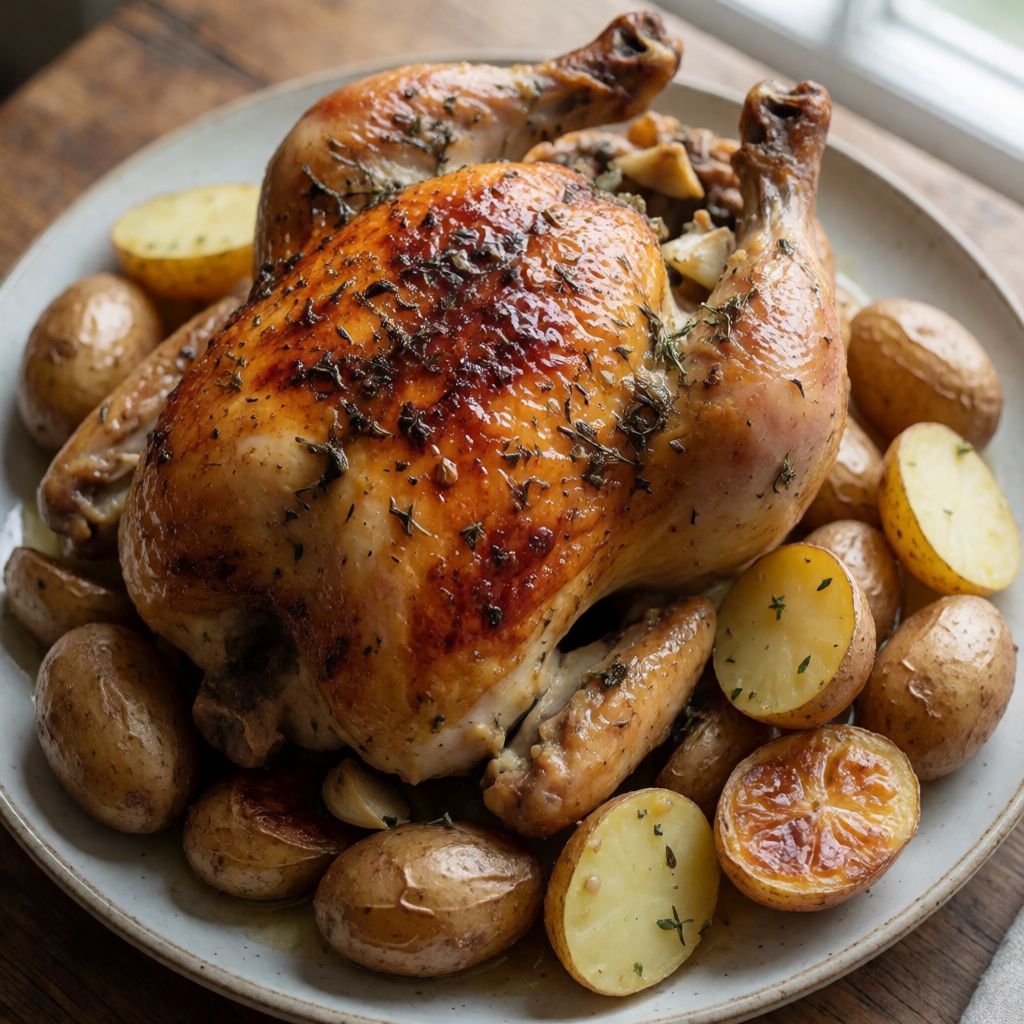
 AI photo
Oven-Roasted Chicken with New Potatoes
A simple roast chicken seasoned with fresh herbs and garlic, served with roasted new potatoes.
Ingredients
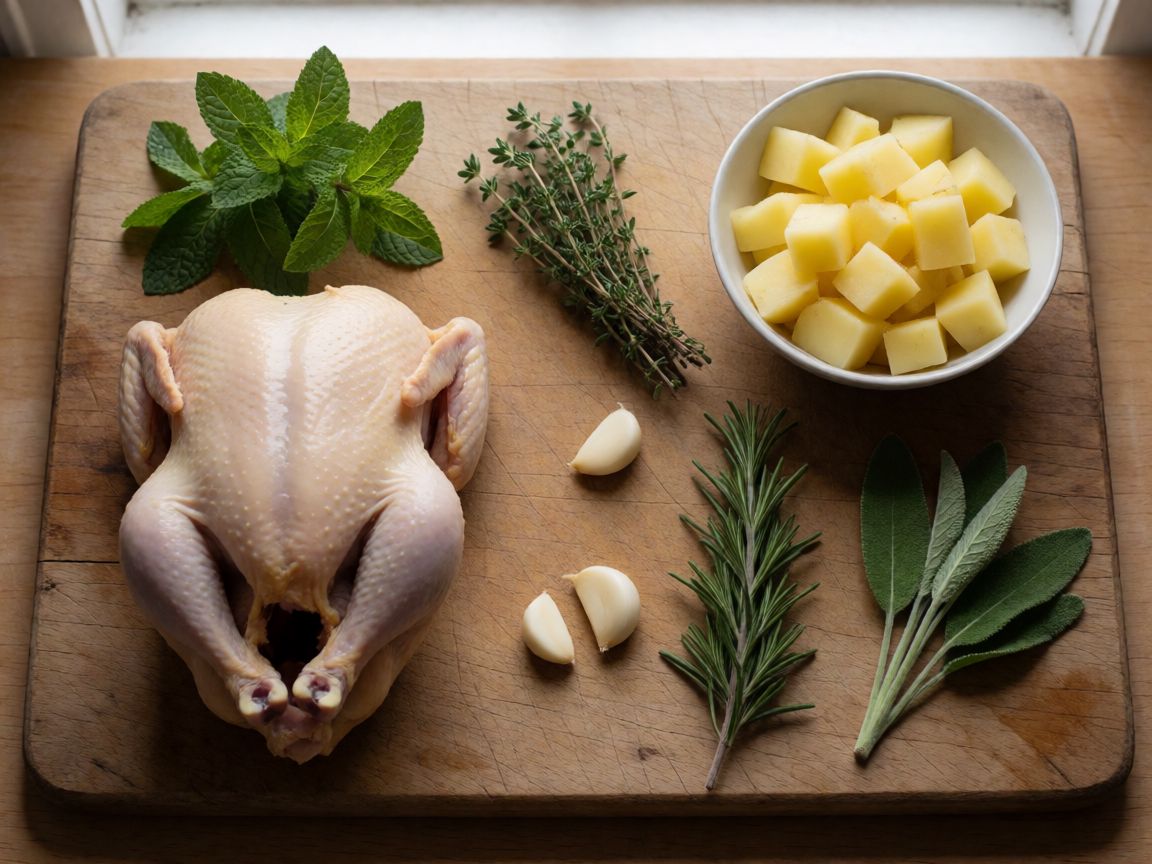
- 1 pcs Whole chicken about 1.2 kg
- 1 bunch Mint
- 1 bunch Thyme
- 1 bunch Rosemary
- 1 bunch Sage
- 2 clove Garlic
- pinch Salt to taste
- pinch Black pepper to taste
- 500 g New potatoes
- 60 ml Olive oil










Steps
Wash and pat dry the herbs (mint, thyme, rosemary, sage). Finely chop them together with the garlic.
Transfer the herb mixture to a bowl, add the olive oil, salt and black pepper, and mix well.
Rub the chicken with the seasoning mixture, inside and out.
Place the chicken in a roasting tin greased with olive oil and roast at 220°C.
30 minMove the tin to the top shelf of the oven, lower the temperature to 200°C and roast for a further 30 minutes.
30 minWash and pat dry the new potatoes, cut them in half lengthways and toss with olive oil, salt, pepper and rosemary.
Take the chicken out of the oven, drain off most of the juices and arrange the potatoes around the chicken.
Spoon a little of the juices over the chicken, return the tin to the oven and roast for a further 60 minutes.
60 minCheck the chicken is cooked through — the internal temperature should reach 74°C. Serve at once.
This is the Sunday roast stripped to its essentials: a whole bird, a herb crust, and potatoes that finish in the chicken's own fat. Nothing exotic, nothing you need a shop trip for beyond a few bunches of soft herbs. What decides whether it works isn't the oven temperature written on the recipe — it's whether you trust what's happening inside the bird rather than the clock on the wall.
Four herbs chopped fine with garlic and bound in olive oil isn't decoration. Rubbed under the skin and into the cavity, it does two jobs: the oil carries the herb oils against the meat so they actually flavour it rather than just sitting on top charring, and the salt in that paste starts drawing moisture to the surface early, which is what gives you skin that crisps instead of skin that just dries out. Some say you should salt only at the end "so the meat doesn't go dry" — no, the opposite happens: salt applied early and left to work pulls moisture out, that moisture dissolves the salt, and it gets pulled back in, seasoning the meat through rather than coating the surface. A dry, leathery bird is nearly always a bird rubbed with salt five minutes before it went in, not one rubbed an hour before.
Pick a bird around 1.2kg and don't scale the herbs down because it looks small — a chicken this size still needs enough paste to coat skin, flesh under the skin where you can get a hand in, and the cavity. Thin, mean seasoning is how you end up with a bird that tastes fine on the outside and of nothing in the middle.
The four herbs aren't interchangeable with each other, but as a group they can be swapped: what you want is one soft, leafy herb for brightness (mint, or parsley if mint feels wrong with chicken to you), and two or three woody, resinous ones for backbone (thyme, rosemary, sage — oregano or marjoram would sit in that second group too). If you've only got rosemary and thyme in the garden, use those two in a heavier hand rather than chasing all four from a supermarket that's sold out of sage. Garlic here is for depth, not heat — two cloves chopped fine, not crushed to paste, so it browns gently in the oil rather than burning to bitterness against hot tin.
The olive oil is doing a specific job: carrying flavour and helping the skin crisp, nothing more mystical than that. The rule for a substitute is simple — any oil with no smell of its own that can take the heat, so a flavourless vegetable or sunflower oil works, but skip anything that announces itself, like a strongly flavoured rapeseed oil, because it'll fight the herbs rather than carry them.
New potatoes are chosen, not incidental — their skins are thin enough to crisp without peeling, and their flesh is dense enough not to collapse in ninety minutes of residual oven time. Halved lengthways gives you more cut surface sitting in the fat, which is where the flavour and the crisping both happen; a potato left whole in its skin would mostly just steam. If new potatoes aren't to hand, any waxy potato cut into similarly sized pieces will do — a floury baking potato will fall apart before it's had the chance to brown.
On an ordinary domestic hob and oven, honesty matters more than precision: your oven's "220°C" and your neighbour's aren't the same heat, ovens vary by 10–15°C easily, fan or not, calibrated or not. Use the numbers as a starting point and the colour of the skin and the give of the potato — tender through, not raw-firm — as your actual instructions. A thermometer costs very little and removes the guesswork a dial can't give you; without one, pierce the thigh at the joint and look for clear juice, not pink.
And build in the patience this wants. Ninety minutes isn't a number to rush past by cranking the heat — a hotter oven won't get you there faster, it'll just burn the outside before the inside has caught up. Sunday roast earned its name because it's the one day people had the time to let a joint sit in the oven and do this properly; that's not sentiment, that's just what an unhurried hour and a half looks like when nobody's watching the clock for the bus.