
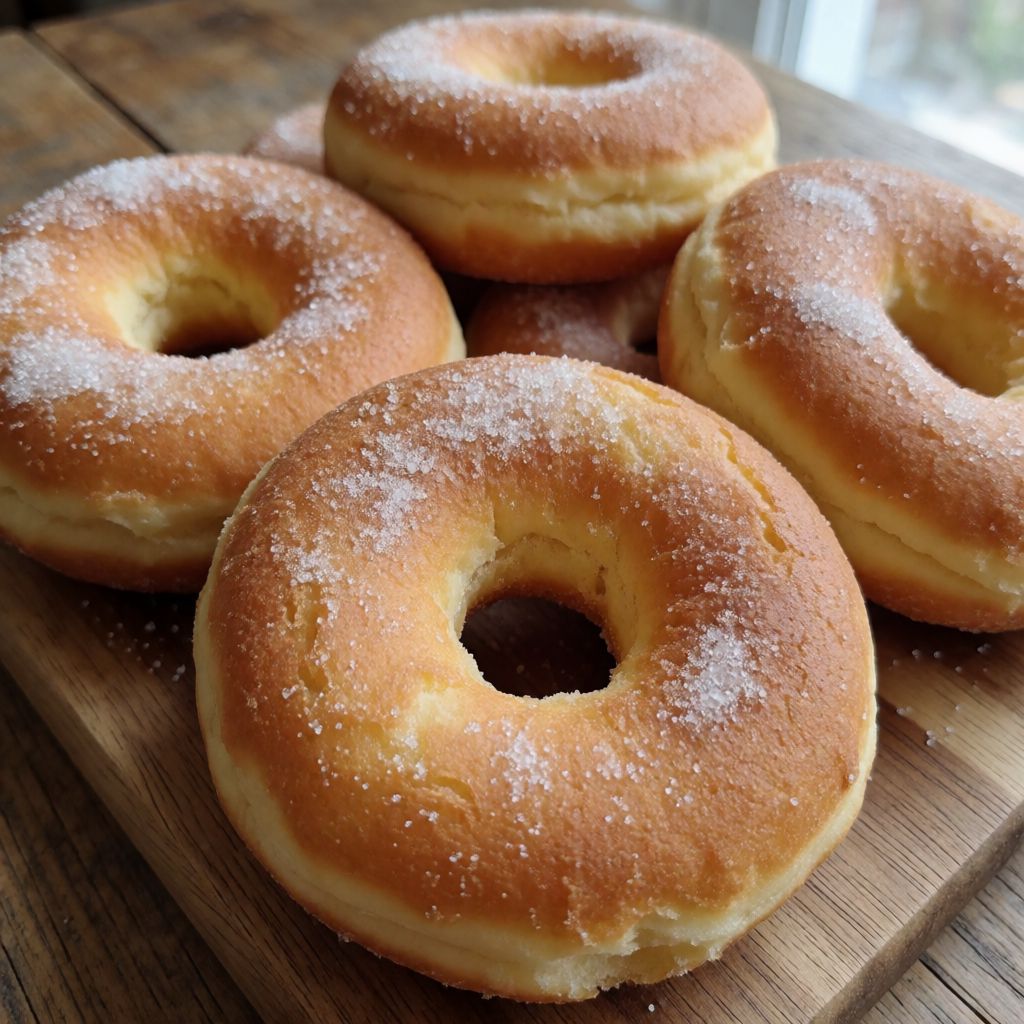
 AI photo
Sweet Baked Doughnuts
Soft, fluffy doughnuts that are baked rather than fried, finished with melted butter and a dusting of sugar.
Labels are worked out automatically from the ingredients and can be wrong. Check the packaging if it matters to you.
Ingredients
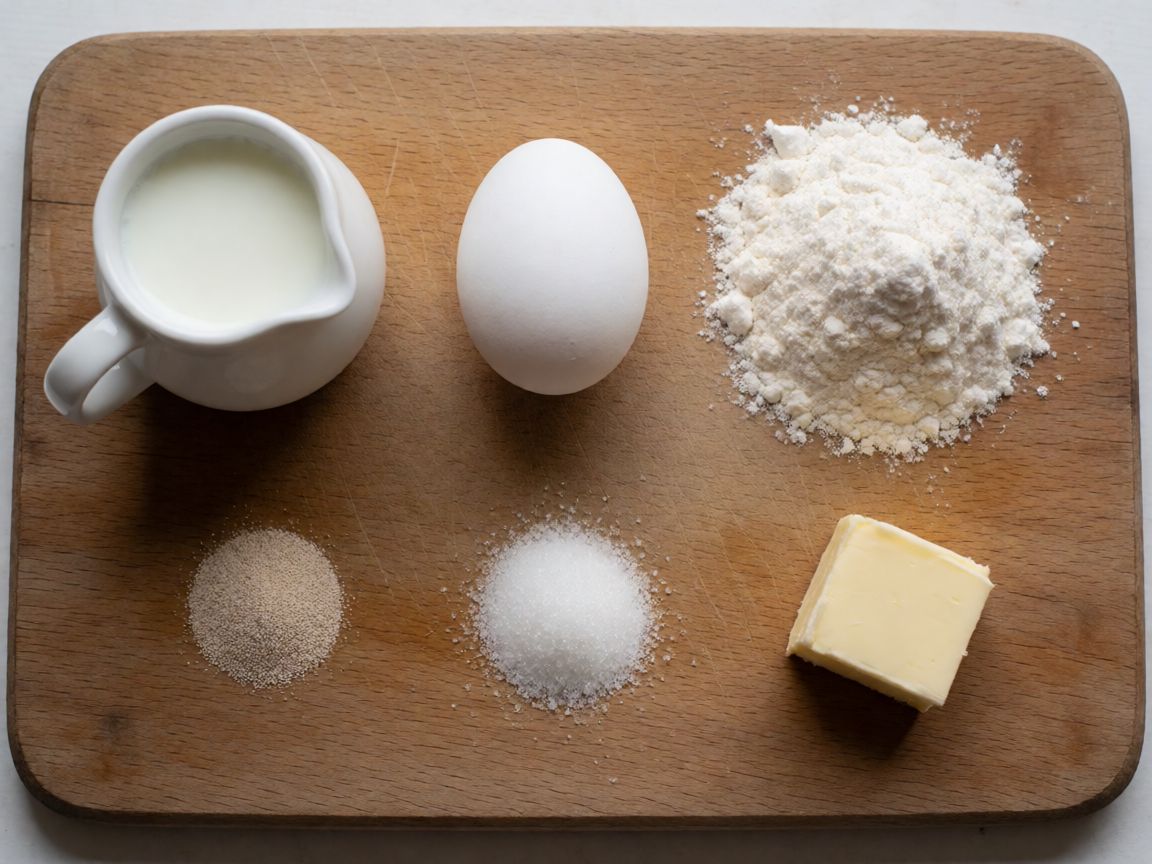
- 200 ml Milk
- 1 pcs Egg
- 15 g Yeast or 5g dried yeast
- 500 g Plain flour
- 100 g Caster sugar plus a little extra for dusting
- 40 g Vegetable oil
- Butter to taste






Steps
In a large bowl, sift the flour and add the sugar, mix by hand, then beat in the egg.
In a small bowl, crumble the yeast into the warm milk and stir until fully dissolved.
Gradually pour the yeast mixture into the flour mixture so it is fully absorbed.
Add the vegetable oil and knead energetically by hand until the dough is smooth.
Shape the dough into a smooth ball, cover the bowl with cling film and leave to rise.
120 minRoll out the dough on a lightly floured surface to a thickness of 4-5mm and cut out doughnuts using two round cutters of different diameters.
Place the doughnuts on a baking tray lined with parchment paper and leave to rise in a warm, dry place.
60 minBake in a preheated fan oven at 180°C.
9 minLet cool, then if desired brush with melted butter and sprinkle with sugar.
These are not doughnuts in the deep-fat sense — no oil bath, no scorch marks from a fryer thermostat gone wrong. This is a yeasted bun, shaped into a ring, and baked. The ring is not decoration: a hole in the middle gives you a thin body that cooks through evenly in nine minutes, instead of a thick disc with a raw, doughy heart underneath a browned top.
What decides whether it works is the dough, twice over. The first rise is where the yeast builds structure inside the gluten net — this is where lightness and flavour actually come from, not from the sugar dusted on at the end. The second rise, after you've cut the rings, builds the final lift. Skip it or rush it and you get a bread roll wearing a sugar coat, dense and a little sad.
Myth worth naming: "doughnuts are fried, full stop." No — fried and baked are two different foods wearing the same ring shape. A fried doughnut gets its lift from steam trapped under a crust that sets almost instantly in hot oil. A baked one has no oil crust to hold anything up, so the yeast does all the work, twice, and patience is the only tool that helps it.
180°C in a fan oven moves hot air fast enough to set the surface before the inside dries out — that's the whole reason nine minutes is enough. Go in cooler or leave it longer thinking "more surely means better," and you dry the crumb instead of baking it through.
Milk, warmed — think the temperature of tea you'd actually drink, not tea straight off the kettle. Too hot and you kill the yeast outright, which is the real reason behind the complaint "my dough never rose" — the yeast usually isn't guilty, the milk is. Too cold and the yeast just sits there, inert, and gets blamed again for nothing.
Yeast: 15g fresh crumbles and dissolves fast, and gives you a rise you can actually watch — the milk clouds, then turns faintly foamy. 5g dried does the same job slower, off the same warm milk, not a hotter one.
Flour: plain, on purpose. This dough needs enough gluten to hold its shape and trap gas, but not the extra protein of a bread flour, which would push you toward something chewy and loaf-like instead of a soft bun. Plain flour here is the right amount of structure, not the maximum.
Egg: goes into the sugar-and-flour before the yeast liquid arrives, so it binds in evenly rather than scrambling into streaks when the warm milk hits it.
Sugar, 100g: mostly food for the yeast early on, and flavour later — the dusting at the end is a finish, not the point. If you've only got granulated, it works the same; caster just dissolves faster into the dough.
Oil, 40g: a fat with no voice of its own, added after the dough has already come together, so it tenderises the crumb without getting in the way of the gluten forming first. Any neutral oil does this job — sunflower, rapeseed, whatever's in the cupboard and smells of nothing when you unscrew the cap.
Butter, melted and brushed on after baking, while the doughnuts are still warm: this sits on the surface for shine and flavour, it has no business inside the dough itself. Optional, and the doughnut stands up fine without it.
The two cutters matter more than they look like they should. One for the outer ring, a smaller one for the hole — don't leave it out thinking it's purely decorative. Without the hole you get a thick disc that browns outside in nine minutes at 180°C while staying gummy in the centre; the ring is what lets the heat reach all of the dough at once, not just the crust.