
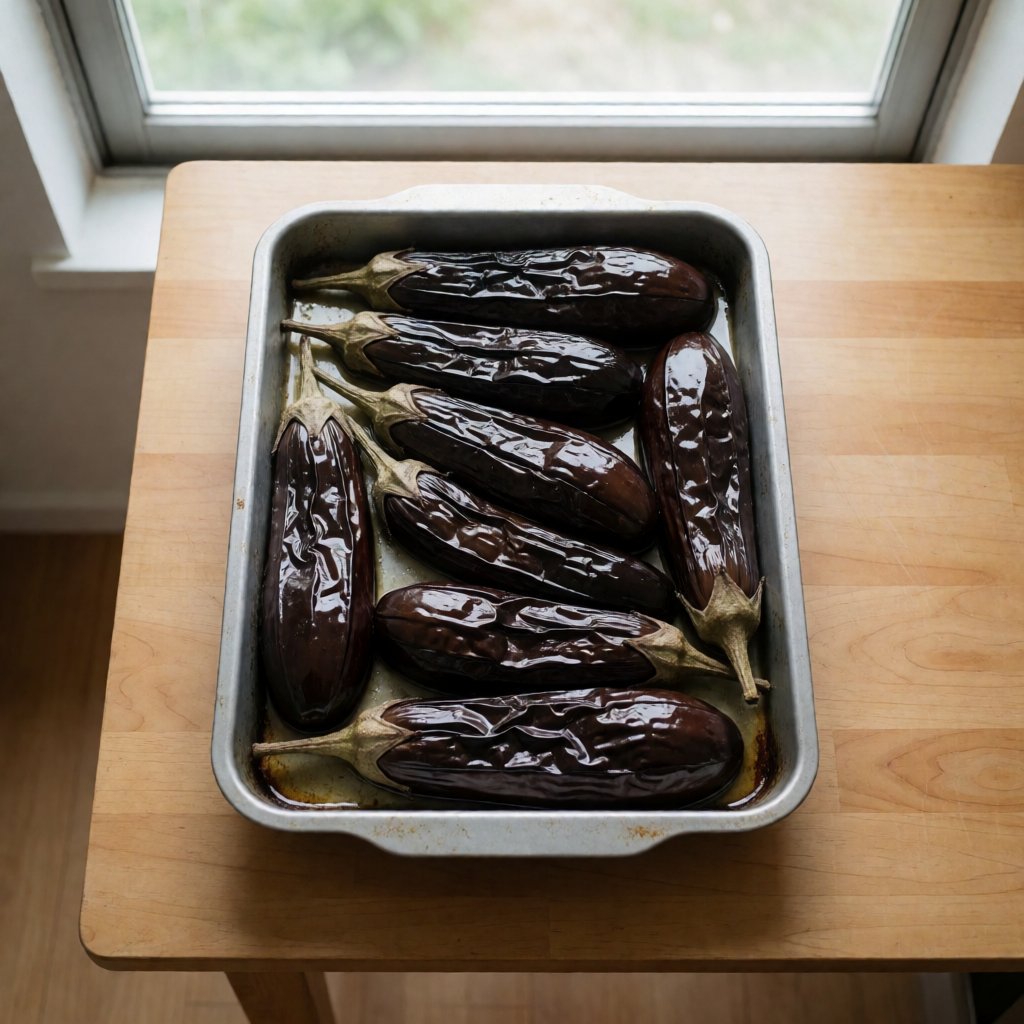
 AI photo
Baked Aubergine Caviar
A traditional Ukrainian baked aubergine spread with onion, tomato, garlic and a touch of vinegar.
Labels are worked out automatically from the ingredients and can be wrong. Check the packaging if it matters to you.
Ingredients





Steps
Prick the aubergines with a fork and place them whole on a baking tray.
Put the tray in the oven at 200°C for 20 minutes.
20 minTurn the aubergines over and bake for another 20 minutes.
20 minRemove the tray from the oven.
Let cool, peel, chop finely, and mix with the finely chopped onion, tomato, garlic, oil and vinegar.
This is the dish people in the Caucasus and the Balkans call aubergine caviar — a joke of a name, because what you're eating is smoky, soft vegetable flesh dressed with raw onion, tomato and garlic, not fish eggs. It earned the name from its colour and its job: a cheap, dark, savoury spread when the real caviar was for someone else's table. What decides whether it works isn't whether the aubergine is cooked through — it will be cooked through well before it's right. What decides it is whether the skin has blistered and the flesh has properly collapsed, because that collapse is what lets steam escape from inside while smoke flavour settles into what's left. An aubergine that's merely soft but still holds its shape is undercooked for this dish, even if a fork slides through it easily.
The oven here is standing in for an open fire. Traditionally you'd lay these straight on hot coals or embers, turning them as the skin on one side blackens and splits — the char isn't a mistake, it's the flavour. Your tray at 200°C does the same job more slowly and more evenly: the skin tightens, blisters, and eventually gives way, and the flesh inside essentially steams in its own moisture. That's why you prick it first — without an escape route for that steam, the skin seals shut and the aubergine can split on its own, messily, inside your oven. A controlled puncture beats an uncontrolled burst.
Patience is doing real work in step five, even though it looks like the quiet bit. Let the aubergines cool before you touch them — not just so you don't burn your fingers, but because the flesh is still weeping bitter, slightly acrid juice right out of the oven, and that liquid needs somewhere to go rather than being folded straight back in. Give it the time sitting on the tray, and you'll find some of that juice pools and can be tipped away before you even start chopping. Rush this and you carry bitterness into the finished dish that no amount of vinegar will fix afterwards.
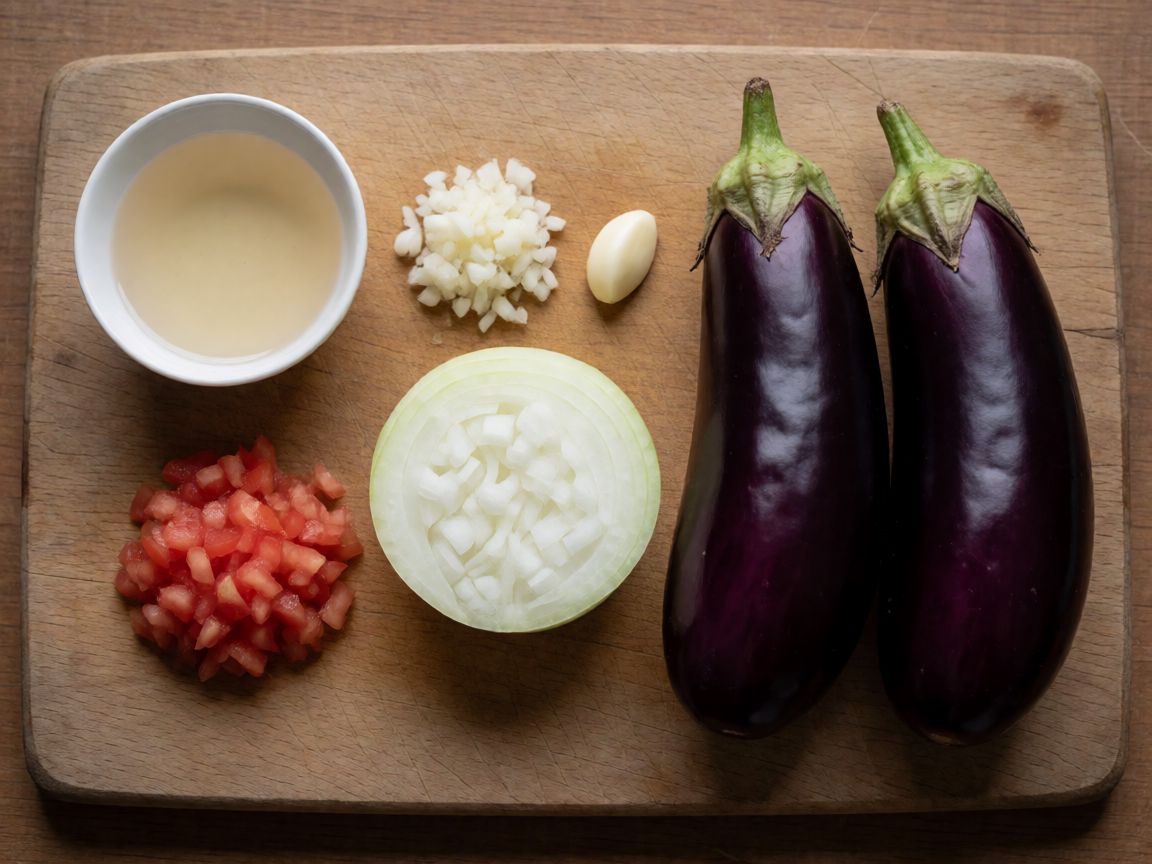
The aubergine itself is the only ingredient with real technique attached, so choose it with that in mind: firm, heavy for its size, skin taut with no give and no wrinkling before it's even been near heat. A soft or wrinkled raw aubergine has already lost water it should be losing in your oven, under your control, and it'll cook unevenly. Size matters more than it looks like it should — two at 600g total is a reasonable pairing, but if yours run smaller, expect them to finish sooner than the time given, and if they're large, expect longer. The fork-pricking and the turn at twenty minutes both exist to manage the same problem from two angles: even steam release, even contact with heat on a flat domestic tray where there's no coal bed underneath to do the work for you.
Onion goes in raw and finely chopped, and that's deliberate — its sharpness is a foil to the mellow, smoky aubergine, not something you want to soften by cooking. If raw onion sits too aggressively on your palate, you can rinse it briefly under cold water after chopping, which takes the edge off without cooking it. Tomato wants to be properly ripe, soft enough to collapse a little under the knife — out of season in the UK, a good vine tomato left to ripen on a windowsill for a day or two beats a hard supermarket one straight from the fridge, or use a well-drained tinned tomato in winter rather than force a pale one to do a job it can't.
Garlic, one clove, finely chopped, stays raw too, and it's there for bite rather than depth — think of it as seasoning, not substance. If you find raw garlic too sharp, you can halve a clove and rub it round the mixing bowl instead of chopping it in, which gives you the suggestion of garlic without the full hit.
The oil's job is simply to carry everything and add a little richness without announcing itself — the criterion is an oil with no smell of its own, so sunflower is the usual choice, but rapeseed or a light groundnut oil would do exactly the same work. Olive oil would fight the aubergine's own smoky note, so save it for other dishes. The vinegar is there to cut through that same richness and wake the whole mixture up — a teaspoon of any sharp vinegar does the job, wine vinegar if you have it, malt vinegar from the back of a British cupboard if you don't; this isn't a dish precious about which acid you use, only that there is one.
There's no kazan needed here and no lid either — a plain baking tray and an ordinary domestic oven do exactly what an open fire and hot ash would have done, just slower and without smoke in your kitchen. Line the tray with foil if you don't fancy scrubbing off sticky aubergine juice afterwards; that's housekeeping, not recipe.
·