
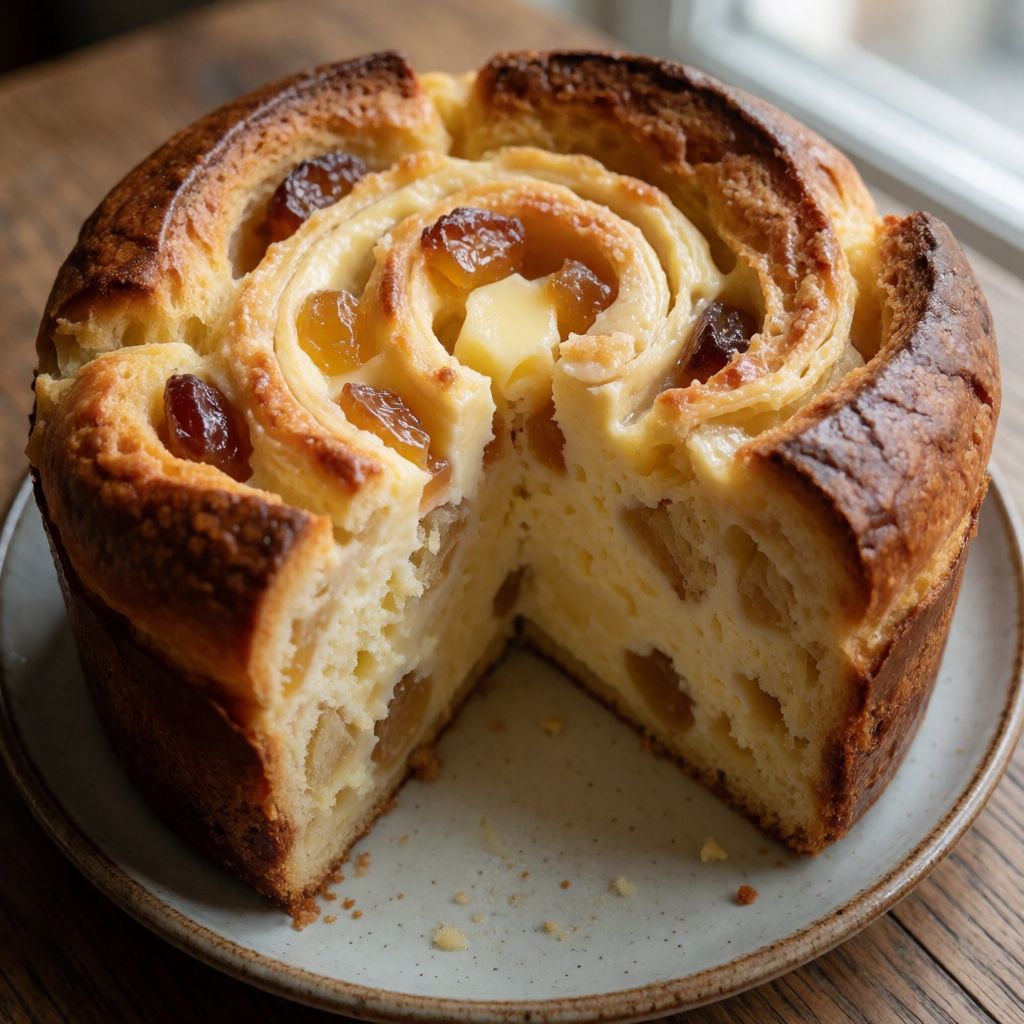
 AI photo
Baked Panettone Pudding
A baked custard pudding made with panettone, soaked in milk, double cream and Grand Marnier, finished with lemon zest and caramel.
Labels are worked out automatically from the ingredients and can be wrong. Check the packaging if it matters to you.
Ingredients
- 400 ml Milk
- 120 g Caster sugar
- 400 ml Double cream
- 3 pcs Eggs
- 2 pcs Egg yolks
- 300 g Panettone
- 1 pcs Lemon zest
- 4 tbsp Grand Marnier
- Caramel sauce to taste









Steps
In a bowl, combine the eggs, egg yolks and caster sugar, and whisk until the sugar has completely dissolved.
Continuing to whisk, gradually add the milk and double cream.
Add the lemon zest, Grand Marnier and panettone. Leave the panettone to soak in the mixture.
10 minGrease aluminium moulds with butter and fill with the prepared mixture.
Bake in a water bath at 170°C until the puddings are firm.
35 minLet the puddings cool, place on plates and decorate with caramel or melted chocolate.
Panettone pudding is what happens when a British Christmas cupboard collides with an Italian one: too much panettone left over, and the custard trick the English already use on stale bread. You tear the panettone into a mould, drown it in an egg-and-cream custard scented with orange liqueur and lemon, and bake it gently until the custard sets round the cake instead of into scrambled egg.
What decides whether it works is not the oven dial but what happens inside the mould: does the custard reach every piece of panettone evenly, and does the heat reach the custard slowly enough for the egg proteins to link into a soft gel rather than curdle into lumps sitting in watery whey. The caramel on top, the liqueur you pick - that's dressing. The custard and the soak are the dish.
Myth: "custard sets because the oven is hot." No - it sets despite the oven being hot, which is exactly why you stand the moulds in water. Water can only get as hot as itself boiling, so it puts a ceiling on how fast heat reaches the eggs. Put those moulds straight on the oven shelf and you'll get a rubbery skin with a pool of yellow liquid underneath, because the edges cooked three times faster than the middle ever did.
Three whole eggs plus two extra yolks isn't fussiness, it's division of labour. Egg white protein is what actually sets a custard firm; yolk is what makes it silky instead of rubbery. All whole eggs and you get something closer to a savoury flan, bouncy and a bit tough. All yolks and it never sets enough to hold the panettone's shape when you turn it out. The ratio here gives you a pudding that holds a slice but still cuts soft.
Whisk the sugar into the eggs before any liquid goes near them, not after - caster sugar dissolves fastest against the slight warmth and movement of beaten egg, and sand left undissolved in a baked custard is a defect you can't fix later, only feel as grit in the next mouthful. Milk and double cream together give you a custard that's rich without being so heavy it never seeps right through the panettone; all cream and it would sit on the surface, all milk and the pudding would taste thin next to that sweet, buttery bread.
Lemon zest, not juice - the zest carries the aromatic oil without the acid, and a dairy custard meeting raw lemon juice is asking for the dairy to curdle before it even reaches the oven. Grand Marnier is doing the same job the candied peel inside the panettone is already doing: bitter orange. Any orange liqueur earns its keep here - Cointreau, triple sec, anything that smells of orange peel rather than orange squash. No alcohol in the house, or none wanted: use the zest of another orange and a spoon of its juice stirred in at the very end, after the eggs and dairy are already combined, so it never meets them cold and raw.
Panettone itself is really a stand-in for "any egg-rich, openly crumbed sweet bread that's a day or two past fresh." Brioche does the job. So does a hot cross bun, split and torn, if Easter's nearer than Christmas when you're reading this. What won't work is a dense, tight-crumbed white loaf - it doesn't have the air pockets to drink the custard, it just goes gluey on the outside and stays dry in the middle, because there's nowhere for the liquid to travel.
For the water bath in an ordinary flat, there's no kazan trick needed, just a roasting tin from the kettle filled with hot water, deep enough to come most of the way up the sides of whatever moulds you're using - small pudding basins, ramekins, dariole moulds, anything that will survive an oven and sit steady in water without tipping. Butter the inside of each mould properly, right into the corners: a dry patch of metal is where the custard touches hottest and sticks, giving you a torn, scorched edge instead of a clean turn-out.
Forget counting to thirty-five and pulling them out on the dot. Look at the centre: the edges will have gone pale and matte, set hard enough that they don't move when you nudge the mould, while the very middle still trembles slightly, like the skin on a bowl of water someone's just put down. That's the point to stop - it keeps setting a little as it cools, and letting it cool before serving isn't neatness, it's finishing the cooking without any more heat. Cut it too soon and what should be a soft gel comes out as custard soup.