
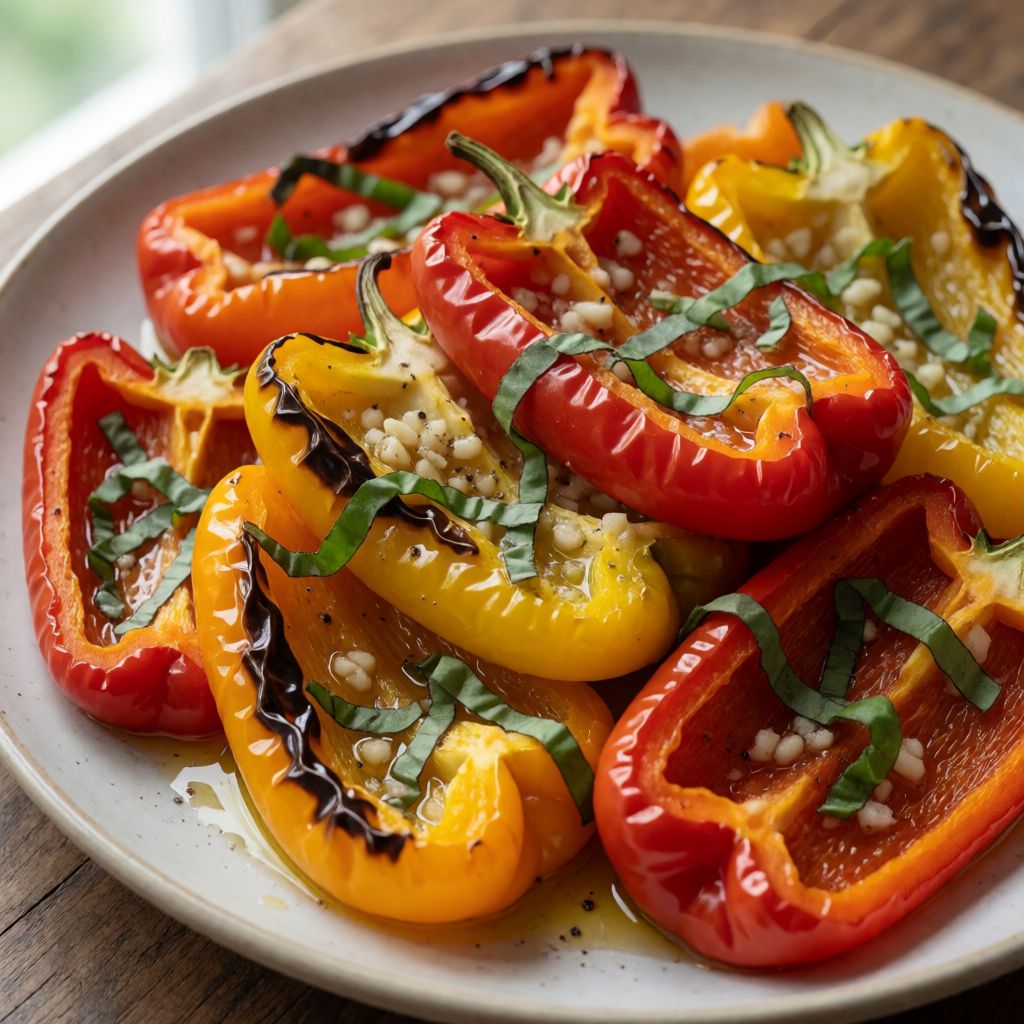
 AI photo
Roasted Peppers
Whole peppers roasted until tender, peeled, sliced and dressed with olive oil, garlic and basil.
Labels are worked out automatically from the ingredients and can be wrong. Check the packaging if it matters to you.
Ingredients
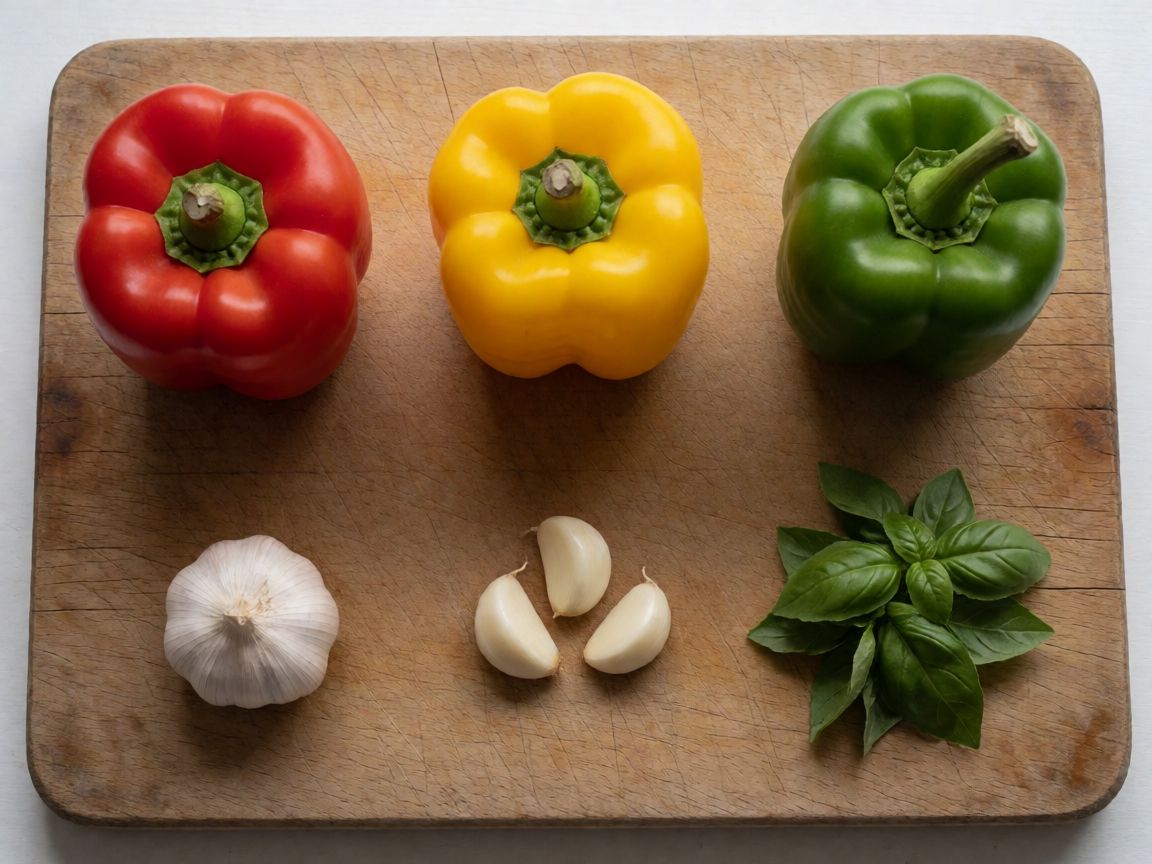
- 4 pcs Bell peppers
- 3 clove Garlic
- Basil to taste
- Olive oil for drizzling
- Salt to taste
- Black pepper to taste






Steps
Wash the peppers thoroughly under running water and dry them with a clean towel.
Line a baking tray with baking paper and place the whole peppers on it, piercing their skins.
Roast the peppers in a preheated oven at 200°C, using the static (fan-free) setting.
35 minRemove the peppers from the oven and peel off the skins.
Cut the peppers in half, remove the seeds and slice them into thin strips.
Transfer the peppers to a plate and drizzle with olive oil.
Add salt and black pepper to taste.
Season the peppers with fresh basil and add the garlic cloves.
Cover the plate with cling film and place it in the refrigerator.
Remove the garlic cloves and serve with slices of bread.
This is peppers with their one unlikeable trait removed — the leathery skin — leaving just the sweet, soft flesh underneath, dressed in oil and quietly perfumed with garlic and basil while it sits in the fridge. It's not a cooked dish in the usual sense by the time it reaches the table; the oven only does the first half of the job, which is to loosen the skin and concentrate the sugar. The second half happens cold, in the fridge, while flavours migrate into the flesh instead of sitting on top of it. Four peppers, a side for four, bread alongside to catch the oil.
What decides whether this works is whether the skin blisters and chars without the inside drying to cardboard — and that's a question of still heat, not fan heat. A fan oven moves hot, dry air fast and even; it's brilliant for crisping a roast potato on all sides, useless here, because it dehydrates the pepper's surface before the skin has had time to bubble, split and loosen from the flesh underneath. Static heat, radiating from the element, is slower and gentler — it gives the skin time to blacken in patches while the pepper steams in its own moisture inside that skin. Same oven you used for Sunday's joint, different setting, and that's the whole difference.
Piercing the skin isn't decoration, it's a pressure valve. A whole pepper sealed in its own skin, heated hard, is a small bag of expanding steam — leave it unpierced and it can split violently and spit hot juice over your tray and your oven glass. One or two holes let that pressure bleed off quietly instead.
Pepper choice matters more than most recipes admit. Red, yellow and orange peppers have spent longer on the plant converting starch to sugar — that's the whole chemistry of ripening — so they roast sweeter and their skin blisters a touch more readily. Green peppers are the same fruit, picked earlier, thicker-walled, more bitter, and they'll want a few extra minutes under the grill before the skin gives up — not a failing, just a different starting point.
Garlic goes in whole, peeled, not crushed, and it comes back out before serving. That's the whole logic of it: a whole clove sitting in warm oil releases its aromatic compounds slowly and mildly, the way a tea bag releases tannin — crush it and you get the harsh, bitter edge of raw garlic the dish was never meant to carry. If you haven't got fresh garlic, don't reach for the jarred paste out of habit; a pinch of chilli flake does a different but comparable job of waking the oil up, or leave it out entirely and let the char do the talking.
Basil is there for green, grassy lift against all that sweetness and oil — fresh, torn rather than chopped, because tearing bruises the leaf cell by cell and releases its oil where a knife blade just slices through cleanly and keeps more of it locked in. Dried basil has lost most of that oil to the drying process already; it'll do in a pinch, but it tastes of hay next to the fresh leaf, so don't expect the same brightness.
On the oil: the only real criterion is that it shouldn't fight the pepper for attention. Extra virgin olive oil earns its place here because its own grassy, peppery note actually adds something rather than competing. If you're reaching for a bottle in a British kitchen and olive oil isn't to hand, a cold-pressed rapeseed oil does the same supporting job without olive's particular flavour — both are a world away from a neutral vegetable oil, which will carry the garlic and basil fine but contribute nothing of its own.
Salt and pepper go on after roasting and after peeling, never before — salting raw veg before heat pulls water to the surface, and that water would sit between pepper and tray, steaming the skin instead of letting it blister and char. Season the finished flesh and you're seasoning the dish you're about to eat, not fighting the roast.
And then the part that's easy to skip: the fridge rest under cling film. This isn't storage, it's where the dish actually becomes itself — oil picks up garlic, garlic mellows from sharp to rounded, basil's oil spreads through the whole plate instead of sitting on the top layer. There's no stopwatch for this; taste a piece of garlic before you fish the cloves out, and if it still bites like raw garlic, it needs longer. Patience here isn't optional — it's the ingredient doing the actual work once the oven's switched off.