
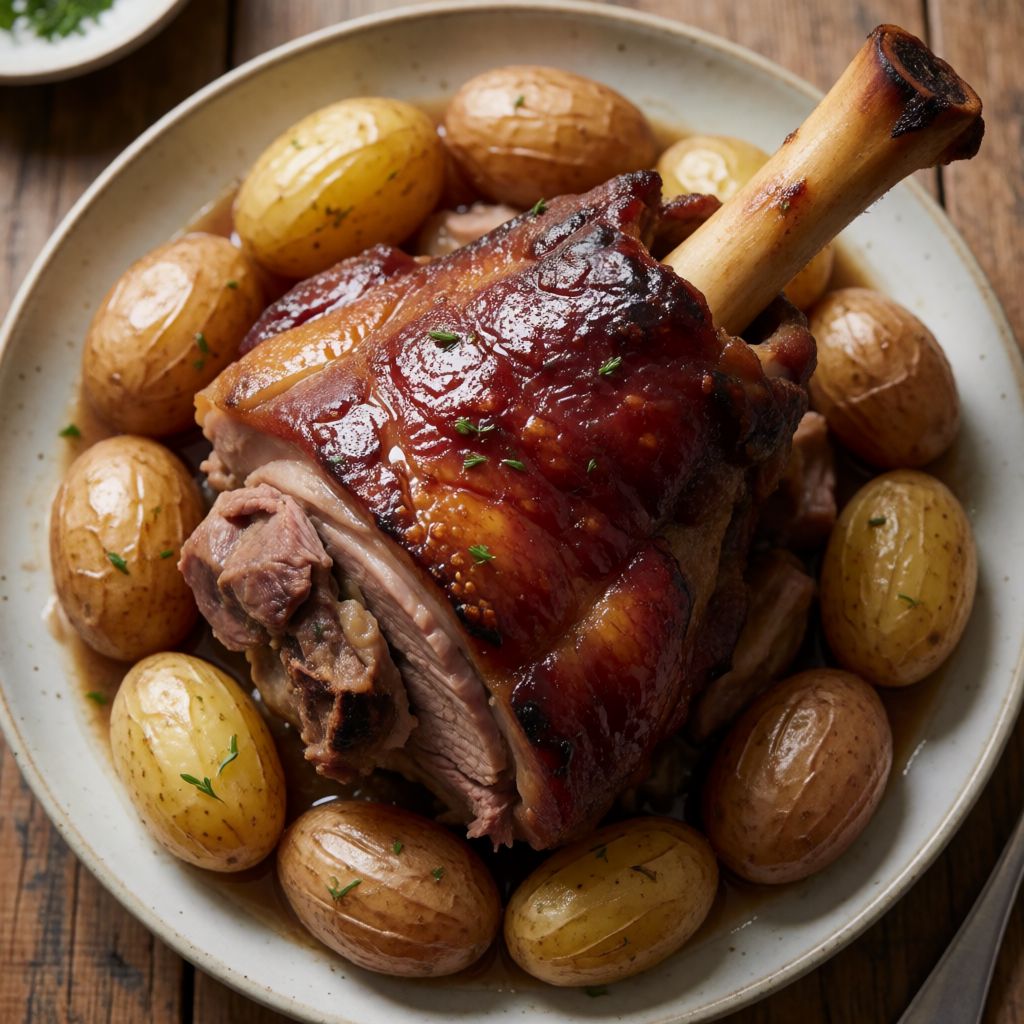
 AI photo
Roast Pork Shank with New Potatoes
A hearty roast of pork shank and new potatoes, simmered first then finished in the oven with garlic and rosemary.
Ingredients
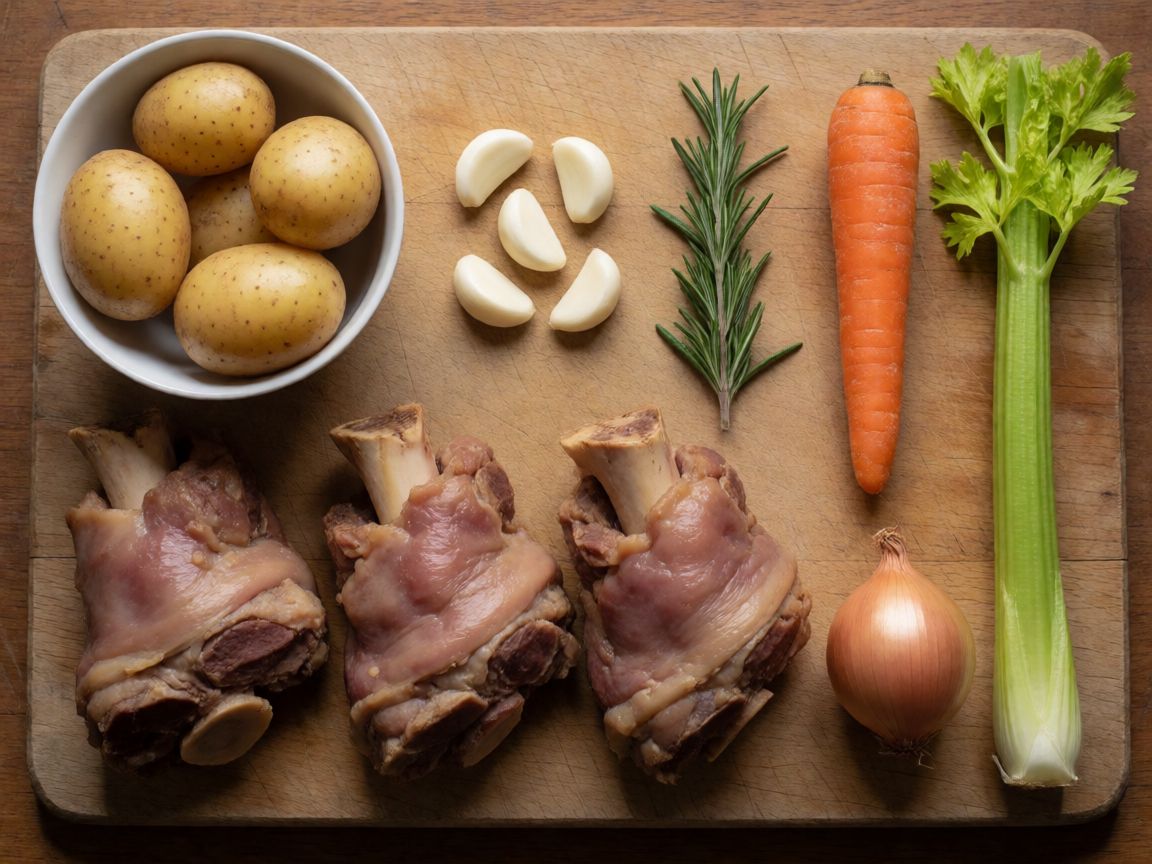
- 4 pcs Pork Shank
- 1 kg New Potatoes
- 4 clove Garlic unpeeled
- 1 pcs Rosemary sprig
- 1 pcs Carrot
- 1 pcs Celery stalk
- 1 pcs Onion
- 0.5 tbsp Black Pepper
- 1 pinch Salt
- Olive Oil to taste
- Salt to taste
- Black Pepper ground, to taste








Steps
Peel and cut the carrot into large pieces, halve the onion, and slice the celery stalk.
Put the vegetables into a large pot and cover with cold water so they are fully submerged.
Bring the water to the boil.
Add the black peppercorns and coarse salt, put in the pork shanks and simmer.
20 minTake the shanks out of the stock and place them in a roasting tin greased with olive oil or lined with baking paper.
Wash the new potatoes thoroughly, leaving the skin on, and cut into wedges.
Arrange the potatoes around the shanks.
Drizzle the potatoes and meat with olive oil, season with salt and ground black pepper, and add the unpeeled garlic cloves and rosemary sprig.
Roast at 180°C, turning the shanks and potatoes occasionally.
Check doneness: the internal temperature should reach 70°C.
This is a roast knuckle of pork, not a stew and not a dry roast — it's both, one after the other. First the shank goes into water with vegetables and spends twenty minutes simmering, which is the only way to start softening the sinew and skin that make this cut cheap in the first place. Then it goes into the oven with the potatoes, dry heat finishing the job and building the crust that water never gives you. Two heats, two different jobs — don't skip either one thinking you can do it all in the oven.
What decides whether it works is the difference between a simmer and a boil, and this is where people get it wrong. A hard boil agitates the water, and that agitation tears at muscle fibre and knocks the fat out into a cloudy, greasy broth. A simmer — a lazy, occasional bubble breaking the surface, nothing more — lets the collagen in the shank soften on its own time, undisturbed. Watch the surface of the water, not the clock, and turn the heat down the moment it looks angry.
The second thing that decides it is doneness, and doneness here is a number on a thermometer, not a guess. Some say pork shank should be falling off the bone — no, not this one, not in seventy minutes. At 70°C the meat is firm with give, still attached to the bone, still asking to be cut rather than pulled apart with a fork. If you want the collapsing, spoon-tender version, that's a different, much longer cook. This is a Sunday roast with a humble cut at its centre, and it's meant to be carved.
Pork shank — the knuckle end of the leg — is tendon, skin, bone and a thin skim of meat wrapped round all of it. It's cheap for exactly that reason: nobody wants to eat it raw-cooked, so it sits in the butcher's case waiting for someone willing to give it time. That's the whole economics of why tough, bony cuts turn up in traditional Sunday cooking across Europe — not nostalgia, just a household working out how to feed four people without buying the expensive joint. If you can't get shank, pork hock does the same job, or a lamb shank if you want a stronger flavour; what you're looking for is skin, bone and connective tissue together, because that combination is what needs the water stage before it can take dry heat.
The vegetables in the simmering pot — carrot, celery, a halved onion — aren't there to be eaten afterwards. They're a basic aromatic base, there to flavour the water the shank cooks in, nothing more exotic than that. The onion goes in halved rather than chopped so it holds together and releases its flavour slowly instead of dissolving into bits floating in your broth. And don't tip that broth away once the shanks come out — it's carrying rendered fat and the first stage of gelatin from the shank itself, and it makes a better base for soup than anything from a stock cube.
New potatoes keep their skin on for two reasons: one is simply that most of the goodness and flavour in a potato sits just under the skin, and peeling it off for a roast is work for no gain. The other is structural — a waxy new potato holds its shape when it's tossed around a hot tray in meat fat, where a floury maincrop potato would start breaking down at the edges into mush. If you can't find new potatoes, Jersey Royals or Charlotte potatoes cut into similar wedges behave the same way; a floury baking potato will still roast, but it won't hold together round the shanks the same way.
The garlic goes in unpeeled on purpose. A peeled clove sitting directly on a hot tray at 180°C scorches before the inside is even soft, and scorched garlic turns bitter, not sweet. The skin acts as a buffer — the clove steams gently inside its own wrapper and comes out soft enough to squeeze out at the table. Rosemary stays as a whole sprig for the same reason chopped herbs are a bad idea in a long roast: chopped, the exposed surface burns and turns acrid; left whole, it releases its oil slowly as it heats, more like infusing than frying.
For the oil, the only real criterion is that it shouldn't fight the rosemary and garlic for attention — something with little character of its own, olive oil being the obvious choice here, though a plain rapeseed oil does the same job without complaint if that's what's in the cupboard. Salt and pepper are genuinely to taste; the only salt that matters for the mechanism is the coarse salt in the simmering water, which seasons the meat from the inside while it's still soft enough to take it in.
And the one ingredient not written on the list: patience, twice over. Once while the shank simmers and you leave the water alone instead of turning the heat up to hurry it, and once in the oven, where the temptation is to pull the tray out the moment it looks brown. Trust the thermometer over your eyes here — a shank can look done on the outside and still be twenty degrees short in the middle, especially this close to the bone.