
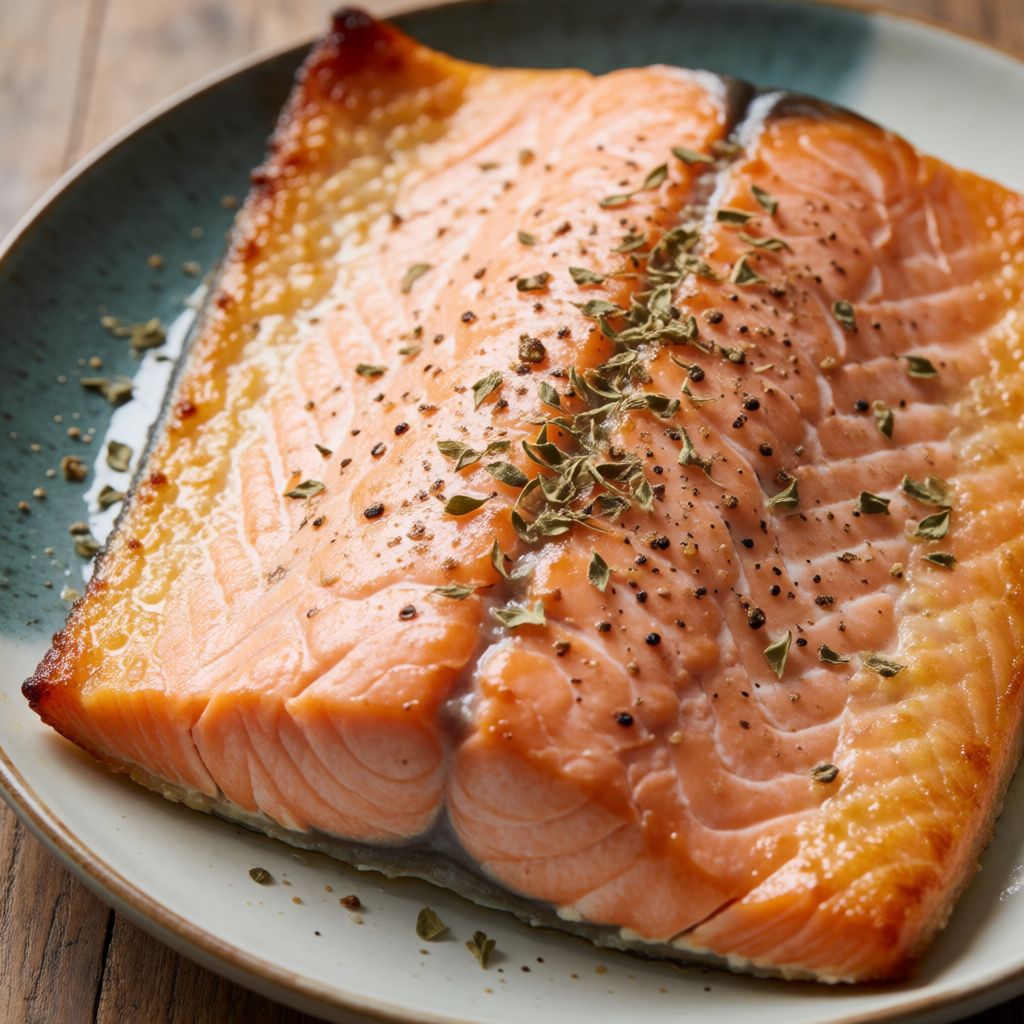
 AI photo
Oven-Baked Salmon
Salmon steaks baked in the oven with rosé wine and fresh herbs.
Labels are worked out automatically from the ingredients and can be wrong. Check the packaging if it matters to you.
Ingredients
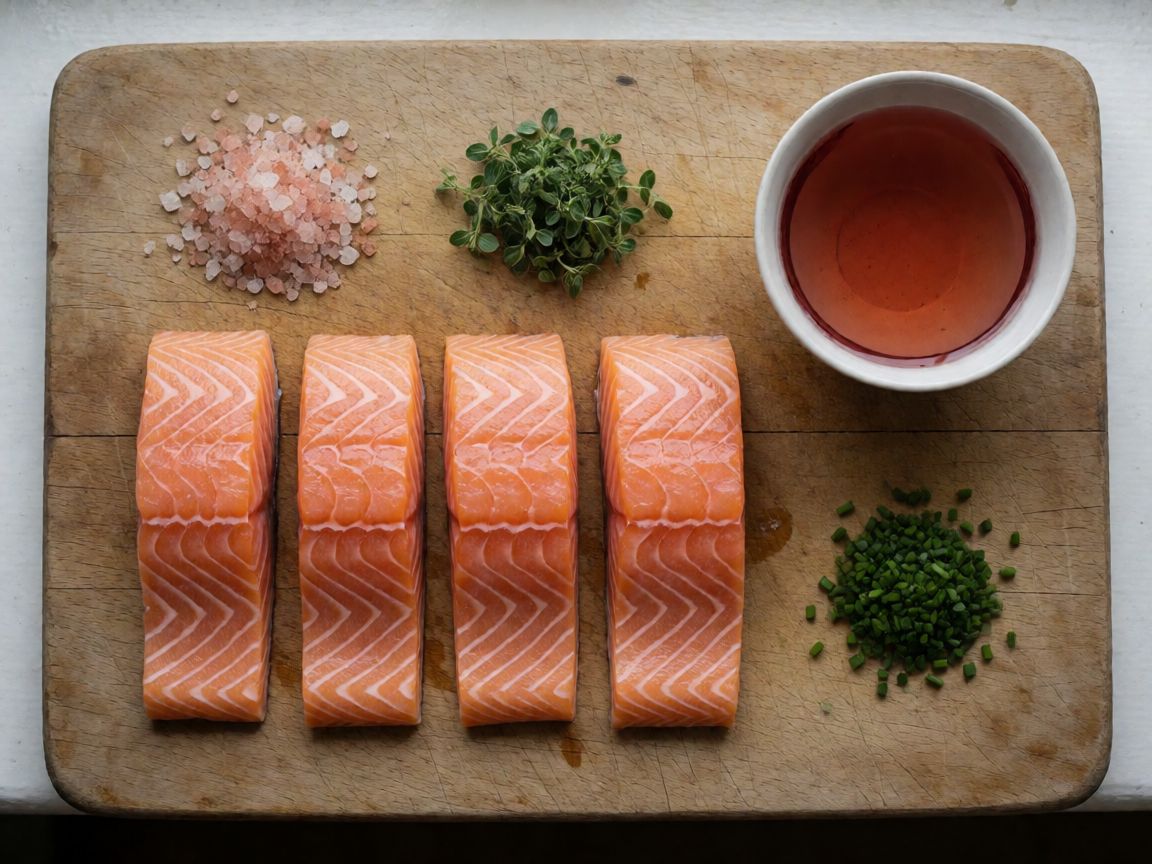
- 4 pcs Salmon
- Olive oil to taste
- Himalayan pink salt to taste
- Marjoram to taste
- Black pepper to taste, or a mix of Creole peppers
- 120 ml Rosé wine Bardolino Chiaretto
- Chives to taste






Steps
Pour 1 tbsp of olive oil into a baking dish and arrange the salmon steaks in it.
Add a pinch of Himalayan pink salt, black pepper, and sprinkle with marjoram.
Pour over the rosé wine and bake in an oven preheated to 200°C.
20 minIt is ready when the thickest part of the salmon reaches an internal temperature of 63°C.
Serve sprinkled with freshly chopped chives, with a mixed salad or grilled vegetables.
This is not a seared fish finished in the oven — it's a fish that never meets a hot pan at all. The steaks sit in a shallow puddle of olive oil and rosé, and the oven does the whole job: 200°C around the dish, gentle simmer underneath. What decides whether it works isn't the clock, it's the thickness of the steak you bought and how closely you watch the middle of it.
Some say you have to sear fish first to "lock in the juices" — no, because juice loss isn't a door you can shut with a crust. It's heat over time, full stop. A crust gives you texture and browning, nothing more. Skip the sear here and you lose nothing except a washing-up pan.
The real danger with salmon is overshooting past done into dry. You've seen the white, slightly curdled stuff that weeps out of overcooked salmon — that's albumin, a protein that holds together fine up to about the point this recipe stops you at, and falls apart messy past it. The 63°C the recipe gives you as a target is not a magic number, it's a safety margin: past that the flesh squeezes out its own moisture instead of holding it. If you don't own a thermometer, watch the side of the steak instead — the flesh goes from glassy coral to a matte, opaque pink, and it starts separating cleanly along its natural seams rather than clinging in one solid block. That's your doneness, time is only the minimum you need to get there.
Salmon: buy steaks of roughly even thickness, because thickness is the only variable that actually changes your timing — a thin tail-end piece and a thick centre-cut piece in the same dish will not be done at the same moment, and no amount of watching fixes that after the fact, only buying evenly saves you. Farmed Atlantic salmon is what you'll find steak-cut in most UK supermarkets, and it's fattier than wild, which actually helps here — more fat means more forgiveness if you run a few minutes over.
Olive oil: its job is just to stop the fish sticking to the dish and to carry fat-soluble flavour into the fish as it bakes, nothing more mystical than that. The criterion for substituting it is simple — any oil with no smell of its own that can sit happily at 200°C, which rules out anything that smokes or turns bitter below that, like an unrefined nut oil. A light sunflower or groundnut oil does the same job quietly.
Himalayan pink salt: the colour and the trace minerals are a selling point, not a mechanism — at oven temperature it behaves exactly like any other salt, drawing a little moisture out of the surface and seasoning as it dissolves. Use what you have; flaky sea salt or ordinary fine salt does the identical chemistry.
Marjoram: a soft, slightly sweet, resinous herb, gentler than its cousin oregano, and it's there to sit on top of oily fish without fighting it. If you haven't got it, dill is the obvious British swap for salmon, or a little thyme if you want something drier. Black pepper or a Creole mix just adds heat and a bit of citrus-peel brightness depending on the blend — taste what you've got before you commit a pinch to the whole dish.
Rosé — Bardolino Chiaretto specifically is light, dry, low in tannin, which is exactly why rosé and fish is an old pairing and not fashion: a heavy tannic red would turn metallic against fish fat, a sweet wine would turn the dish into dessert. The criterion for substitution is dry, light-bodied, low tannin — a dry white works just as well if that's open in your fridge already; don't reach for anything you wouldn't drink a glass of, cooking doesn't improve bad wine, it just concentrates it.
Chives go on at the end, raw, off the heat, because their whole value is a green, sharp snap that dies the second it meets real heat — treat them as a finishing seasoning, not an ingredient that cooks. And once the dish comes out, give it a minute or two before you plate — not because anything dramatic is happening, but because a fish straight from 200°C carries on cooking a touch from its own residual heat, and that minute of patience is what keeps the centre from tipping past where you wanted it.