
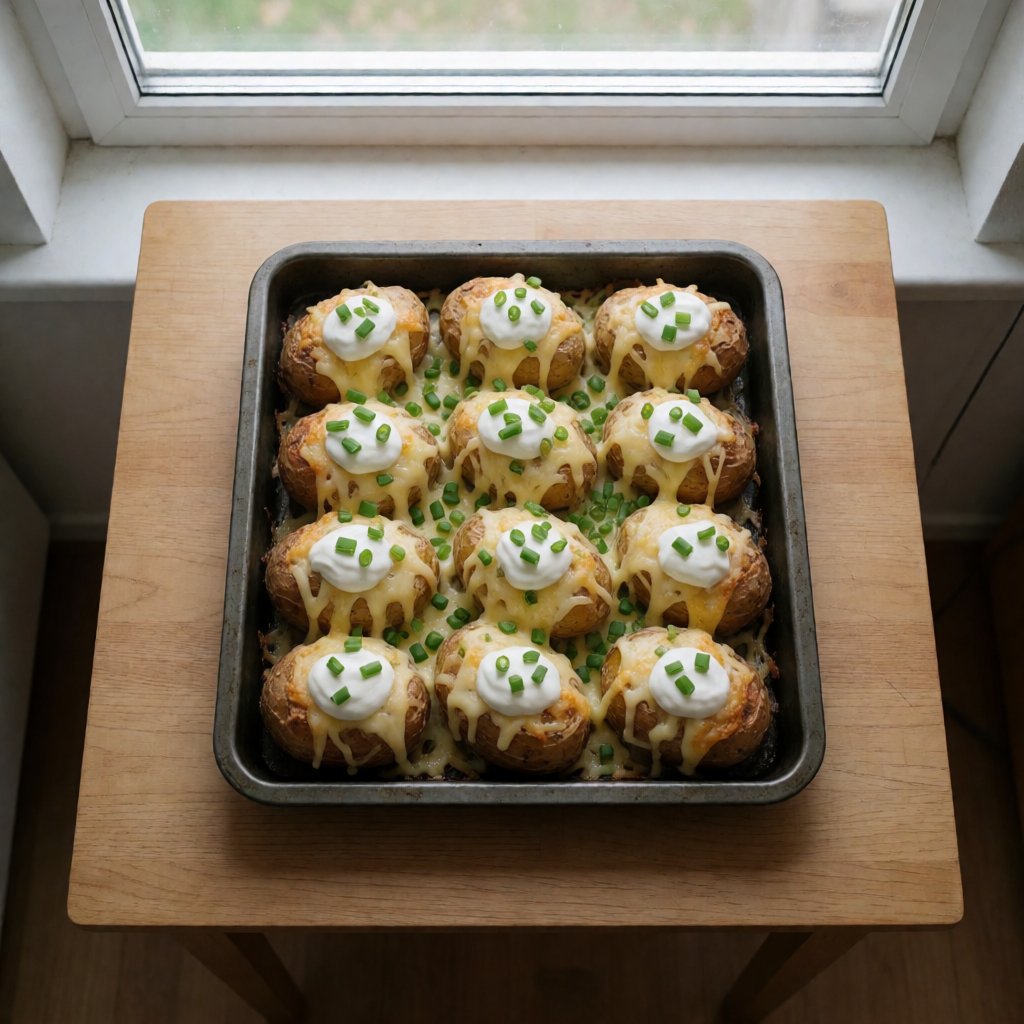
 AI photo
Jacket Potato
A simple baked potato topped with soured cream, cheddar and spring onion.
Labels are worked out automatically from the ingredients and can be wrong. Check the packaging if it matters to you.
Ingredients
- 400 g potatoes 2 large potatoes
- 1 tbsp sunflower oil
- 1 pinch salt to taste
- 2 tbsp soured cream
- 30 g cheddar grated
- 1 bunch spring onion to taste





Steps
Wash the potatoes, prick them all over, and rub with oil and salt.
Place the potatoes on a baking tray and bake for 50 minutes until soft.
50 minCut a cross into each potato, add soured cream and cheese, and bake for a further 5 minutes.
5 minTake the potatoes out of the oven and sprinkle with spring onion.
What was changed
The hard cheese was swapped for cheddar, the cheddar most commonly found in British shops.
A jacket potato is really two different cooking processes happening in the same object. Inside the skin, the potato's water turns to steam and that steam, trapped, cooks the starch from within — this is what turns a hard, raw interior into something you can crush with a fork. Outside, the skin itself dries out in the dry heat of the oven and goes from rubbery to brittle, almost like a thin biscuit. Whether the dish works is entirely about not letting these two things fight each other.
The oil and salt rubbed on before baking aren't decoration — oil helps the skin take heat evenly and brown instead of just drying patchily, and salt pulls a little surface moisture out, which is exactly what you want on the outside and exactly what you don't want trapped inside. The prick marks all over the potato are not tradition for tradition's sake either: without them the steam building up inside has nowhere to go, and a sealed potato in a hot oven is a small pressure vessel. It has happened — not often, but it has — that an unpricked potato splits open on the tray with a noise that makes you jump.
Some say wrap it in foil first, for a softer result. No — foil does the opposite of what you want. It holds moisture against the skin, so instead of drying and crisping, the skin steams in its own wrapper and comes out pale and leathery. The whole point of baking it naked is to let that outside dry while the inside steams. Foil undoes the one bit of contrast that makes a jacket potato a jacket potato rather than boiled potato with extra steps.
Start with the potato itself, because this dish lives or dies on that choice. You want a floury variety — high dry matter, low moisture, the kind that falls apart into fluffy curds when you mash it. Maris Piper and King Edward are the obvious British answer, sold everywhere and bred more or less for this job. A waxy potato — new potatoes, Charlotte, anything sold as 'salad potato' — will bake fine on the outside but stay dense and almost gluey inside, because it simply doesn't have enough starch to fluff up. If that's what's in your cupboard, it'll still be edible, just not light.
Two large potatoes for two people is the honest ratio here — a jacket potato is a whole meal on its own plate, not a side dish pretending to be modest. If you're feeding it alongside a roast, one smaller potato per person is plenty; the stomach only has so much room, and jacket potatoes are heavier than they look.
The oil is doing a job, not adding flavour, so any oil with no smell of its own will do it — sunflower, rapeseed, vegetable oil are all fine and interchangeable here. Olive oil works too but it has its own voice, which you won't taste much of once it's baked in, so don't go out of your way for it. If you want to go the other direction, a scrape of beef dripping or duck fat left over from a Sunday roast will crisp the skin further and taste like something — the British oven has been reheating that trick for a century, mostly because the fat was already there and throwing it away felt wasteful.
Soured cream does two things when it hits a hot potato: it cools the surface so you can actually eat the first forkful, and its acidity cuts through the starchiness the way lemon cuts through fat. If you have none, plain yoghurt is close but thinner and sharper, crème fraîche is richer and closer in body, and a simple knob of butter works as a fallback though it won't give you that tang. The cheddar melts into the hot cream and salts the whole thing — any hard cheese that melts without turning oily will do the same job, a mature cheddar just happens to be the one sitting in most British fridges.
The cut you make across the top isn't just presentation — it opens the structure so you can squeeze the ends and the inside puffs upward like a little volcano, giving the cream and cheese somewhere to sit rather than sliding off a smooth dome. That final five minutes in the oven isn't cooking the potato any further, it's melting the cheese and warming the cream through — you're not adding doneness here, you're finishing a plate.
Spring onion at the end is for bite and colour against all that soft, hot, melted stuff — chives do the same job if that's what you've got. And patience is the real ingredient in this whole dish: there is no version of a jacket potato that's any good rushed, because the thing that makes it worth eating — the contrast between crisp shell and steamed, fluffy inside — only happens if you give the oven the full, slow hour to do it properly.
·