
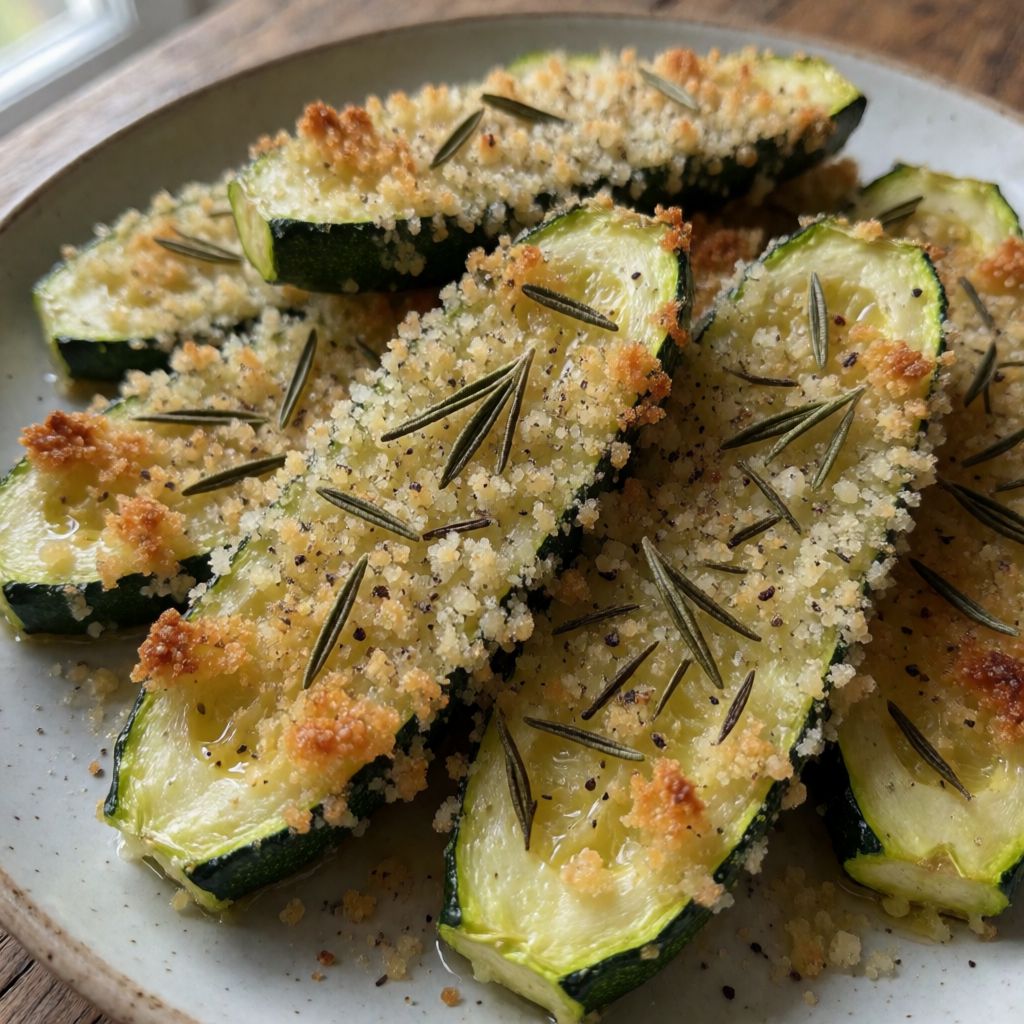
 AI photo
Baked Courgettes
A simple way to bake courgette slices topped with a crunchy rosemary breadcrumb crust.
Labels are worked out automatically from the ingredients and can be wrong. Check the packaging if it matters to you.
Ingredients
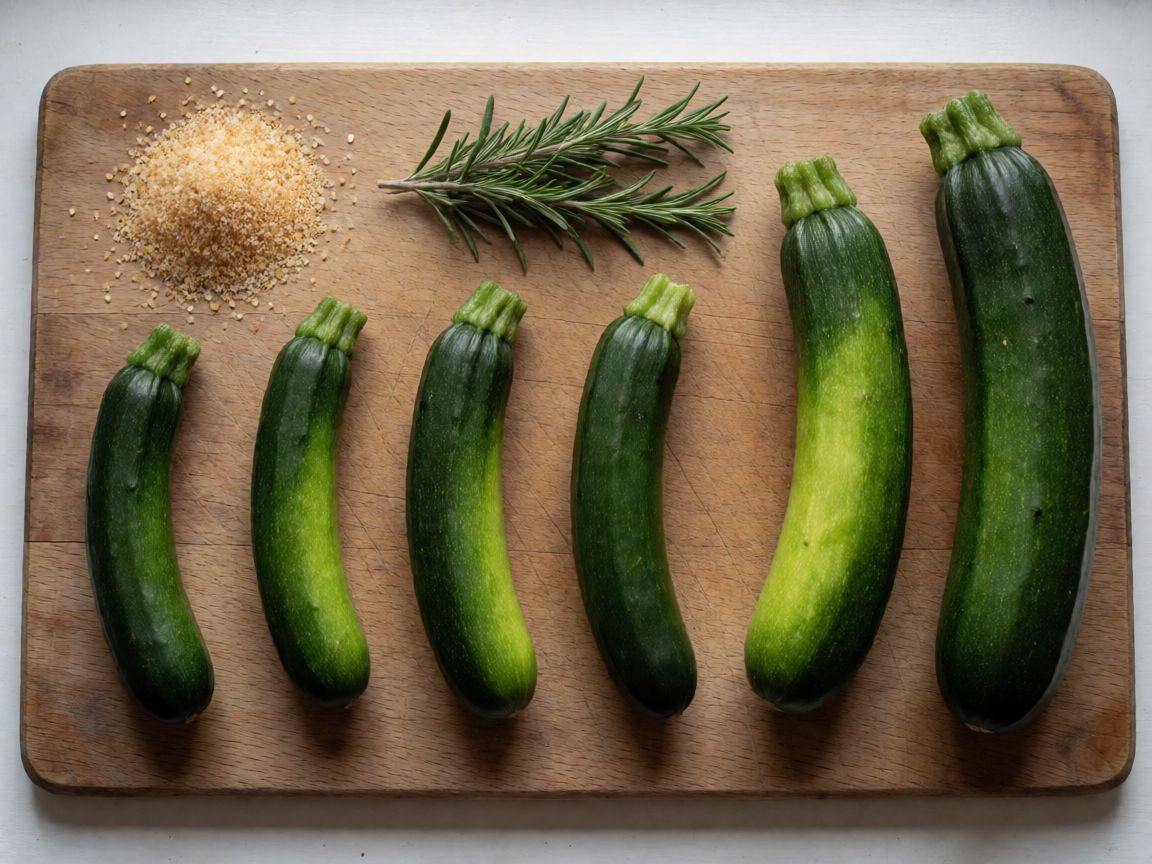
- 6 pcs Courgette
- 3 tbsp Breadcrumbs dried
- 2-3 tbsp Olive oil
- Rosemary to taste
- Salt to taste
- Black pepper to taste






Steps
Wash the courgettes, peel them and cut into not too thick slices. Line a baking tray with baking paper, dampening it with water.
Arrange the courgette slices on the tray, add salt and olive oil, and turn to coat evenly.
Bake in the middle of the oven at 180°C.
10 minFinely chop the rosemary. Mix it with the salt, breadcrumbs, black pepper and olive oil until well combined.
Remove the tray from the oven and sprinkle the courgettes evenly with the breadcrumb mixture.
Return the tray to the top of the oven and turn on the grill so the courgettes brown nicely.
This isn't a gratin and it isn't fried courgette with a sprinkle on top. It's a vegetable dried out by heat first, then given a crust by a different, harsher heat afterwards. Two separate jobs, and the oven has to do them one at a time, not together.
What decides whether it works is whether you let the courgette lose its water before the crumbs go anywhere near it. Courgette is mostly water held in a loose, wet net of cells. Heat breaks that net down and the water runs. Land dry breadcrumbs on wet flesh and they don't crisp, they go to paste. The first stretch in the middle of the oven at 180°C isn't cooking the courgette through — it's getting the water out, so by the time the crumb goes on, there's something dry underneath for the grill to actually brown. Done looks like this: the slices have gone limp, they bend rather than snap, the edges are starting to go translucent. That's your cue, not a clock.
Some say you have to salt courgette and let it sit and drain, the way you'd treat an aubergine, or it'll be bitter. No — modern courgette isn't the bitter old marrow it descends from, and the salt here is just seasoning. The thing that actually removes the water is the oven, not the salt sitting on the counter.
Courgette: buy them firm and glossy, heavy for their size. A spongy one is an old one, already holding more water than it should, and that water won't dry out predictably in ten minutes — you'll end up with some slices still raw-tasting and others collapsing to mush. Six courgettes for four people as a side sounds generous until you remember how much of that bulk is water about to leave the pan. Peeling isn't about wasting nutrients, despite what you'll hear — it's about the skin holding moisture in and staying tough under the grill when the flesh beneath has already gone soft. Peeled, the surface dries evenly and the crumb has something to grip.
Breadcrumbs, and they must be dried, not fresh. Fresh breadcrumbs carry their own water, which is exactly the problem you spent the first stage solving — add them and you reintroduce the enemy. Dried crumb is really just a carrier: for fat, for seasoning, for structure that can take direct heat and turn crisp instead of turning to char-dust in seconds. Any coarse, dry crumb with no strong taste of its own will do the same job — panko, crushed crackers, even your own stale bread grated and left to dry out. That's an old trick with nothing special about this dish — turning yesterday's loaf into tonight's crunch is just good domestic economics, from this kitchen to any other.
Olive oil appears twice, doing two different jobs. On the courgette, it stops the slices sticking and spreads heat evenly across the cut surface — without it, whatever touches the hot tray scorches while the dry top stays pale and sad. Mixed into the crumb, it binds the crumb into small clumps that brown together rather than fine dust that catches and burns the instant the grill comes on. The criterion for substituting is simple: any oil with no smell of its own. A flavourless rapeseed oil, which is cheap and sits in most British kitchens anyway, does this job exactly as well — save the olive oil's actual flavour for drizzling at the table if that's what you want it for.
Rosemary works here because it's a tough, resinous herb — its oils can sit under a grill without turning bitter. A soft, delicate leaf like basil would scorch black and bitter in the same heat; thyme or oregano, same toughness, would substitute without complaint. Salt and pepper do what they always do, seasoning both stages, nothing mysterious there.
The tray's baking paper gets dampened with water before anything goes on it, which stops sticking without a film of oil sitting directly under the vegetable — useful, because a shallow pool of oil that close to a domestic grill element has a habit of starting to smoke before your courgette's even brown.
And patience is the one ingredient not on the list. Give the courgette its full stretch in the middle of the oven before you even think about moving the tray up to the grill. Rushing that stage — reaching for the crumb early because it smells ready — is the single thing that turns this from a crisp-topped side into a soggy one.