
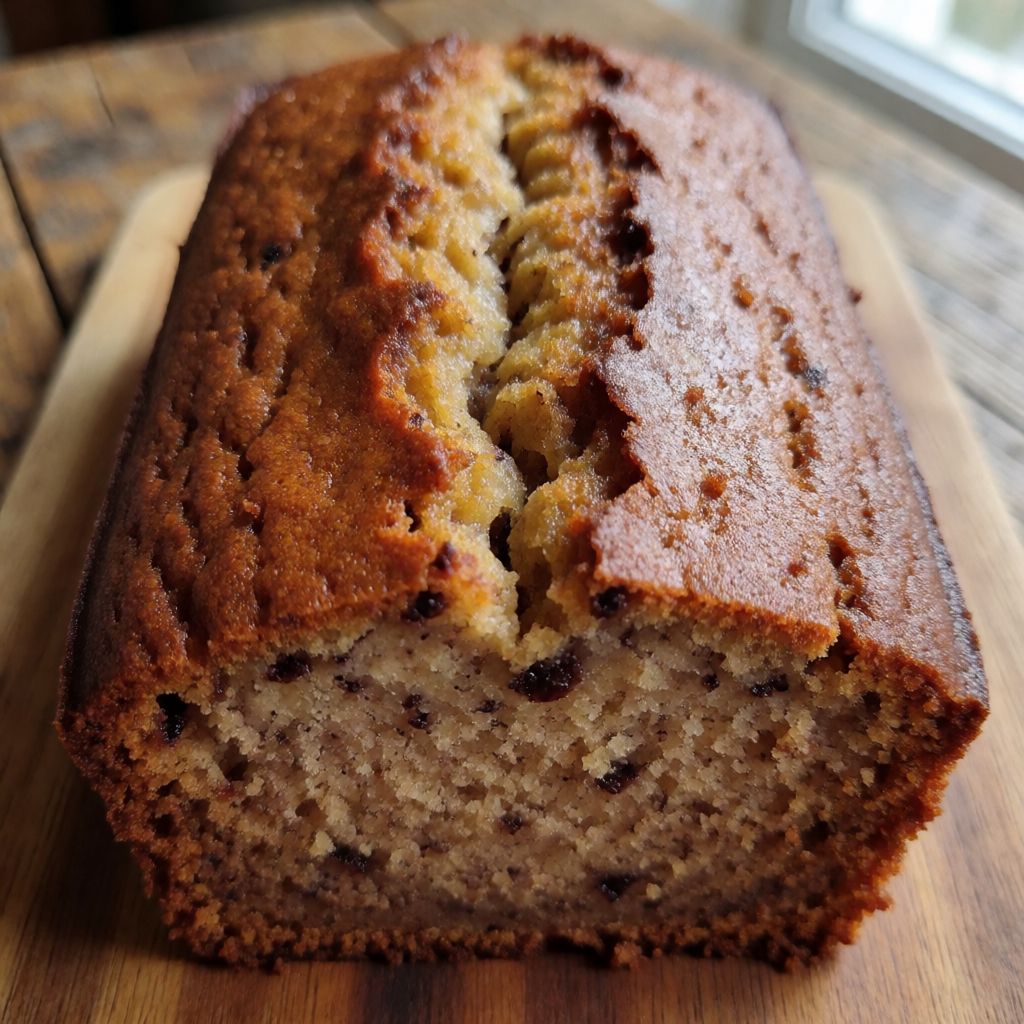
 AI photo
Banana and Chocolate Cake
A simple banana and dark chocolate cake, lightly spiked with lemon juice to keep the banana fresh.
Labels are worked out automatically from the ingredients and can be wrong. Check the packaging if it matters to you.
Ingredients
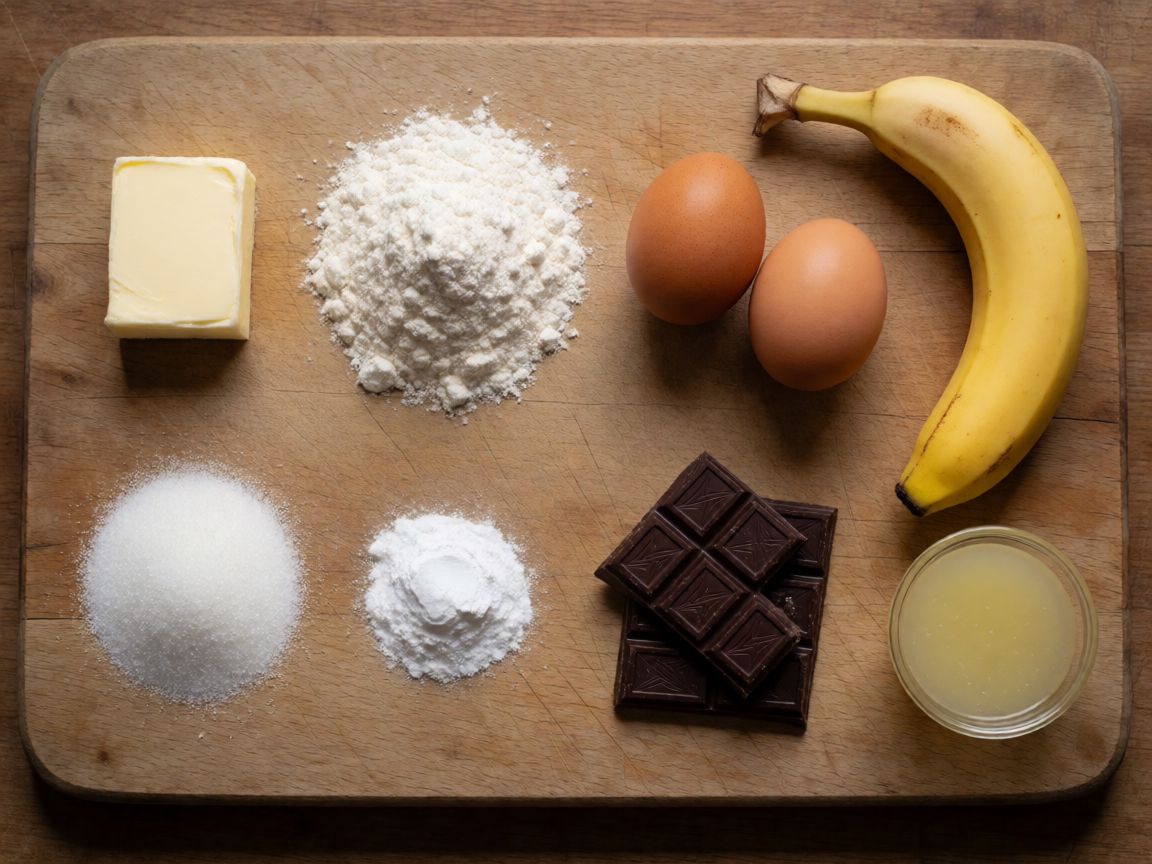
- 100 g Butter
- 150 g Plain flour
- 130 g Caster sugar
- 2 pcs Eggs
- 1 pcs Banana approximately 150g
- 8 g Baking powder
- 80 g Dark chocolate
- 0.5 pcs Lemon juice juice of half a lemon







Steps
Peel the banana and slice it, sprinkling with lemon juice so it doesn't turn brown.
In a bowl, combine the butter and caster sugar, and beat with an electric mixer until creamy.
Add the eggs one at a time, continuing to beat until the mixture is smooth and fluffy.
Gradually fold in the sifted flour and baking powder, mixing well to form a smooth batter.
Fold in the chopped dark chocolate and prepared banana, draining off any excess lemon juice.
Transfer the batter to a 20cm cake tin, buttered and dusted with flour.
Bake in a preheated fan oven at 170°C for about 60-65 minutes.
65 minLet the cake cool slightly before serving.
This is a pound cake wearing banana and chocolate — not banana bread (too eggy, too much fat for that family), not a brownie (too much flour and air for that one). It sits on its own branch: butter and sugar beaten to a pale fluff, eggs folded in, then banana slices and chocolate chunks suspended in a crumb light enough to rise on baking powder alone. Whether it works is decided in the first three minutes at the mixer, not in the oven.
Creaming butter and sugar isn't a cosmetic step you can rush through to get to "the real cooking." The sugar crystals cut thousands of tiny air pockets into the fat as you beat. Those pockets are where the baking powder's gas goes later — without them, the gas has nowhere to collect and just leaks out through the batter, and you get a cake that's dense at the bottom and risen only at the top, like a loaf that gave up halfway. Some say the eggs are what make a cake rise — no, eggs set the structure around the air that's already there. That's also why the eggs go in one at a time, beaten in fully before the next: butter is fat, egg is mostly water, and if you dump both eggs in together the emulsion splits before it forms, curdles into little lumps, and you lose the air you just worked to put in.
Butter has to be soft enough to beat, not melted — melted butter can't hold air, it just slides past the sugar instead of trapping it. Leave it out of the fridge an hour before you start; in a British kitchen that's rarely a problem since butter sits on the counter half the week anyway. If you forget, ten seconds in the microwave on low is safer than full melt, but watch it like a kettle you've left on.
The flour's only job here is structure and a home for the baking powder — any plain flour works, there's no gluten development needed from a strong bread flour, so don't reach for one. Baking powder, at 8g for 150g flour, is doing real lifting work alongside the creamed air; don't substitute bicarbonate of soda one-for-one, it needs an acid to activate and this batter doesn't have enough on its own to wake it up.
The banana wants to be ripe — speckled skin, soft but not collapsing — because ripening converts starch to sugar and softens the fruit enough that it holds its slice shape in the batter instead of turning to paste. Some say only fully black, liquid-ripe bananas belong in baking — no, that's true for banana bread where the fruit gets mashed into the wet ingredients and needs to be sloppy. Here you're folding in slices, and a banana gone to mush will just sink and disappear instead of giving you bite.
The lemon juice is not for flavour, and barely registers as acid in the finished cake — it's there to slow an enzyme in the cut banana flesh that reacts with air and browns it, the same browning you see on a cut apple. That's why you drain it off before folding the banana in: enough acid and extra liquid changes the batter's balance and you risk a gummy band at the bottom where it couldn't set. No lemon to hand, a few drops of any vinegar does the same chemical job, though it leaves more of a smell behind.
Dark chocolate chopped by hand, in pieces you can see and feel, is the point — chop it fine or run it through a processor and it melts fully into the batter, leaving streaks of brown instead of pockets you bite into. Any chocolate with 60–70% cocoa behaves the same way in heat; milk chocolate has more sugar and fat and tends to run rather than hold its shape, softer pools instead of chunks.
A 20cm tin is a specific ratio of batter to surface, which is why the bake time assumes it — go wider and shallower and the centre will cook before the edges dry out, go narrower and taller and you'll get a risen middle with a raw core long after 65 minutes have passed. Butter and flour the tin properly, because banana and melting chocolate both want to glue themselves to bare metal, and that's the actual reason cakes stick — not bad luck, just sugar caramelising against unprotected tin. One cake this size, cut into reasonable wedges, feeds four with tea — the quantities aren't built for a crowd, so don't expect Sunday-roast-sized leftovers.