
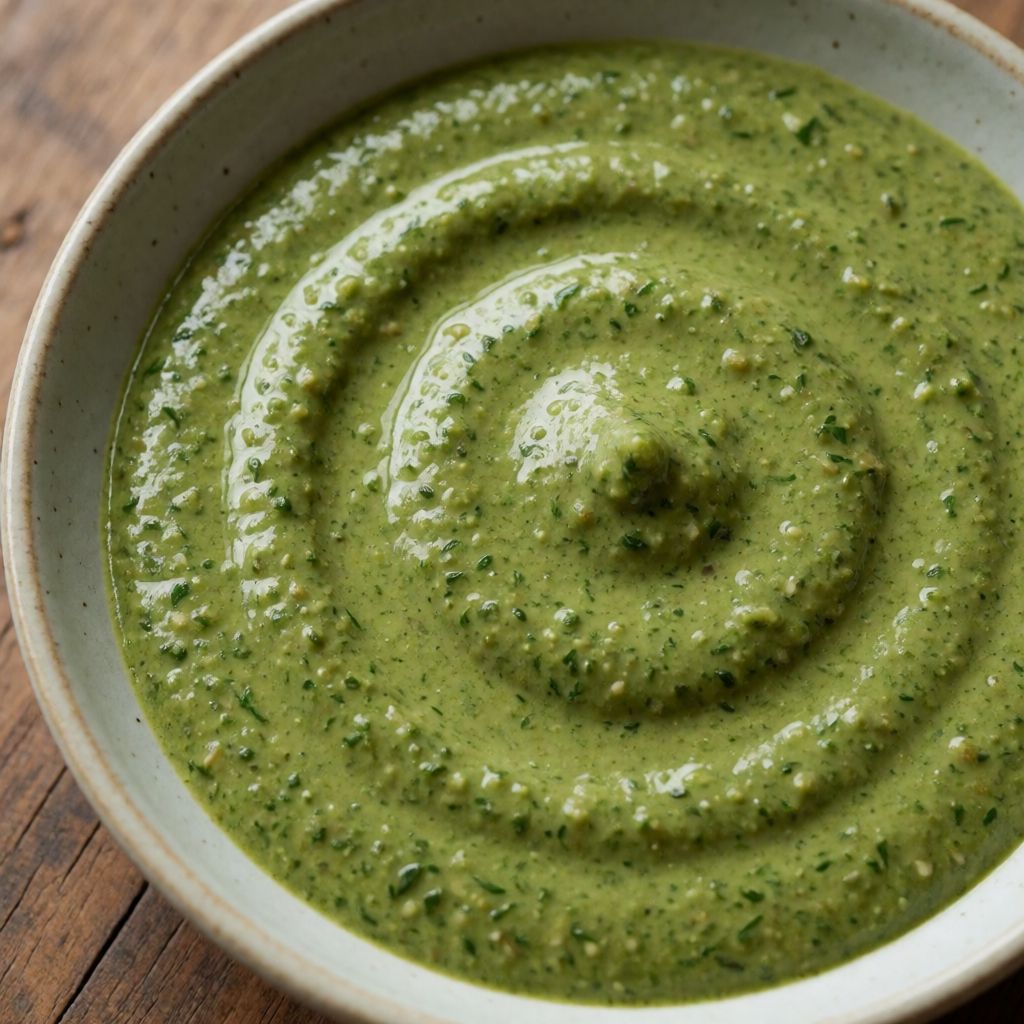
 AI photo
Creamy Basil Sauce
A smooth basil and walnut sauce with rocket, olive oil and lemon juice, ready in minutes.
Labels are worked out automatically from the ingredients and can be wrong. Check the packaging if it matters to you.
Ingredients
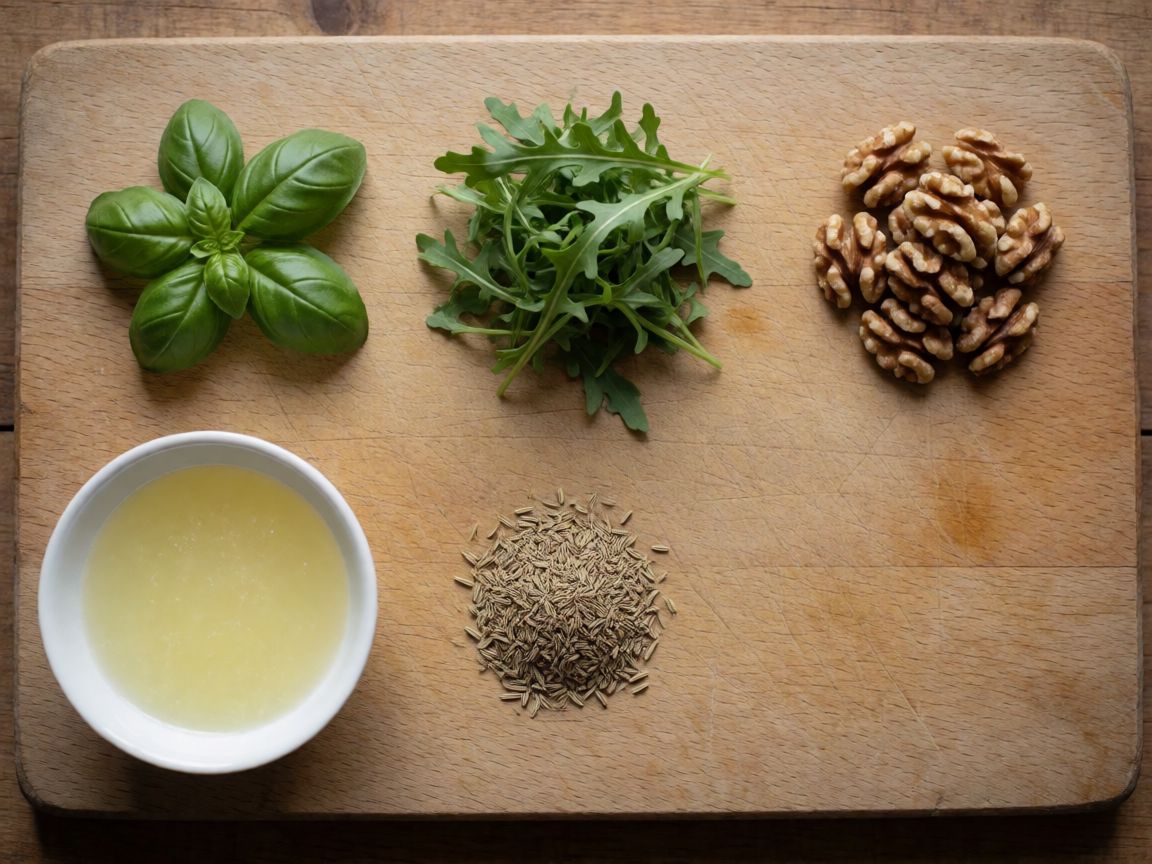
- 60 g Basil
- 20 g Rocket
- 50 g Walnuts
- 6 tbsp Olive oil
- Lemon juice from half a lemon
- Fennel seeds to taste
- Salt to taste
- Black pepper to taste








Steps
Wash the basil and rocket leaves under running water, then lay them on paper towels to dry.
Transfer the leaves to the beaker of a stick blender. Add the walnuts, olive oil, lemon juice, salt, black pepper and fennel seeds.
Blend everything until smooth. If the sauce is too thick, add a little water.
Spoon the sauce into small bowls and garnish with basil leaves and fennel seeds.
This isn't pesto, whatever the shape of it tempts you to call it. Pesto means "pounded" — basil crushed slowly in a mortar with garlic and hard cheese, the oil worked in drop by drop so it holds as an emulsion. Here you throw everything into a blender beaker and pulse it to a paste. Different method, different result, and neither one is the lesser for it — just don't expect parmesan's salt-fat kick, because there isn't any cheese in this at all.
What decides whether this sauce works isn't a time on a clock — there's no stove in this recipe, no "medium heat" to get wrong, which for once makes life easy. What decides it is three things: how dry the leaves are before they go in, how long you let the blade run, and whether you've got the fat-to-acid balance right at the end. Wet basil dilutes the sauce and makes it split later into oil sitting on top of green water — that's why you pat the leaves dry rather than skip straight from tap to beaker. It's a small patience, thirty seconds with a paper towel, but it's the difference between a sauce that stays glossy and one that weeps.
Basil is the backbone, so buy it with leaves that are dark, not yellowing at the edges, and that smell of basil the moment the bag opens, before you've even torn anything. If it smells of nothing standing on the shelf, it will taste of nothing in the sauce, however much olive oil you throw at it. Rocket wants the same test — peppery on the nose, not just bitter. If you can't get rocket, baby spinach will bulk the sauce the same way texturally, but you lose the pepper note entirely, so add an extra pinch of black pepper to cover for it.
Walnuts are standing in for pine nuts, and that substitution is worth naming rather than apologising for. The rule for the nut in a sauce like this: it needs to be oily enough to blend into a paste rather than grit, and mild enough not to fight the basil. Pine nuts are the traditional choice because that's what grew near the basil fields of Liguria — it's geography, not virtue, that put them there. Walnuts do the same fat-and-body job for a fraction of the price, with a slightly more bitter, earthier edge that actually suits rocket well. Almonds, blanched and skinned, would do it too, milder still.
The olive oil carries the sauce and also seasons it, so don't reach for the cheapest bottle — an oil with no flavour of its own is right for frying, wrong here. You want something that tastes of itself: fruity, maybe a little peppery at the back of the throat, because that pepper will echo the rocket rather than clash with it. If your only oil is a neutral one — sunflower, rapeseed — the sauce will still blend and still taste fine, but it'll be a basil-and-walnut sauce rather than an olive-oil sauce, and that's a different thing, not a failure.
Lemon juice isn't there for tartness alone — it's there to slow the browning. Cut basil oxidises and dulls in minutes; acid holds the green longer, which is why you squeeze it in during blending rather than after. If you're out of lemon, a spoon of white wine vinegar does the same acid job, though it brings its own sharper smell with it, so use less.
Fennel seed is the one ingredient that looks like a mistake until you taste it. There's no heat anywhere in this dish to develop any warmth through browning or toasting, so the fennel seed supplies a warm, aniseed note that the raw ingredients can't generate on their own. If you crush the seeds first — just under the flat of a knife — they release more of that oil and go further on less. Leave them out entirely and the sauce is fine, just flatter, a one-note green rather than a green with a low hum underneath it.
If the sauce sits too thick to spoon out properly, that's not a fault in the recipe, it's just basil's low water content doing what basil does — add water a tablespoon at a time, blend again, and stop the moment it moves off the spoon rather than sitting on it. Over a Sunday roast, a spoon of this on the vegetables does more work than another jug of gravy ever could.