
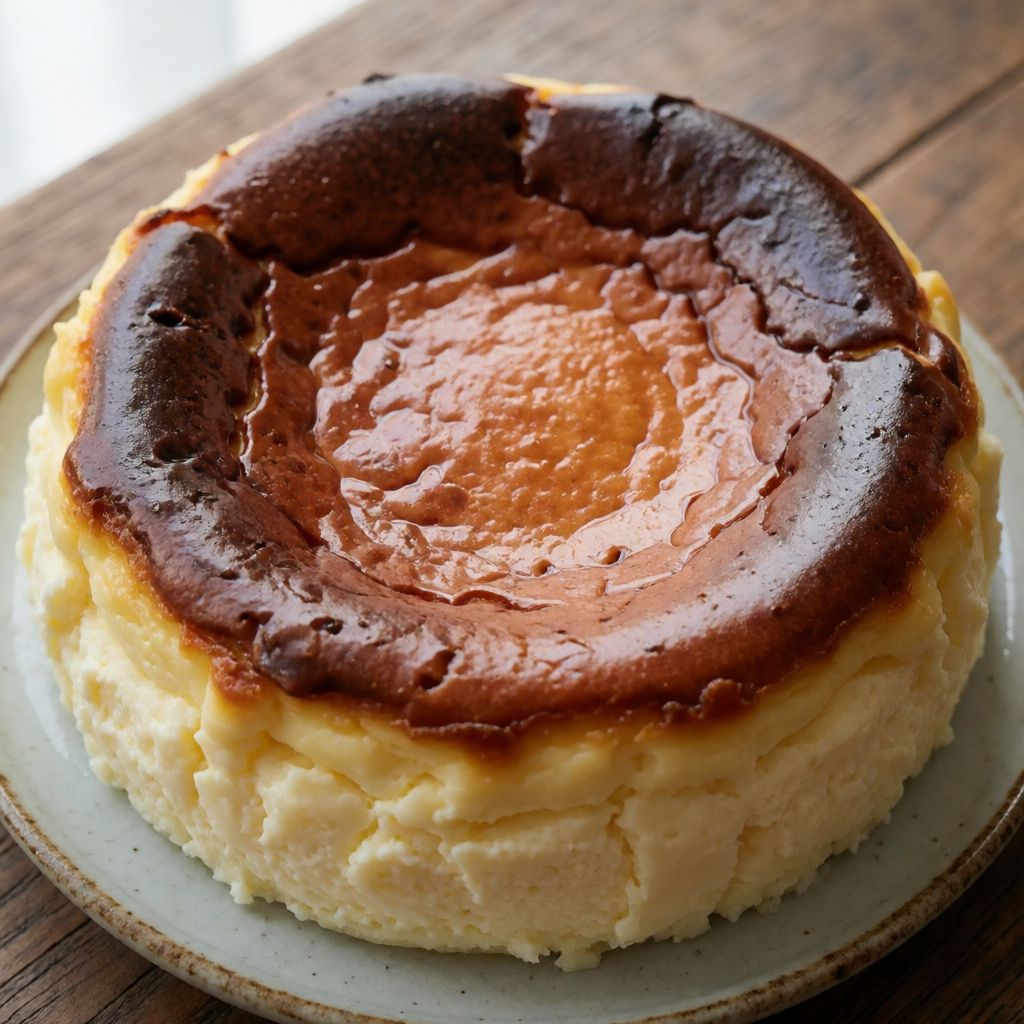
 AI photo
Basque Cheesecake
A rich, deeply caramelised Basque-style cheesecake with a soft, wobbly centre.
Labels are worked out automatically from the ingredients and can be wrong. Check the packaging if it matters to you.
Ingredients
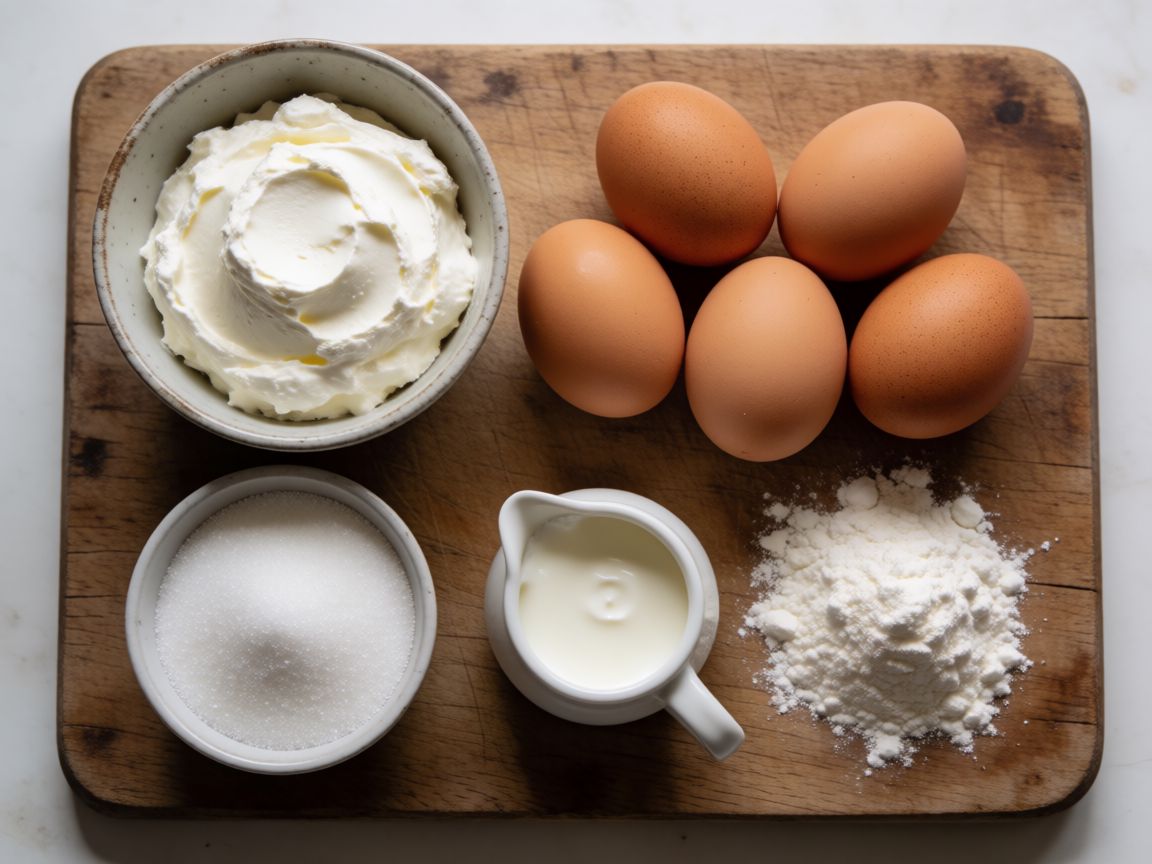
- 1 kg Cream Cheese
- 5 pcs Eggs
- 340 g Caster Sugar
- 500 ml Double Cream
- 1 pinch Salt
- 30 g Plain Flour sifted






Steps
Put the cream cheese in a bowl, add the caster sugar and a pinch of salt. Whisk until smooth and even.
Add the eggs and mix thoroughly so they fully combine with the mixture.
While continuing to stir, pour in the double cream.
When the batter is smooth, sift in the plain flour and gently fold it in with a spatula.
Line the base and sides of a springform cake tin with baking parchment.
Pour the smooth, velvety batter into the tin and level it so the surface is even.
Bake the cheesecake in a fan oven preheated to 220°C for about 50 minutes.
50 minCheck it's done by gently shaking the tin: the edges should be set while the centre is still very wobbly.
Remove the cheesecake from the oven and let it cool completely before transferring it to the fridge.
Basque cheesecake is a custard, not a cake, built to look like it failed and taste like it didn't. No biscuit base, no careful bain-marie, no low slow oven - you put a cheese-and-cream batter into a screaming hot oven and let the top burn on purpose. The char on top isn't a flaw you're racing to avoid; it's the one flavour layer in a dish that's otherwise just fat, sugar, and egg - a little bitterness to cut the sweetness, the way a good caramel does.
What decides whether it works is the gap between outside and inside: the edge needs to set into something that holds its shape when you lift a wedge, while the centre stays loose enough to spread like a thick sauce the moment you cut in. Fifty minutes at 220°C fan gets you into the right neighbourhood, but it's only a starting point - the shake test is what actually tells you you're done. Chase a fully set centre, which is what every other cheesecake recipe trains you to want, and you'll end up with something dense and rubbery, because egg-and-dairy custards don't improve the longer you cook them; past a point the proteins squeeze out the water they were holding and the texture turns grainy.
Cream cheese is the scaffold - it's the one ingredient here with almost no water to give up, so it's what keeps the whole thing from turning into sweet scrambled eggs. You want a block or tub style, full-fat, the kind sold for baking rather than the spreadable one cut with whey for toast - the wetter spreadable tubs loosen your batter and push your bake time around in ways you can't predict from outside the oven door. If you can't get it, a well-drained quark or a stiff curd cheese can stand in, but drain it hard first; any extra water it's carrying becomes steam in the oven, and steam is what blows cracks and bubbles into the top.
The eggs are what sets the custard - not flour, not a separate thickener. Egg proteins unwind in heat and link up into a mesh that traps the fat and water around them; that's the whole mechanism behind "the edges are set, the middle wobbles." The flour's only job is to loosen that mesh slightly so it doesn't clamp down too hard and squeeze liquid out of itself - any plain-tasting starch does the same work, so a tablespoon of cornflour is a fair swap if that's what's in the cupboard.
Double cream needs to be cream with enough fat to survive high heat without splitting - UK double cream, at around 48% fat, is already built for this; a lighter pouring cream curdles at the edges before the centre's anywhere close to right. The criterion for a swap, if you ever need one, is fat content before flavour - anything much lighter will fight the oven instead of cooperating with it. Caster sugar does double duty: sweetness, obviously, but its fine grain also means it dissolves into the cheese before the eggs go in, so you're not left with a gritty bite later. The pinch of salt isn't seasoning in the savoury sense - it's there to stop the whole thing tasting flatly sweet, the same reason a pinch goes into caramel.
In a UK kitchen the numbers are kind: a fan oven at 220°C is genuinely hot, and a standard springform tin handles that without complaint, so there's no equipment problem to solve, only a watching one. Line the tin generously, parchment coming well above the rim, because there's no crust to hold the sides together once it's out of the tin - the paper is doing the structural job pastry would do in any other cheesecake, and it's also your only handle for lifting out something this soft.
A kilogram of cheese and five eggs sounds like a lot for six people, but this is a rich, thin-sliced dessert, the kind that goes further than its size suggests. Plan small wedges rather than generous ones - it sits better after a Sunday roast, or alongside tea, than as a dessert you try to finish in one go.