
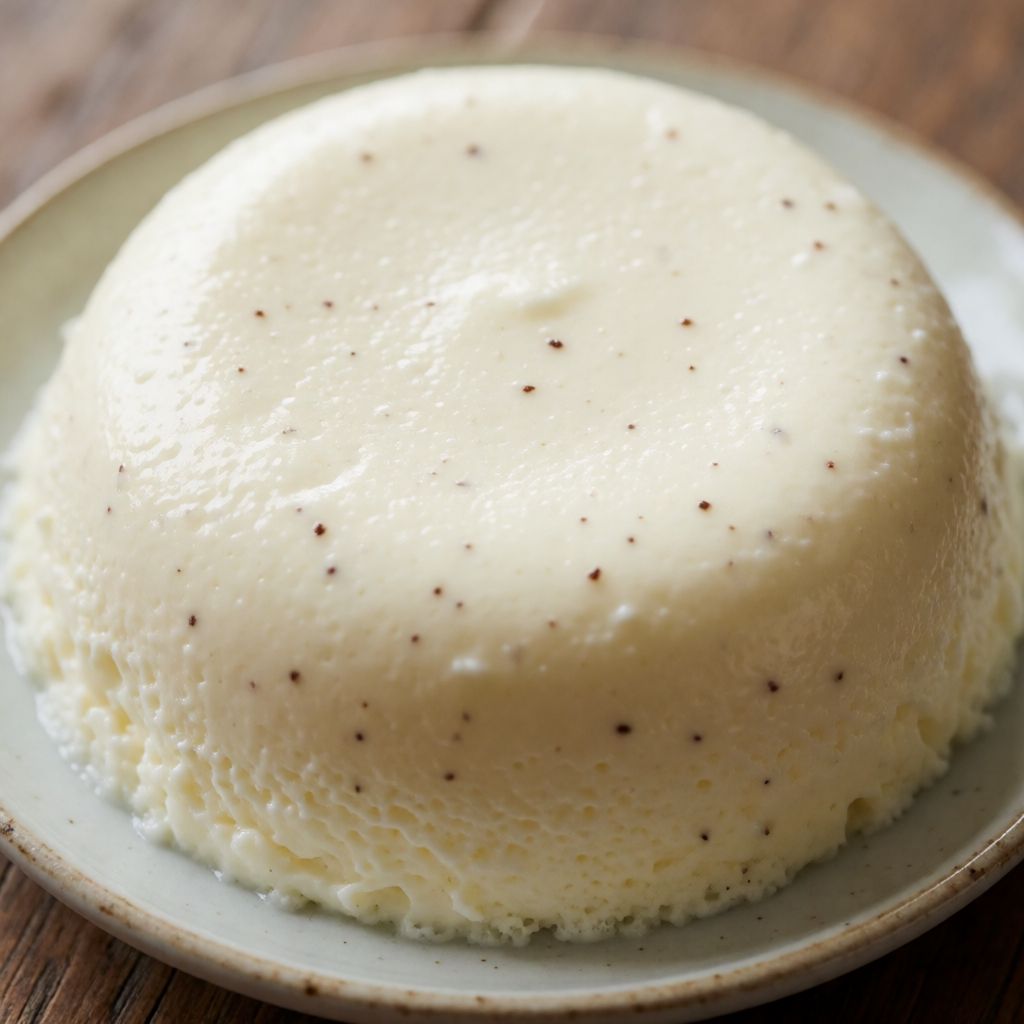
 AI photo
Bavarian Cream — a light and delicate dessert
A silky custard dessert set with cream and gelatine, finished with fresh berries.
Labels are worked out automatically from the ingredients and can be wrong. Check the packaging if it matters to you.
Ingredients
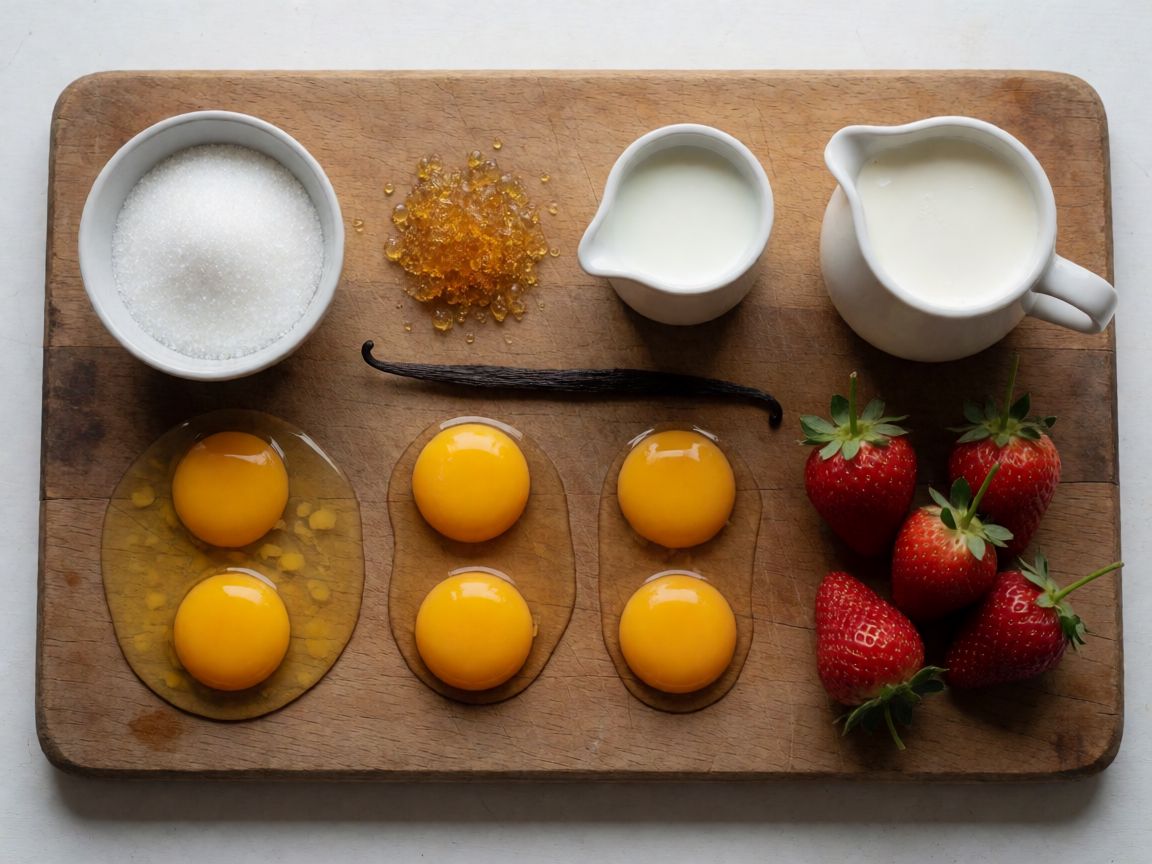
- 6 pcs egg yolks
- 220 g caster sugar
- 12 g gelatine
- 500 ml milk
- 1 pcs vanilla pod half a pod
- 500 ml double cream
- strawberries to taste, for decoration







Steps
Separate the yolks from the whites and whisk the yolks with 150 g of the sugar until pale and airy.
6 minSoak the gelatine in cold water.
Slice the half vanilla pod lengthways and scrape out the seeds.
Heat the milk with the vanilla seeds and pod, bringing it to the boil while stirring constantly.
Remove the pod, stir in the whisked egg yolk mixture and mix well.
Heat gently and take the custard off the heat just before it comes to the boil.
Squeeze out the softened gelatine and stir it into the hot custard until fully dissolved.
Transfer the custard to a bowl and leave to cool at room temperature, then chill in the fridge.
Meanwhile, whip the double cream with 70 g of sugar until thick, then fold in the chilled custard.
Pour the mixture into a 22-24 cm ring mould and chill in the fridge for 2-3 hours.
180 minTurn the Bavarian cream out of the mould (dip it briefly in hot water if needed) and decorate with fresh berries.
Bavarian cream — bavarois — is an egg custard carrying just enough gelatine to stand up on its own, lightened with whipped cream. That's the whole mechanism. No flour, no baking, nothing to brown. It's a dessert built entirely on temperature control and patience, which is why it feels fancy while being, technically, forgiving.
What decides whether it works is the custard stage — the point where egg yolks go from raw to cooked without curdling into sweet scrambled egg. You're heating yolks, sugar and milk to somewhere around 82-84°C, the point where egg proteins start to set and thicken the liquid, but you must pull it off the heat before it reaches a boil, because a boil is where those proteins seize into visible lumps. "Just before it comes to the boil" is the recipe's own phrasing, and it's the right instinct — in an ordinary flat with no thermometer to hand, watch for the custard coating the back of a spoon and holding a line when you drag a finger through it. That's your cue, not a clock.
Some say Bavarian cream is a French dessert because it has a French name on every menu. No — the name is marketing, probably 19th-century, attached to a technique (crème anglaise plus gelatine plus whipped cream) that French kitchens systematised and wrote down, the way French kitchens wrote down most of European patisserie in that era. Nothing uniquely Bavarian about it except the label.
Egg yolks here aren't flavouring, they're the thickening agent and the fat that gives the custard body — six yolks to 500ml milk is a classic crème anglaise ratio, enough to set the liquid lightly even before gelatine joins in. Whisking them with sugar first isn't decoration either: the sugar granules work through the yolk, separating the proteins slightly, so when hot milk hits them they thicken smoothly instead of clumping. Skip this step and you've built in the exact curdling risk the slow-heating stage is trying to avoid.
Gelatine is the scaffolding that lets this dessert hold a shape and turn out of a mould, which a custard alone never could — crème anglaise just stays a sauce. 12g (roughly two standard UK sachets, or about 6 leaves) sets 1 litre of liquid firmly enough to stand but still wobble, which is the point: too much and you've made a rubbery panna cotta cousin, not a bavarois. Soaking it first in cold water, not hot, matters — gelatine needs to absorb water gently to bloom evenly; drop it straight into hot liquid and the outside of each granule seizes before the inside hydrates, leaving grainy threads in your finished custard.
Vanilla pod, split and scraped, is there because vanilla's flavour compounds are fat-soluble and release slowly into warm milk — the pod itself keeps infusing even after you've pulled out the seeds, which is why it goes in with the seeds and comes out only once the milk's job is done. If you don't have a pod, a teaspoon of good vanilla extract stirred in off the heat does nearly as well; a cheap "vanilla flavouring" with no real vanillin will taste flat and slightly bitter against the eggs, so if that's all you've got, use more of it than the recipe would suggest and accept the compromise.
Double cream, not single or whipping cream, because you need a fat content (around 48%) that whips stable enough to fold through a liquid custard and hold air without collapsing — any oil-free dairy fat that whips to soft peaks will do the same job, double cream is just the standard UK answer to that criterion. Whip it only to soft peaks, not stiff — stiff cream has already lost some water out of its structure and folds in unevenly, leaving streaks.
The mould and the 2-3 hour chill are where most kitchen anxiety sits, and it's unearned. A domestic fridge, not a blast chiller, is what you've got, so budget the full time and don't test it early by poking — gelatine sets as a slow chemical process, not something that finishes the moment it "looks" set at the edges. Some say you need a proper charlotte mould with a tin ring to turn it out cleanly. No — any straight-sided bowl or cake tin with no overhang will release fine with a dip in hot water for a few seconds, because what releases the cream isn't the shape of the mould, it's a thin film of custard melting against hot metal or china.
Strawberries at the end aren't just colour — their acidity cuts the richness of all that cream and egg, which is why a bavarois is almost always served with something tart rather than another sweet element. Any sharp, ripe fruit does the same job; what you're looking for isn't strawberries specifically, it's acid against fat.