
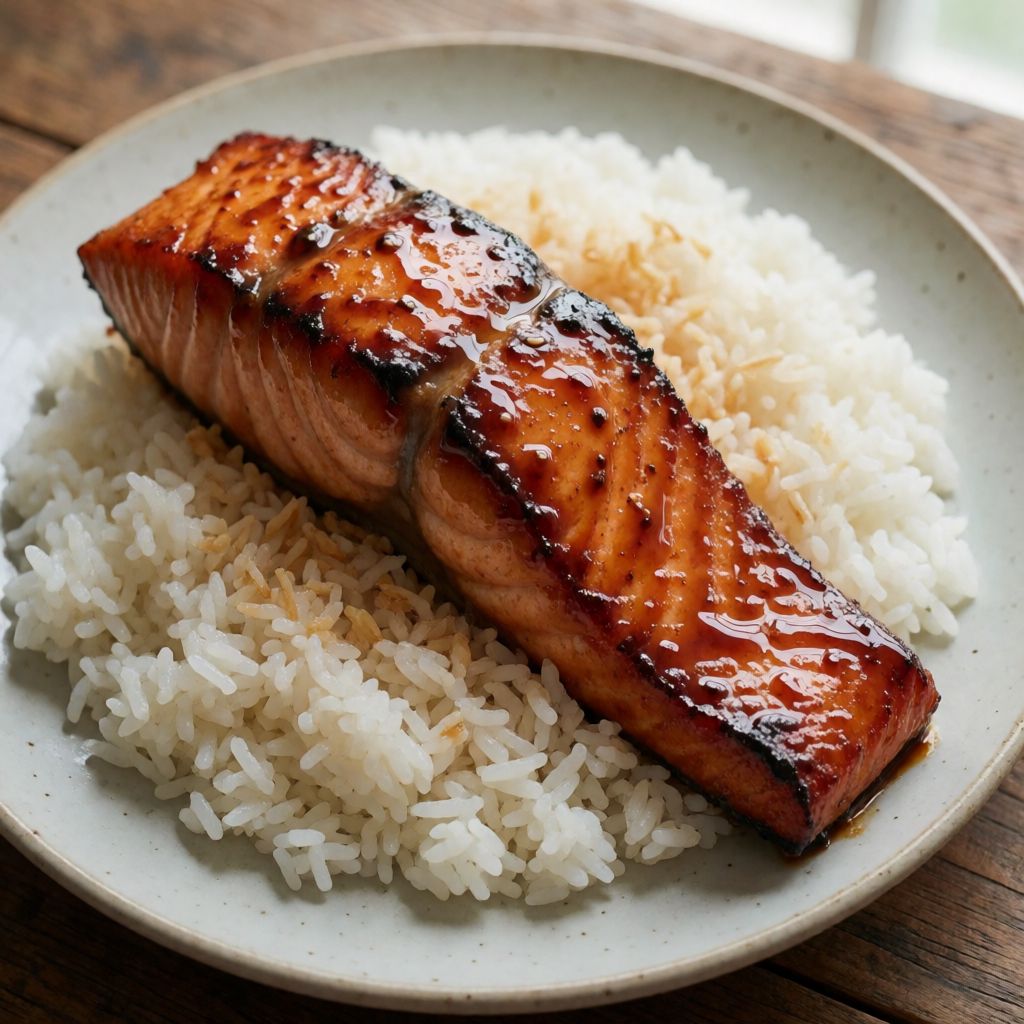
 AI photo
BBQ Salmon with Garlic Rice and Green Beans
A quick BBQ salmon bake served with garlic rice and spinach, finished with green beans and sesame seeds.
Labels are worked out automatically from the ingredients and can be wrong. Check the packaging if it matters to you.
Ingredients
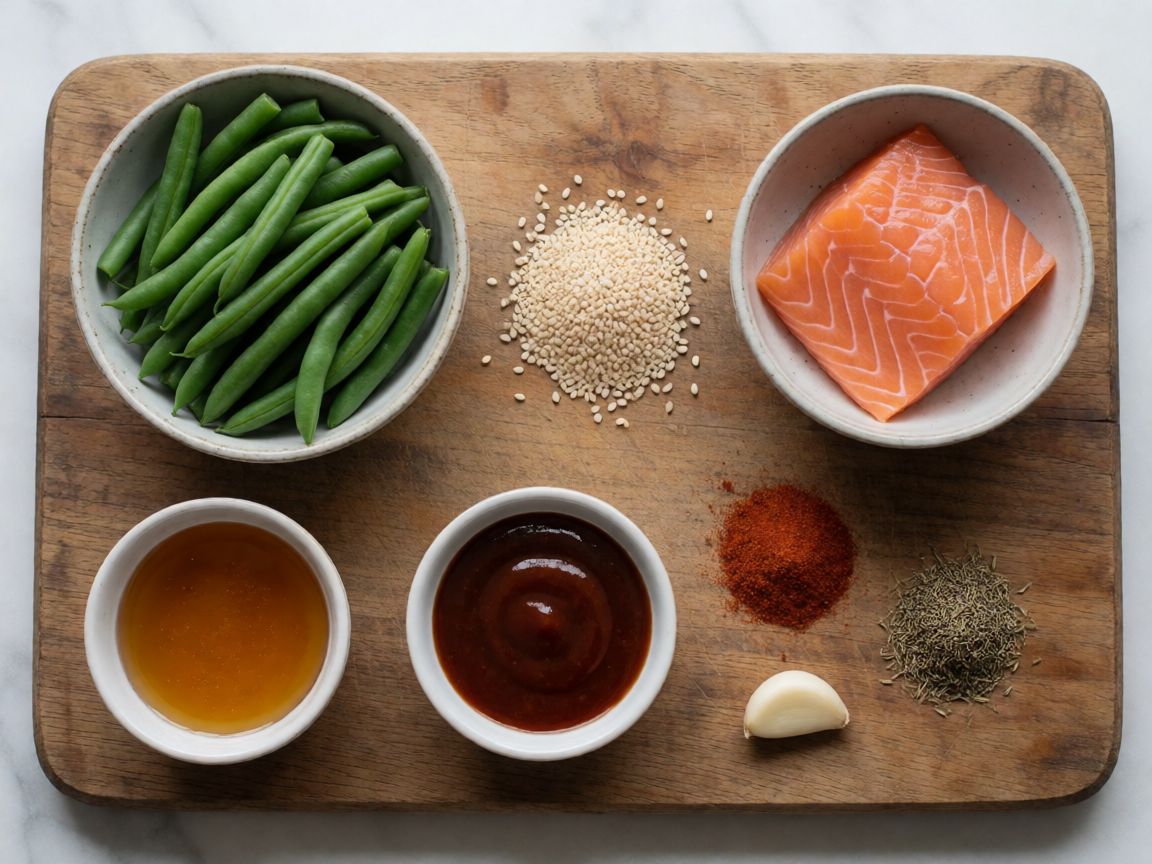
- 300 g Green beans
- 20 g Sesame seeds
- 600 g Salmon
- 3 tbsp Olive oil
- 1 tbsp Honey
- 2 tbsp BBQ sauce
- 2 tsp Smoked paprika
- 2 tsp Dried thyme
- 1 clove Garlic crushed
- Salt
- Black pepper freshly ground
- 10 g Butter for the dish
- 3 clove Garlic
- 300 ml Basmati rice
- 500 ml Water
- 75 g Spinach finely chopped
- 0.5 tsp Salt
- 1 tsp Olive oil















Steps
BBQ salmon. Place the green beans in a greased ovenproof dish.
Sprinkle the beans with sesame seeds and lay the salmon on top.
Brush the salmon with olive oil mixed with honey, BBQ sauce, smoked paprika, thyme, garlic, salt and black pepper.
Bake in a preheated fan oven at 175°C for 12–15 minutes, until the fish is tender.
Garlic rice with spinach. Heat the olive oil with garlic in a saucepan and sauté over medium-low heat until the garlic is lightly fragrant.
Add the water, basmati rice and salt.
Stir well, cover with a lid and slowly bring to the boil.
Simmer covered over low heat for 10 minutes.
Remove from the heat and let the rice rest, covered, for a further 10 minutes.
Before serving, stir the finely chopped spinach into the rice.
Serve the garlic rice topped with the green beans and salmon.
This is a sheet-pan trick dressed up as three dishes. Salmon, green beans and a garlic rice all land on the table together because two of them cook unattended while you give the rice ten minutes of actual attention. What decides whether it works is restraint in two places: don't let the salmon dry past the point of bending its flesh apart in soft flakes, and don't let the rice drown — basmati wants a precise ratio of grain to water, not a glug "to taste".
The salmon and beans share a dish for a reason beyond washing-up. The beans sit under the fillets and catch the glaze that drips off — fat carrying flavour downward, nothing mystical. Oven at 175°C is a moderate, even heat: hot enough to set the glaze into something closer to lacquer than syrup, gentle enough that a 600g piece of salmon won't seize and spit out its juices before the inside catches up. Some say you need a blazing oven to get "that BBQ char" — no, because a home oven's top element isn't a grill flame, it just scorches sugar before the fish is done. Watch the fish, not the clock: at 12 minutes it should give under a fork with faint resistance, at 15 it's sliding apart. Past that, it goes chalky — the proteins have tightened and squeezed out their own moisture, and no amount of sauce brings that back.
Ten minutes resting off the heat, lid still on, matters as much as the ten minutes of simmering. The pan's residual heat finishes steaming the grains that were still firm in the centre, and the moisture evens out through the whole pot instead of staying wetter at the bottom. Lift the lid too early here and you get rice that's soft on top and underdone where it touched the pan — the fix for that isn't more water, it's patience, which costs nothing and which people skip because it feels like nothing is happening.
Salmon: buy it in one piece if you can, skin on or off doesn't change the method, but even thickness does — a tail-end fillet tapering to nothing will overcook at the thin edge before the thick end is ready. If salmon's not to hand or budget, any oily fish that holds together under a glaze works — trout, or a firm white fish will survive the same oven time though it won't take the sauce quite the same way, lean fish dries faster so watch it closer, not longer.
Green beans go in raw under the fish, no blanching, because the oven time and the salmon's drip is enough to take them from squeaky to tender-with-bite. That's your doneness cue, not a timer — a bean that still snaps hasn't had enough; one that's gone grey and limp has had too much, usually because it sat under a fillet that needed longer than 15 minutes.
The glaze is honey plus BBQ sauce plus smoked paprika and thyme, which is really just sugar, acid, smoke and herb doing four separate jobs — honey caramelises and gives shine, the sauce brings tang and body, paprika fakes the smoke a real fire would've given it, thyme cuts through the sweetness so it doesn't read as dessert. Any neutral oil works in place of olive here — "neutral" meaning no smell of its own, so sunflower or a light rapeseed, both common enough in a UK kitchen — because its job is just to carry the glaze and crisp it, not to add flavour of its own.
Basmati specifically, not just "rice", because its grains stay separate and lengthen rather than swelling into a clump — that's what lets the chopped spinach fold through at the end instead of turning the whole pot into porridge. The spinach goes in raw, off the heat, stirred through residual warmth: it wilts in seconds and keeps its green. Cook it any longer and it turns that tired khaki colour and leaches water into your rice, undoing the ten minutes you spent getting the texture right. Three cloves of garlic for the rice and one more crushed into the glaze is not a typo — they're doing different jobs, one mellow and background, one punchy and upfront, and conflating them is how people end up with a dish that tastes like garlic and nothing else.
Butter greasing the dish is there to stop the beans and any sugar in the glaze welding themselves to the baking dish — a thin film of fat between food and metal, nothing more poetic than that. This whole thing feeds four as written, and it scales the way sheet-pan dinners always do: double the fish and beans, but don't just double the rice water blindly — basmati's ratio holds roughly steady per volume of rice, so scale water with rice, not against a fixed number you remember from last time.