
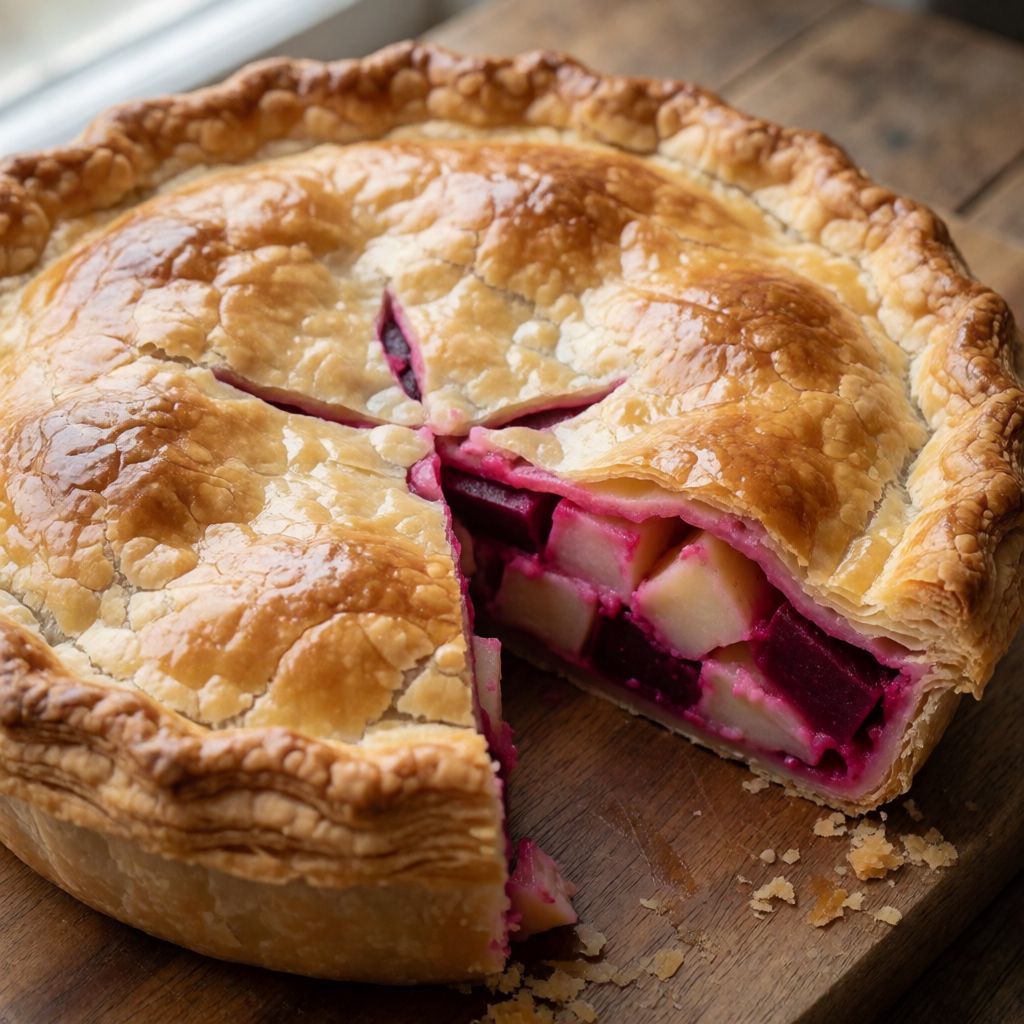
 AI photo
Beetroot and Potato Pie
A rustic savoury pie layering tender potato and beetroot in puff pastry with a creamy Parmesan egg filling.
Labels are worked out automatically from the ingredients and can be wrong. Check the packaging if it matters to you.
Ingredients
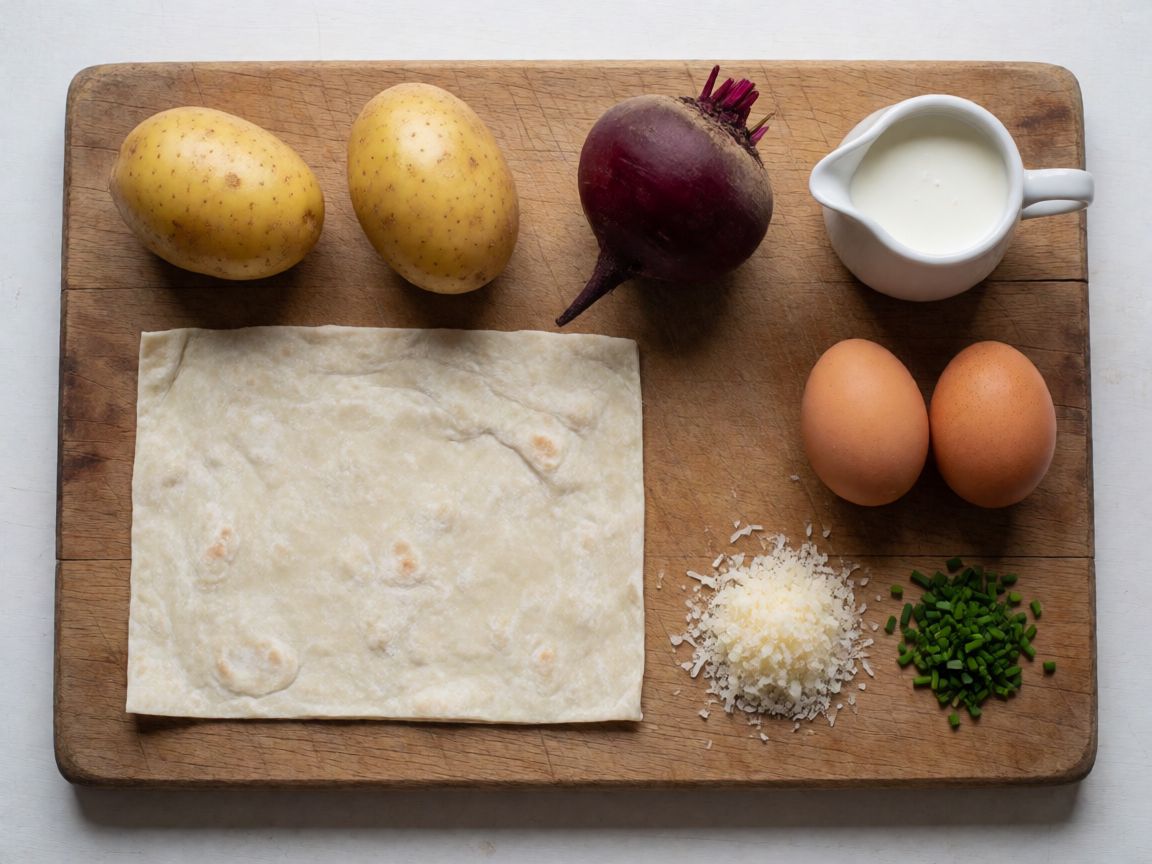
- 1 pcs Ready-rolled puff pastry
- 2 pcs Potato
- 2 pcs Beetroot
- 2 pcs Eggs
- 50 ml Double cream
- Olive oil to taste
- Parmesan to taste
- Chives to taste
- Salt to taste
- Black pepper to taste










Steps
Boil the potatoes in a large pot of salted boiling water for about 15 minutes, until tender.
15 minDrain and leave the potatoes to cool for 10 minutes, then peel and slice them.
10 minSlice the beetroot and set aside with the potato.
Unroll the puff pastry into a tin, press it into the edges and prick the base with a fork.
Crack the eggs into a bowl, whisk vigorously, then add the double cream, chives, black pepper and Parmesan.
Brush the pastry with olive oil and arrange the potato and beetroot slices on top.
Pour over the egg and cream mixture.
Preheat the oven to 180°C.
Bake the pie for about 30 minutes, checking that the pastry is golden and the filling has reached 71°C inside.
30 minServe warm, cut into slices.
This is a tart dressed up as a pie — layers of potato and beetroot sitting in a loose custard of egg, cream and Parmesan, the whole thing held up by puff pastry. What decides whether it works is not the baking, it's the water. Potato and beetroot are both wet vegetables once cooked, and if that water isn't dealt with before it meets the pastry, you don't get a pie, you get a pond with a soggy raft underneath it.
So the boiling-and-cooling of the potato isn't just "cooking" — it's drying by stealth. Ten minutes resting after draining lets the surface steam off and the starch firm up, so when you slice it the pieces hold their shape instead of mashing into paste under the custard's weight. Skip the rest and the slices crumble, and crumbled potato bleeds more water into the filling than sliced potato does.
The egg-and-cream mixture is doing the job a kazan's heat usually does in a stew — binding loose things into one mass. Egg alone would set like a rubber sheet; cream alone would never set at all. Together, at a gentle 71°C internally, you get a custard that's firm enough to slice but still yields under the fork — that's the number to trust, not the clock, because ovens lie and thermometers don't.
Some say puff pastry under a wet filling is doomed from the start — no, because the olive oil brushed on first isn't flavour, it's a raincoat. A thin fat layer between pastry and filling slows the moisture getting through long enough for the oven's heat to set the top layers of pastry into a seal. That's the whole trick, and it's a cheap one.
Puff pastry itself is a UK kitchen shortcut, and a fair one — the real version is built from folding butter into dough dozens of times, which takes patience most people don't have on a Tuesday. Ready-rolled, cold from the fridge, works fine here because this pastry's job is small: hold a shape, go crisp, get out of the way of the filling. Don't thaw it to room temperature before it goes in the tin — warm pastry stretches and tears instead of pressing cleanly into the corners, and that's where leaks start.
Potato: choose a variety that holds its shape when boiled — waxy over floury. A floury potato (the kind that's lovely mashed) falls apart into the custard and you lose your layers; a waxy one slices and stays sliced. If you've only got floury potatoes, boil them a touch less and handle them cold, not warm, when slicing.
Beetroot raw or pre-cooked both work, but raw needs real thought about timing — it's harder and wetter than potato and won't catch up to it in 30 minutes of baking unless it's already soft before it goes in. If using raw, you're better off roasting or boiling it alongside the potato rather than trusting the oven to cook it from scratch inside a tart.
The eggs and cream are not interchangeable with a general "custard" idea — two eggs to 50ml cream is a stiff ratio, more egg than cream, which is why it sets rather than stays saucy. If you want it richer and softer, you nudge cream up slightly, but push too far and it won't hold at 71°C, it'll still be wobbling at 90°C and the pastry base will have burnt by the time the middle sets.
Parmesan here isn't garnish, it's salt and savour doing double duty — a hard, aged cheese melts into the custard rather than floating on it, and its saltiness means you can go lighter on the salt pot itself. Any hard, well-aged grating cheese does the same job — a mature Cheddar, which you've got no shortage of, will do it with a different but honest flavour.
Olive oil for brushing: the brief is "any oil with no smell of its own that can sit under heat without complaining" — a neutral vegetable or sunflower oil does this just as well, you don't need the good extra virgin bottle for a job this unglamorous.
A domestic oven at 180°C rarely reads true — check yours against an oven thermometer once if you can, because this dish's one real test, the 71°C internal custard, is unforgiving of an oven that runs cold. A probe thermometer earns its keep here; poking a knife in and guessing by "it looks set" is how people end up with a tart that's golden on top and raw custard underneath.