
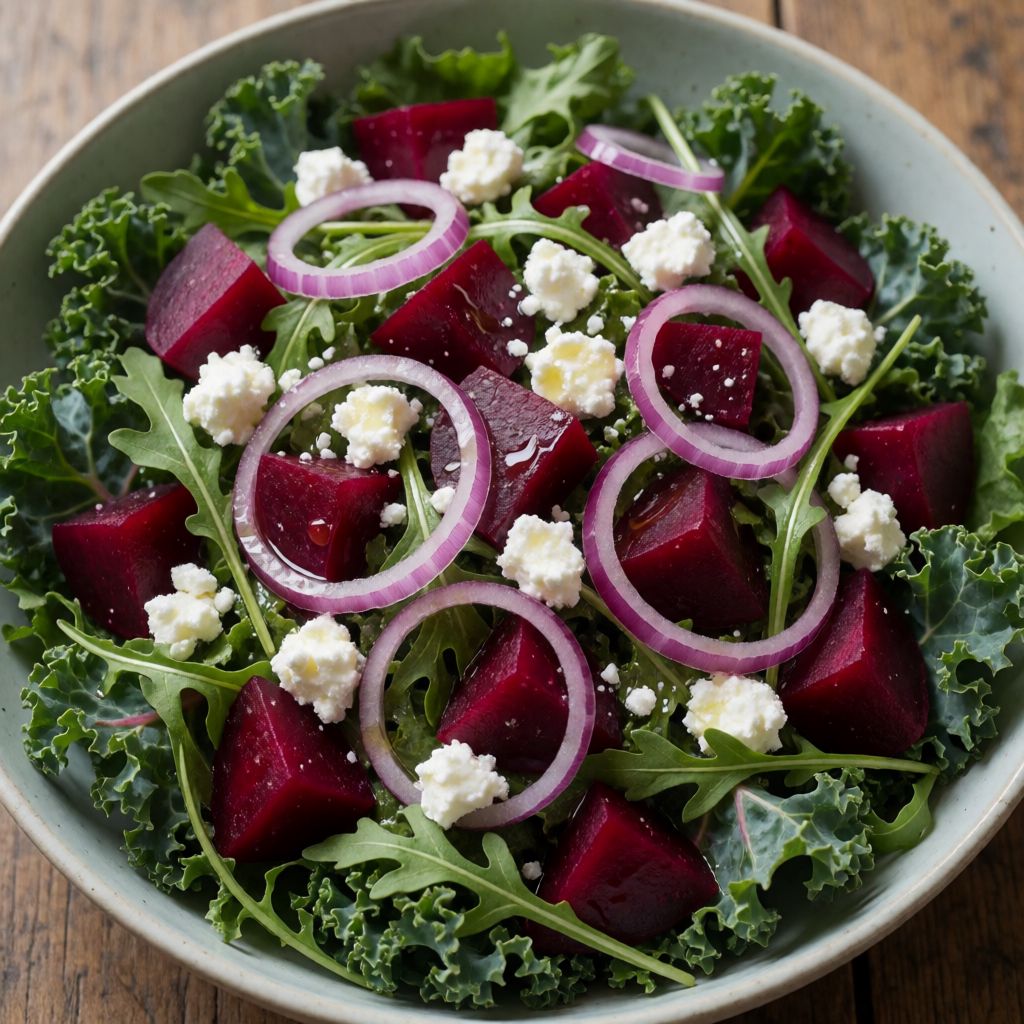
 AI photo
Beetroot and Feta Salad
A fresh salad of roasted beetroot, kale, rocket and feta with a ginger-mustard dressing.
Labels are worked out automatically from the ingredients and can be wrong. Check the packaging if it matters to you.
Ingredients
- 300 g Beetroot cut into cubes
- 100 g kale finely chopped
- 125 g Rocket
- 1 pcs red onion thinly sliced
- 100 g Feta crumbled
- 1 tsp Olive oil
- Salt
- Black pepper freshly ground








For the dressing
- 1 tsp Dijon mustard
- 1 tsp Ginger finely grated
- 2 tbsp Olive oil
- 2 tsp Honey
- Salt
- Black pepper freshly ground



Steps
Toss the beetroot with olive oil, salt and black pepper, spread on a parchment-lined baking tray and roast in a fan oven preheated to 175°C for 15 minutes.
15 minMix the dressing well with the chopped kale.
Put the salad in a bowl, add the rocket, the roasted beetroot cut into cubes, and the red onion, then toss. Crumble the feta over the top just before serving.
Ginger-mustard dressing: mix the Dijon mustard, ginger, olive oil, honey, salt and black pepper.
This is a salad that solves a real problem: raw beetroot is a chore to eat, but boiled beetroot is wet and loses its edges. Roasting is the compromise — dry heat concentrates the sugars instead of washing them into a pan of water, so the beetroot comes out sweeter and firmer, not mushy. That's the whole engineering decision behind this dish, and it's worth knowing before you follow the steps blindly.
175°C in a fan oven is not an arbitrary number — it's hot enough to caramelise the cut surfaces of the beetroot without scorching them in the time it takes the inside to soften. You're looking for a skewer or knife to slide in with faint resistance, not nothing. If it meets real resistance, it needs more time regardless of what the clock says — beetroot varies by size and age far more than most root vegetables, and a tired old one will sit there stubbornly past the 15-minute mark.
The second mechanism is the dressing meeting the kale before anything else happens. Raw kale is tough and slightly bitter — that's cellulose and the leaf's own defence chemistry. Massaging acid, oil and salt into it (here via the mustard-honey dressing) breaks down the leaf structure just enough that it turns tender and glossy instead of staying rigid and raw-tasting. Skip this step and the kale sits in the bowl as a fibrous weed; do it five minutes early and you've got something you'd mistake for a cooked green.
Beetroot itself — buy it raw and whole if you can, not the vacuum-packed cooked kind sold next to it in most UK supermarkets. The pre-cooked ones are usually boiled in vinegar brine, which means they arrive already soft and sour, and roasting them again just dries them out without giving you the caramelisation you're after. If raw beetroot genuinely isn't available, the vac-packed version will still make an edible salad — just skip the oven step entirely and go straight to tossing it through, treating it as a shortcut rather than an ingredient you've improved.
Kale is doing a job that rocket alone can't: it's the one leaf in this bowl sturdy enough to hold dressing and not collapse by the time you eat it. If you can't get kale, use a leaf with similar backbone — shredded cavolo nero, or even a firm savoy cabbage — anything that needs a minute of massaging before it behaves. Baby spinach won't work here; it has no structure to break down and will just go slimy under the dressing.
Rocket brings the bitterness and peppery bite that stops the whole plate tasting sweet — beetroot, honey and ginger together would be cloying without it. Any assertive leaf with a bit of heat does the same job: watercress, mizuna, or a mustard-leaf mix. Avoid soft lettuces here; they add bulk but no flavour, and they wilt under a warm dressing within minutes.
The red onion is sliced thin and raw for crunch and sharpness — a counterweight to the soft roasted beetroot. Some cooks will tell you raw onion must be soaked in water or vinegar first to "take the harshness out" — no, because that harshness is exactly what the salad needs against all that sweetness; soak it and you've just made a wet, flavourless onion.
Feta's job is salt and tang against sweet beetroot and honey — that contrast is the point of the dish, not a garnish. If you're substituting, look for any salted, crumbly, non-melting cheese: a firm goat's cheese or a mild halloumi crumbled (not fried) will do it, though halloumi is milder and you may want a touch more salt in the dressing to compensate.
The dressing itself is built on an emulsion principle even though the recipe doesn't dwell on it: mustard is there not just for flavour but because it helps the oil and honey bind into something that coats rather than pools at the bottom of the bowl. Use an oil with no flavour of its own competing with the ginger and honey — a light olive oil, not an aggressively peppery extra virgin, which will fight the honey instead of carrying it. One tsp for roasting, two tbsp for the dressing — that's deliberate; the beetroot needs just enough oil to crisp its edges in the oven, the dressing needs enough to coat four servings of leaves without drowning them.
And on patience: give the beetroot its full time in the oven and no rushing it out early because the rest of the salad is ready. A beetroot cut too soon from the oven is firm in the wrong way — undercooked, not "al dente" — and no amount of good dressing fixes that at the table.