
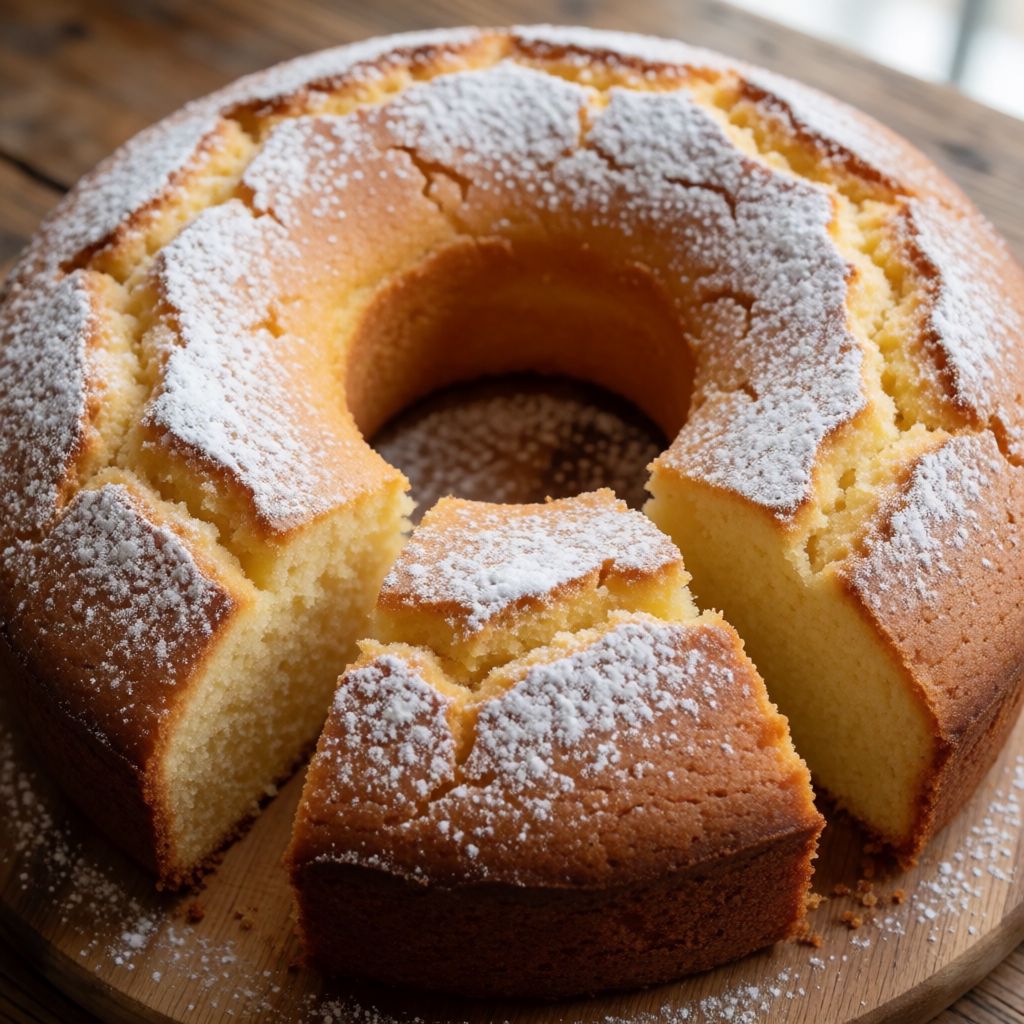
 AI photo
Berlingozzo — Tuscan Carnival Cake
A fragrant Tuscan carnival cake, scented with lemon and orange zest and finished with a citrus syrup and sprinkles.
Labels are worked out automatically from the ingredients and can be wrong. Check the packaging if it matters to you.
Ingredients
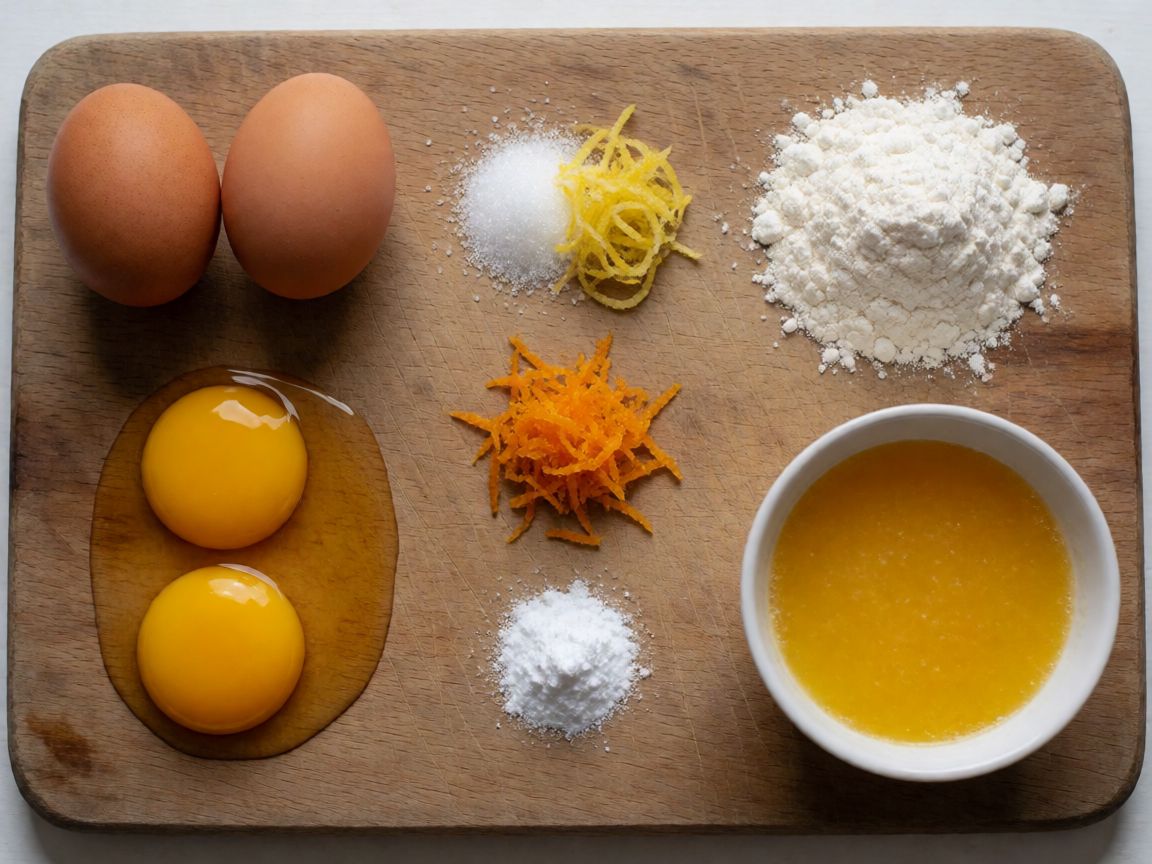
- 2 pcs Eggs
- 2 pcs Egg yolk
- 100 g Sugar
- 50 g Vegetable oil
- 1 pcs Lemon zest
- 1 pcs Orange zest
- 250 g Plain flour
- 15 g Baking powder
- 70 g Orange juice
- 50 g Sugar
- Pastry sprinkles to taste










Steps
In a large bowl, break in the two eggs and add the two yolks; whisk with a mixer together with the sugar until pale and fluffy.
Pour in the vegetable oil in a thin stream, continuing to whisk.
Flavour the batter with lemon zest and orange zest.
Sift and fold in the flour and baking powder; mix thoroughly so no lumps form.
Pour the batter into a 22 cm ring tin, well greased with oil and dusted with flour.
Bake in a preheated fan oven at 160°C for 35–40 minutes.
38 minCheck it is done with a wooden skewer: if it comes out dry, the cake is ready.
Let the cake cool, then transfer it to a plate.
Make a syrup by dissolving the sugar in the orange juice over low heat, stirring constantly.
Pour this syrup over the cake and immediately sprinkle with pastry sprinkles.
Berlingozzo is a ring cake from Tuscany that carnival season throws together because carnival wants something sweet, cheap, and fast — no overnight rise, no filling, no fuss, just a good crumb and a shiny sugar skin. The name itself apparently comes from "berlingaccio," the Thursday-before-Lent carnival day in Florence when people ate rich food before the Lenten fast started cutting it back. So this is leftover-abundance logic: eggs, sugar, oil, a bit of citrus, baked in a ring, then soaked in syrup. Nothing exotic, nothing that needs a trip to a specialist shop.
What decides whether it works is the whisking at the start and the baking-powder-only lift at the end. You're not folding in whipped whites, you're not creaming butter — you're beating whole eggs and yolks with sugar until the mixture goes pale and thick enough to hold a ribbon shape when it falls off the whisk. That trapped air is most of your lightness; the baking powder finishes the job but can't start it from flat batter. Some say any vigorous mixing will do — no, because under-whisked batter gives you a dense, slightly rubbery ring instead of an open, soft one, and no amount of extra baking powder fixes that after the fact.
On the eggs: two whole eggs plus two extra yolks is a ratio worth noticing, not an accident. The extra yolks add fat and colour without adding more egg white — more white would mean a drier, more elastic structure, closer to a sponge for rolling. You want tender here, not springy, so the yolks skew the balance toward richness. If you only have whole eggs to hand, three whole eggs instead of two eggs plus two yolks will get you close enough; the crumb will be a touch less golden and a touch less rich, that's the trade.
Sugar does two jobs in two different places. The 100g beaten in with the eggs is structural — it stabilises the air you're whisking in, the same reason meringue needs sugar to hold its peaks. The second 50g, dissolved into orange juice for the syrup, is purely for moisture and shine; it never meets a whisk, it just needs heat and patience to go from grainy to clear. Don't rush that pan — low heat, constant stirring, until you can't feel sugar crystals against the spoon anymore. Crank the heat to hurry it and you'll catch a few crystals caramelising at the edge, and bitterness where you wanted sweetness.
Vegetable oil is specified because this is a workaday cake — any oil with no smell of its own will do: sunflower, a light rapeseed, a mild grapeseed. Leave the olive oil in the cupboard for this one; its flavour fights the citrus rather than sitting quietly under it. If you've only got olive oil, use the mildest bottle you own, not the peppery extra virgin you'd dress a salad with.
Flour and baking powder together, sifted: the sifting isn't ceremony, it's distribution — baking powder clumped in one spot of the batter gives you a cake that rises unevenly, taller on one side, dense on the other. Fifteen grams of baking powder against 250g of flour is a fairly generous lift, which is the whole point when you're not beating egg whites separately — the powder is doing more of the work than it would in a classic sponge, so don't skip or eyeball it down.
Citrus zest is where you choose the character of the cake — lemon for sharpness, orange for roundness, both together for balance, which is what's written here. Zest only the coloured skin, not the white pith underneath; the pith is bitter and that bitterness doesn't cook out, it just sits there arguing with the sugar. The same orange reappears as juice in the syrup, so really one orange does double duty if you plan it — zest it before you juice it, not after, because a juiced orange is a slippery thing to grate.
On the UK kitchen specifically: a 22cm ring tin is a continental size more than a British one, so check it against your bundt or ring mould rather than assuming — a slightly bigger tin just gives you a shallower ring and a shorter time toward that dry-skewer test, which stays the real marker of doneness regardless of what the clock says. Fan ovens run a touch fierce for delicate bakes, so 160°C fan as written is already the gentler setting; if your oven runs hot in practice, the skewer test is your correction, not a guess at a new number. And pastry sprinkles — "codette" in Italian — are decorative, not structural; coloured sugar strands from the baking aisle do exactly the same job, and if you've none, a plain dusting of granulated sugar onto the warm syrup will still catch the light and give you that tell-tale carnival shine.