
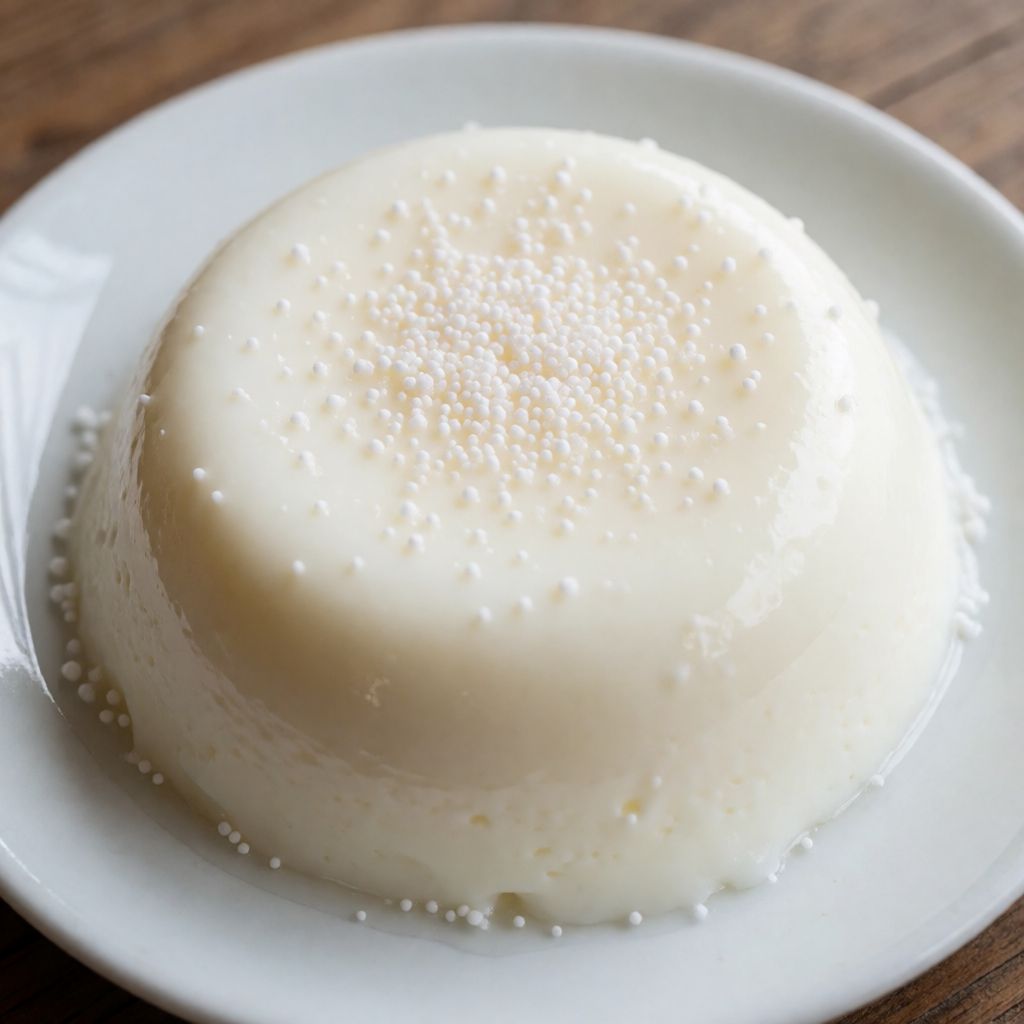
 AI photo
Biancomangiare – Sicilian almond pudding without eggs or flour
A delicate Sicilian almond milk pudding, free from eggs and flour, flavoured with lemon zest and vanilla.
Labels are worked out automatically from the ingredients and can be wrong. Check the packaging if it matters to you.
Ingredients
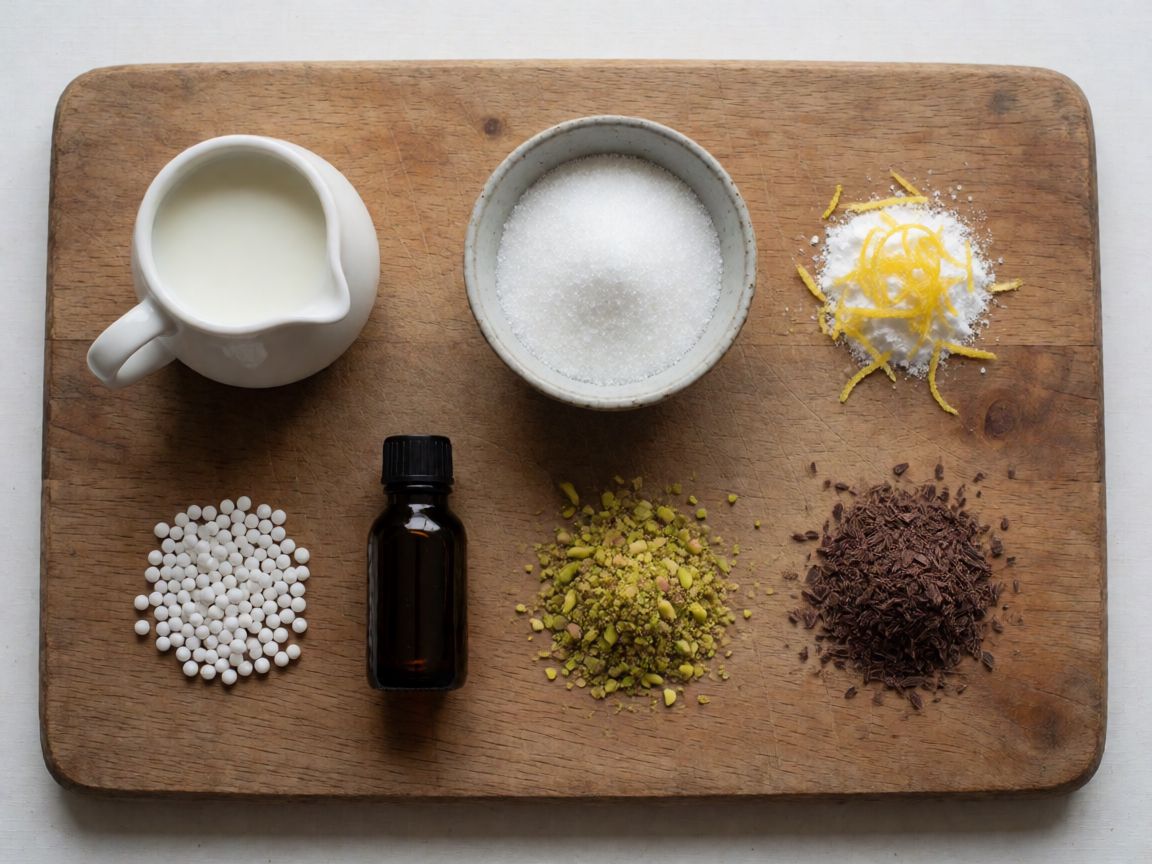
- 500 ml Almond milk
- 100 g Sugar
- 50 g Cornflour
- 1 pcs Lemon zest
- 1 tsp Vanilla extract or vanilla powder
- Sugar pearls to taste
- Pistachio chopped, to taste
- Chocolate shavings to taste






Steps
Pour the almond milk into a saucepan, add the sugar, lemon zest and vanilla extract, and bring to the boil.
5 minDissolve the cornflour in a little cold milk, stirring well so no lumps form.
2 minPour the dissolved cornflour into the boiling milk, mix well and return to a medium-low heat for a few more minutes until it thickens.
5 minPour the thickened mixture into moulds, filling them right to the top.
3 minLeave to cool at room temperature, then chill in the refrigerator for a few hours.
Carefully turn the dessert out onto a plate and decorate with sugar pearls, chopped pistachios and chocolate shavings.
5 min
Biancomangiare means "white food" — a medieval Sicilian way of saying luxury without colour. Once it really was almond milk simmered with capon, because almonds arrived by ship and sugar was taxed like gold, so a white, pale dish was a rich man's dish, no saffron or spice needed to prove the point. What's on your plate now is the sweet branch of that family that split off centuries ago: almond milk, sugar, a note of lemon and vanilla, and cornflour to hold the whole thing together. No egg anywhere.
In Britain the word people reach for is "blancmange," which by Victorian times had become a wobbly, slightly mocked nursery pudding, usually set with gelatine. That's a different animal. Gelatine sets by trapping water in a protein net; cornflour sets by swelling its own grains into a paste as it cooks. That's not a small difference — it's why you can do this whole thing in an ordinary saucepan on direct heat, no bain-marie, no careful water bath, no kazan. Egg custard curdles if you hurry it or let it get too hot; starch doesn't curdle, full stop. The only mistakes you can make with it are mechanical ones.
Almond milk is the body of the dish, so buy the plainest version you can find — unsweetened, no vanilla already stirred in, because you want to control both of those yourself. Check the ingredients aren't mostly water and gum; a watery milk gives a watery pudding no matter how much cornflour you throw at it. If you don't have any, any milk with a quiet flavour of its own — not a loud one — will stand in: dairy milk works, oat milk works, even your own almond milk made by blitzing ground almonds with water and squeezing it through a cloth, which is closer to how this dish would have been made before it came in a carton.
Sugar does more than sweeten. It slows the set a touch and keeps the surface glossy rather than matte once chilled, which matters when the whole appeal of this pudding is how clean and pale it looks turned out on a plate. Caster dissolves a minute faster than granulated if you're impatient at the boiling stage; granulated gets there too, it just needs that minute.
Cornflour is pure starch — no protein, no gluten — and that's exactly why this sets clear and smooth rather than cloudy and floury-tasting. Some people assume any thickener called "flour" behaves the same way: no, because wheat flour brings protein along with its starch, needs far longer cooking to lose its raw taste, and never clears the way pure starch does. Out of cornflour, use another pure starch at the same weight — potato starch or rice starch both work, though potato starch sets a little softer and can thin back out if you keep cooking it past the thickening point, so pull it off heat the moment it drags at the spoon.
Lemon zest, not juice. Juice brings acid, and acid can make almond milk look slightly grainy or split at the edges without adding anything you couldn't get from the zest alone — which carries the oil, and the oil is where the whole fragrance lives. Vanilla does similar work, rounding off the slightly flat, nutty taste almond milk has on its own.
Filling the moulds right to the top isn't fussiness — a half-full mould sets into a dome with a soft, unsupported edge that's more likely to slump or tear when you turn it out. Full to the top gives you a flat-bottomed shape with even thickness all the way through, which is what lets it come out of the mould in one piece rather than in two.
The decorations — sugar pearls, pistachio, chocolate — are there partly for contrast, since the pudding itself is soft with nothing to bite into, and partly as a quiet signpost that this is the sweet version of biancomangiare, not the old savoury one made with meat stock, so nobody at the table has to guess. Use whatever gives crunch and a bit of colour against the white — toasted flaked almonds or a dusting of cinnamon do the same job if that's what's in the cupboard.