
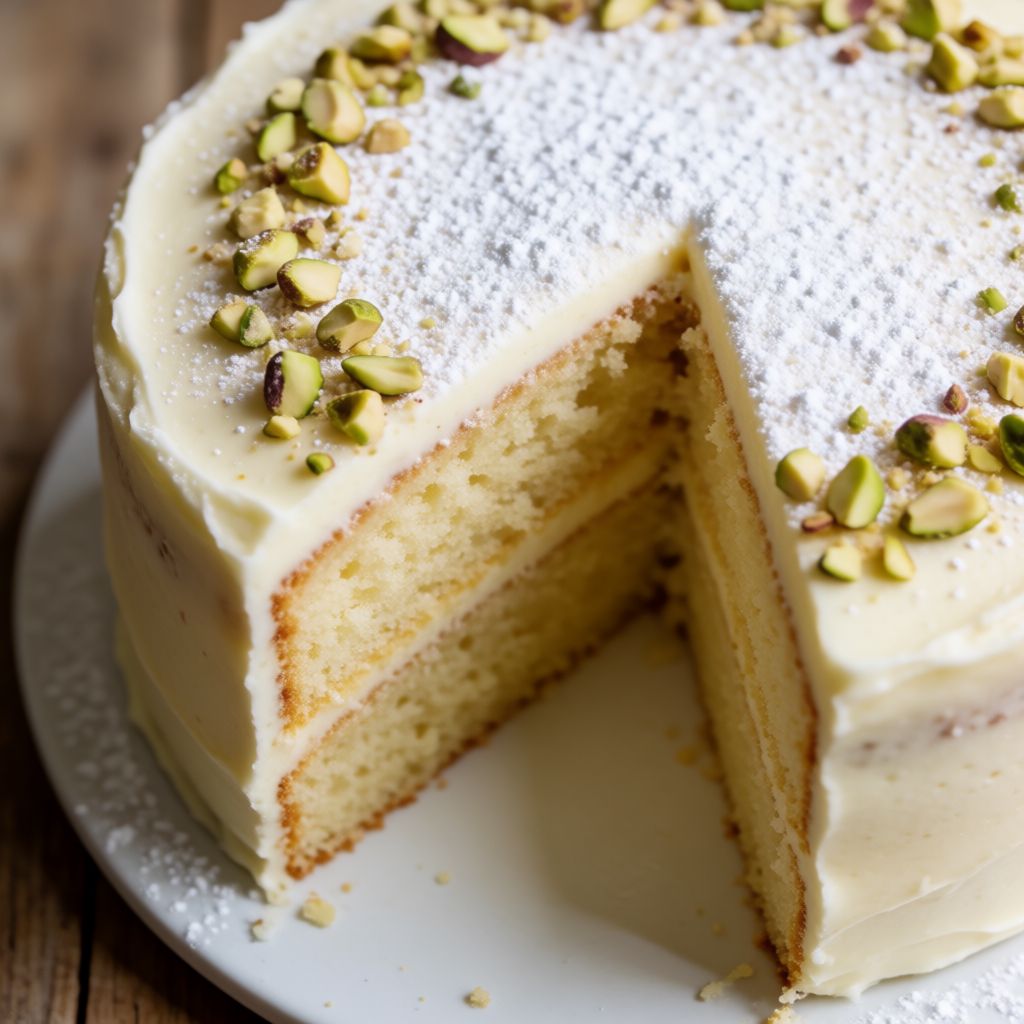
 AI photo
Gluten-Free Birthday Cake
A gluten-free birthday cake with a light sponge, pistachio cream and ricotta filling.
Labels are worked out automatically from the ingredients and can be wrong. Check the packaging if it matters to you.
Ingredients
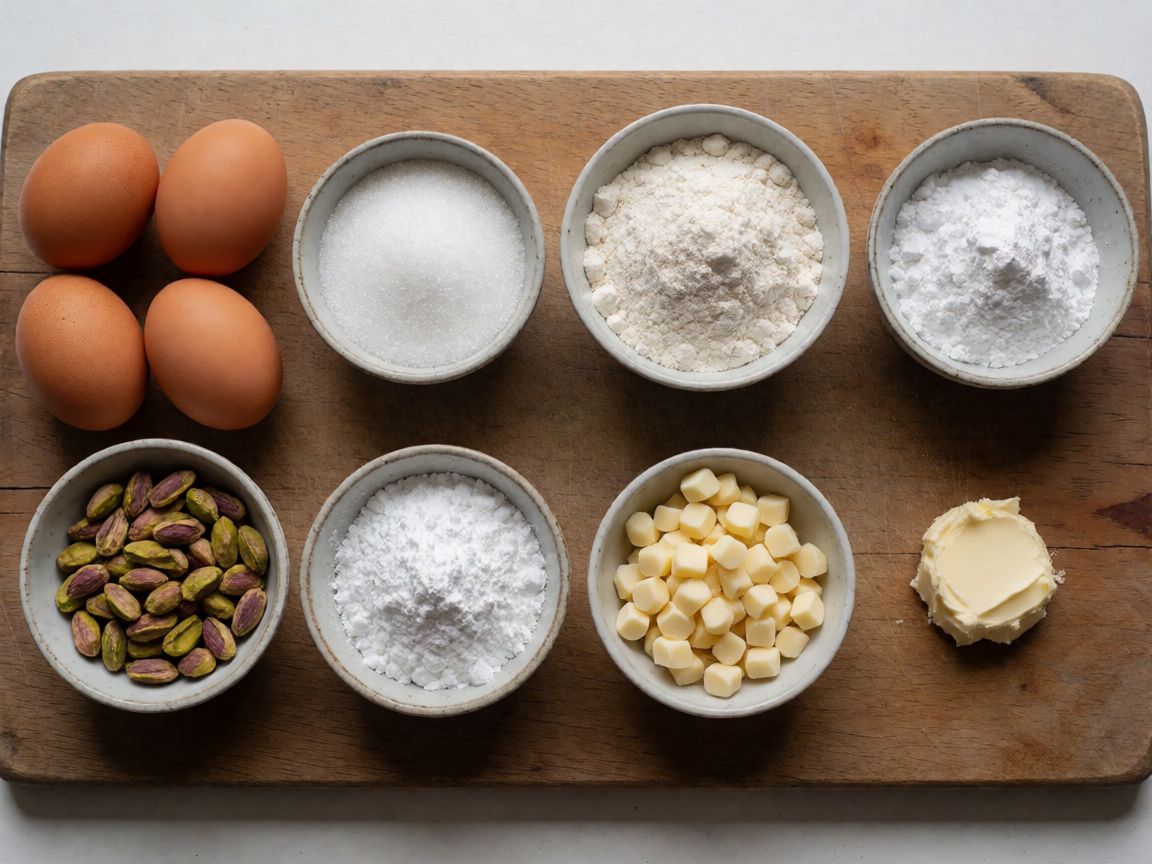
- 4 pcs Eggs
- 100 g Caster sugar
- 65 g Gluten-free flour mix
- 65 g Potato starch
- 240 g Pistachios
- 240 g Icing sugar
- 200 g White chocolate
- 60 g Butter
- 100 g Milk
- 250 g Ricotta
- 500 ml Double cream
- 50 g Icing sugar
- Pistachios chopped




Steps
Whisk the eggs with the sugar for about 15–20 minutes, until the mixture is pale and creamy.
18 minSift the gluten-free flour with the potato starch and fold them into the egg mixture in several batches, mixing gently.
Grease a 22 cm tin with butter and dust with flour, then carefully pour in the batter.
Bake in an oven preheated to 180°C for about 25 minutes, or a further 5–10 minutes without fan.
Blanch the shelled pistachios in boiling water for about 5 minutes, drain and rub with a towel to remove the skins.
5 minBlend the pistachios with the icing sugar (240 g) until a thick, creamy paste forms, chilling occasionally.
Melt the butter, milk and chopped white chocolate over low heat, stirring well, then add the ground pistachios.
Let the pistachio cream cool, then combine the ricotta with the cooled cream in a large bowl.
Whip the double cream with the icing sugar (50 g) and gently fold it into the mixture.
Cut the cooled sponge into 3 equal layers and stack with the pistachio cream, soaking each layer with milk.
Cover the whole cake with the cream, smoothing the sides and top with a palette knife.
Chill the cake in the fridge for at least 4 hours to set.
240 minDecorate with chopped pistachios, fresh fruit or chocolate shavings.
This is a sponge that has nowhere to hide. Take out the gluten and you take out the net of elastic strands that normally holds air in while wheat flour bakes — so the lift here comes almost entirely from the eggs. That's why you whisk them with the sugar for the better part of twenty minutes, not five. You're not just dissolving sugar, you're beating air into the egg proteins until they can hold their own weight, pale as custard and thick enough that a ribbon of batter sits on the surface for a few seconds before sinking in. Rush this and the cake won't rise so much as sit there, dense and a bit sad, because there's no gluten left to bail you out.
What decides whether this works is restraint in two places: folding, and heat. Fold the flour and starch in gently, in batches, because every stir after the air is in is a stir that knocks air back out — and with no gluten structure to re-trap it, that air doesn't come back. Then the oven: 180°C gets the crumb set before the bubbles collapse, and the "further 5–10 minutes without fan" at the end is there because fan ovens dry and colour the surface faster than the centre actually finishes — pull it by colour and spring (press the top, it should come back, not dent), not by the clock alone.
On the flour: "gluten-free flour mix" plus potato starch is doing two jobs. The mix (usually rice flour, maybe some tapioca, with a gum blended in) gives body; the starch lightens it so the crumb doesn't turn gummy or chalky, which is the usual complaint about gluten-free sponges. If you only have the mix and no separate starch, you can lean harder on the mix alone, but expect a slightly denser, less tender crumb — the starch is what's giving you tenderness here, the same job cornflour does in a Victoria sponge when people want it less heavy.
Some say gluten-free cakes are just always worse than the wheat version — no, because the actual reason they disappoint is usually technique, not ingredients: people treat the egg-whisking stage as optional, the way you might with a wheat sponge that has gluten to fall back on. Here it isn't optional, it's the whole structure.
Pistachios: buy them raw and shelled if you can, because the blanching step (5 minutes in boiling water, then rubbed in a towel) is there to strip the papery skin that makes pistachio cream look muddy grey-green instead of that bright jade colour, and tastes faintly bitter if left on. If you only have roasted salted pistachios, the cake still works, but rinse and taste — salt and oil in roasted nuts change the balance, and you'll want to go lighter on any extra salt elsewhere.
White chocolate: choose one with cocoa butter listed, not vegetable fat, because vegetable-fat "white chocolate" won't melt the same way with the butter and milk — you'll get something greasy and separated rather than a smooth cream. Melt it low and slow; chocolate scorches quietly and you won't smell it happening until it's grainy.
Ricotta and double cream together are a British-kitchen-friendly stand-in for the mascarpone-heavy creams of the original Italian-leaning pistachio desserts this owes a debt to — ricotta is lighter and a bit grainy on its own, whipped cream smooths it out, and folding rather than beating them together keeps the air you whisked into the cream from collapsing. Whip the cream to soft peaks, not stiff — stiff cream folded into ricotta turns lumpy and is hard to spread evenly, and a cake with a lumpy coat shows every flaw when you slice it.
On the tin and the oven: a 22 cm tin with a proper domestic oven (no kazan, no steam injection) means you're relying on grease-and-flour alone to stop the sponge sticking — do it properly, into the corners, or you'll tear the top layer trying to turn it out, and torn sponge is very hard to disguise once it's the outside of a cake rather than a hidden middle layer.
The "soak each layer with milk" step matters more in a gluten-free sponge than a wheat one, because this crumb dries out faster once baked — the starch structure holds moisture less generously than gluten does. Milk here isn't flavour, it's insurance against a cake that eats dry by the second day. And the four hours chilling: don't shortcut it because you're impatient for cake. Patience is the ingredient that turns a bowl of mousse sitting on sponge into something you can actually cut a clean slice from — rushing it just means it slumps on the plate instead of standing.