
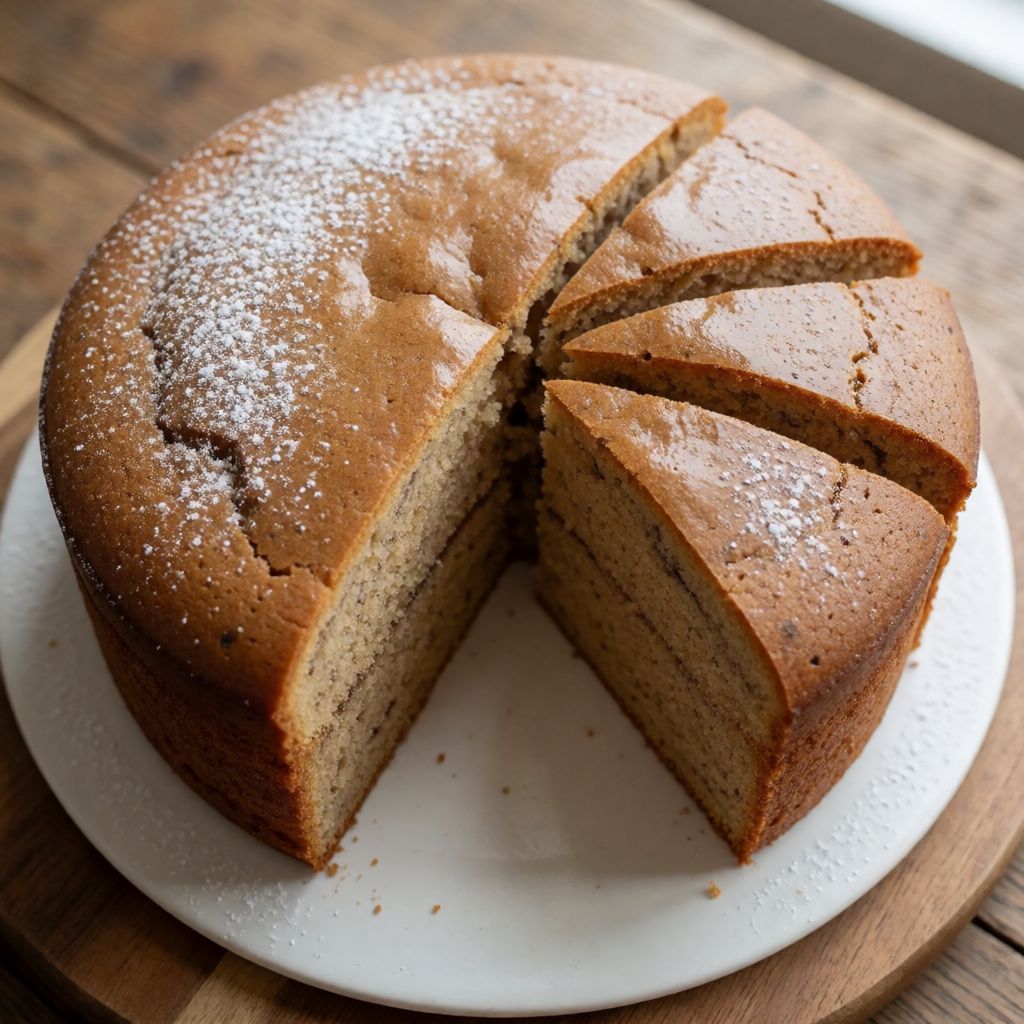
 AI photo
Black Tea Cake
A light, moist sponge cake flavoured with brewed black tea, perfect for an afternoon treat.
Labels are worked out automatically from the ingredients and can be wrong. Check the packaging if it matters to you.
Ingredients
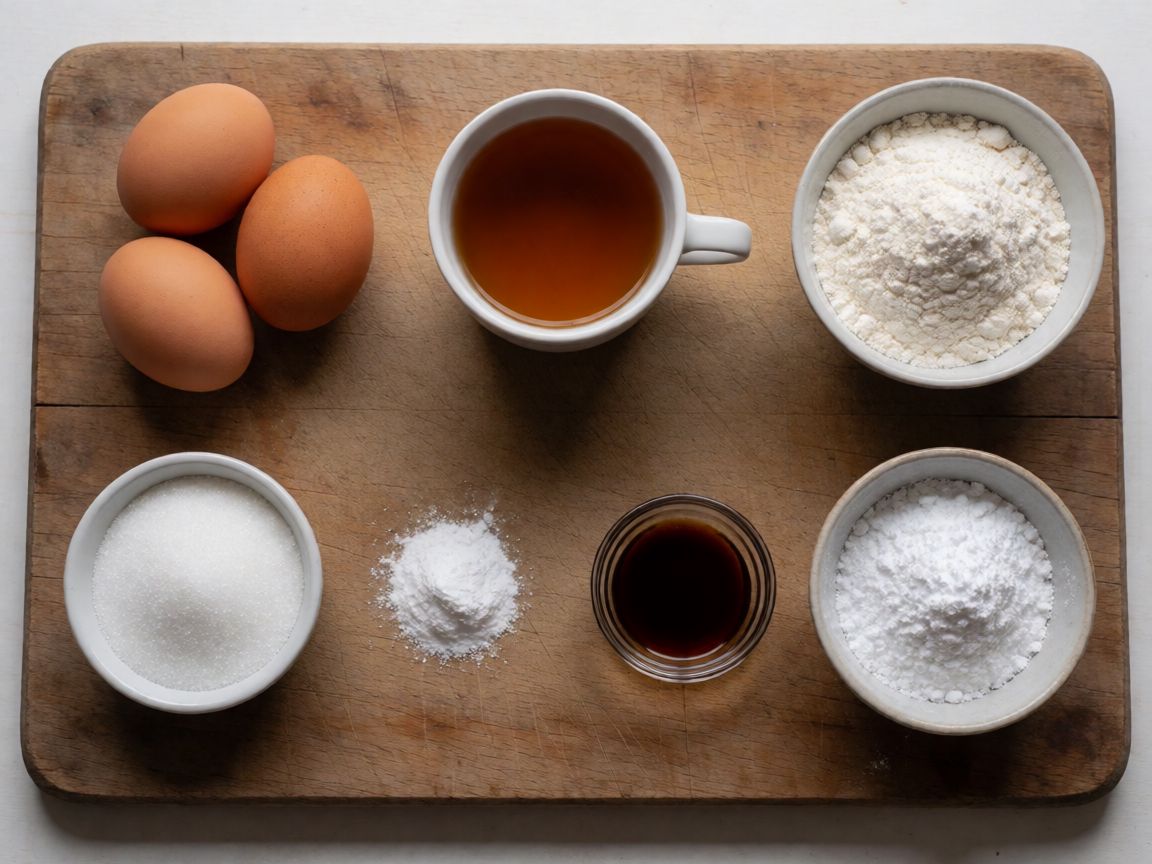
- 3 pcs Eggs
- 150 g Caster sugar
- 100 g Vegetable oil
- 2 package Black tea bags
- 150 ml Water
- 300 g Plain flour sifted
- 8 g Baking powder
- 1 tsp Vanilla extract
- 1 pinch Icing sugar for dusting, to taste








Steps
Boil 150 ml of water and brew two black tea bags in it.
In a large bowl, whisk the eggs with the caster sugar until light and fluffy.
Add the vegetable oil and the slightly cooled tea, then mix well.
Sift in the flour together with the baking powder, add the vanilla extract and mix into a smooth batter.
Pour the batter into a 20 cm or 22 cm tin, greased and dusted with flour.
Bake in an oven preheated to 180°C for 35-40 minutes.
38 minIf you like, dust the cake with icing sugar before serving.
This is a sponge built on oil instead of butter, scented with tea instead of citrus or spice — the kind of cake you'd call a quick loaf cake if someone cut it into slices rather than wedges. Flat, honest, no layers, no filling. It stands on three things: how much air you beat into the eggs and sugar, how gently you fold in the tea without knocking that air back out, and whether you pull it from the oven when the crumb has actually set, not when the clock says so.
The batter has no butter to carry flavour, so the lift and the moisture both have to come from somewhere else. The eggs whisked with sugar until pale and thick aren't decoration — that's mechanical leavening, thousands of tiny air pockets trapped in egg protein and sugar syrup. Baking powder does the rest, but only the rest. Some say baking powder is what makes a cake rise — no, because if your eggs go in thin and runny, all the baking powder in the tin won't save you; it inflates bubbles that are already there, it doesn't create them from nothing.
The tea is where people usually get greedy. Strong, long-steeped tea feels like more flavour — it's actually more tannin, and tannin reads as bitterness and a slight chalky dryness once it's baked through a crumb. Two bags in 150 ml, brewed and let to cool a little before it meets the eggs, is enough to tint and perfume the cake without turning it stern. Adding it hot and straight from the kettle is the other way to ruin the foam you just built — heat deflates egg bubbles faster than you'd think.
Eggs: use them at room temperature if you remember in time, because cold eggs don't whip to the same volume — the proteins unfold and trap air better when they're not fighting the cold. If you forget, warm them briefly in their shells in a bowl of hot tap water for a few minutes before cracking. Three eggs is the right amount for this volume of flour; more and the cake turns rubbery, fewer and it won't hold its shape once cool.
Sugar is doing two jobs, not one. It sweetens, obviously, but caster sugar also dissolves into the egg mixture and stabilises the foam you're whipping — this is why caster works better here than coarser granulated, which takes longer to dissolve and can leave you whisking past the point where the eggs want to collapse. The sugar on the crust is also what lets it brown rather than just dry out.
Oil instead of butter is not a shortcut, it's a different outcome. Butter solidifies as the cake cools, which is partly why butter cakes firm up and can turn a touch dry by the next day. Oil stays liquid at room temperature, so the crumb stays soft for longer — this is the same reason carrot cake and most tea-brack recipes lean on oil rather than butter. The criterion for substitution is simple: any oil with no smell of its own. Sunflower or a light rapeseed oil both do the job without leaving a taste behind; a fruity extra-virgin olive oil will fight the tea and lose.
The tea itself is a nod to thrift as much as to flavour — the kind of cake that grew out of not wanting to waste a pot that had gone cold, the same impulse behind tea loaves and tea-soaked fruit cakes across Britain. Milk never comes into it here, even though it's hard to think of tea in this country without picturing a splash of it — the milk is for drinking, the leaves are for the cake, and mixing the two roles only mutes the flavour you brewed it for.
Flour and baking powder go in together and sifted, which matters less for removing lumps — plain flour rarely has any — and more for breaking it up so it folds in without overworking the batter. Overmixing at this stage develops gluten you don't want in a cake; you're after a tender crumb, not chew, so fold until just combined and stop. Vanilla extract isn't there to taste like vanilla so much as to round off the slightly metallic, bitter edge raw baking powder can leave — a small trick, but it works.
Tin size changes the shape of your problem, not the chemistry of it: a 20 cm tin gives a taller cake that needs the fuller 38–40 minutes and a watchful eye on the top so it doesn't catch before the middle sets; 22 cm spreads the same batter thinner, bakes faster, and risks drying out if you stick rigidly to 38 minutes regardless. Icing sugar at the end is purely cosmetic — it does nothing for flavour or texture, so skip it without guilt if you're not fussed about how the top looks. And give the cake a proper ten minutes in the tin and longer on a rack before you cut it — patience here isn't optional, it's the step where the crumb finishes setting; cut it hot and you'll get a cake that tastes slightly gluey no matter how well you baked it.