
 AI photo
Blackberry Cake
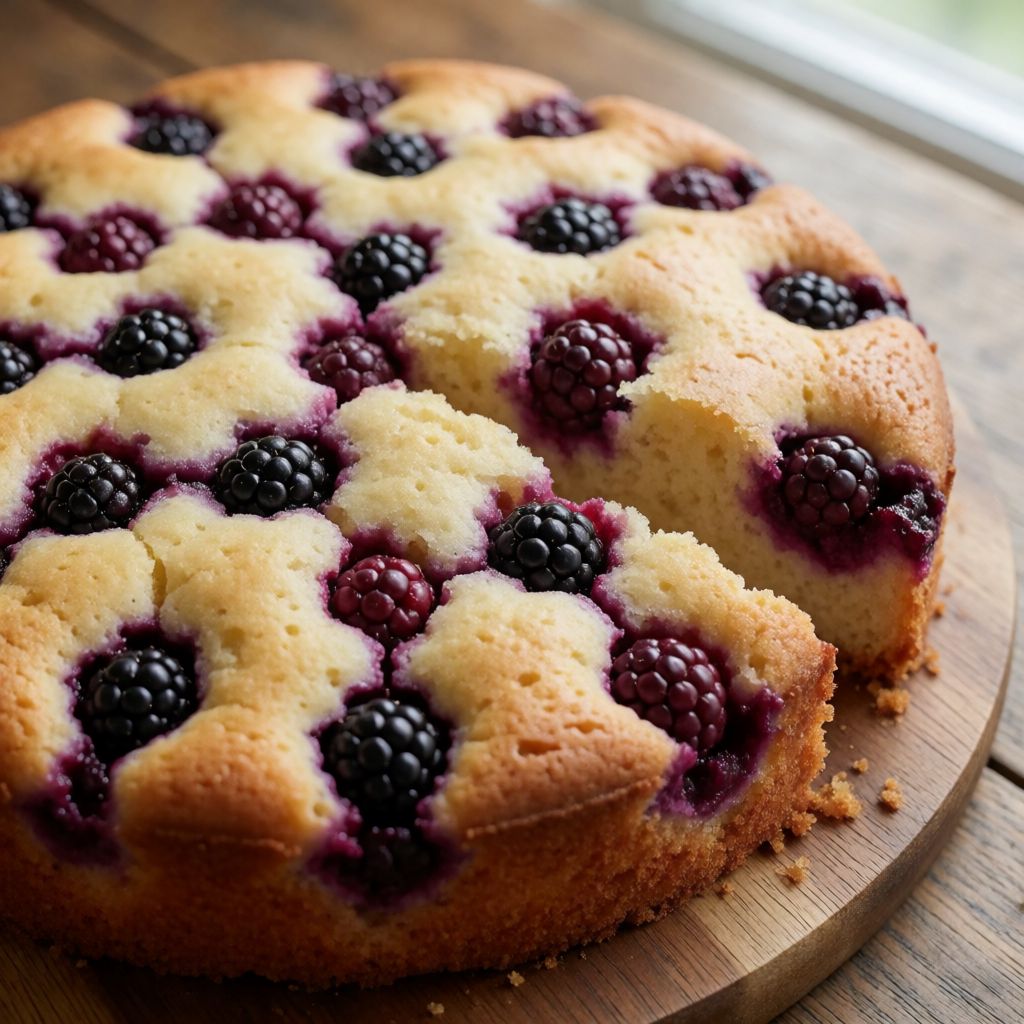
A soft yogurt sponge cake topped with fresh blackberries.
Labels are worked out automatically from the ingredients and can be wrong. Check the packaging if it matters to you.
Ingredients
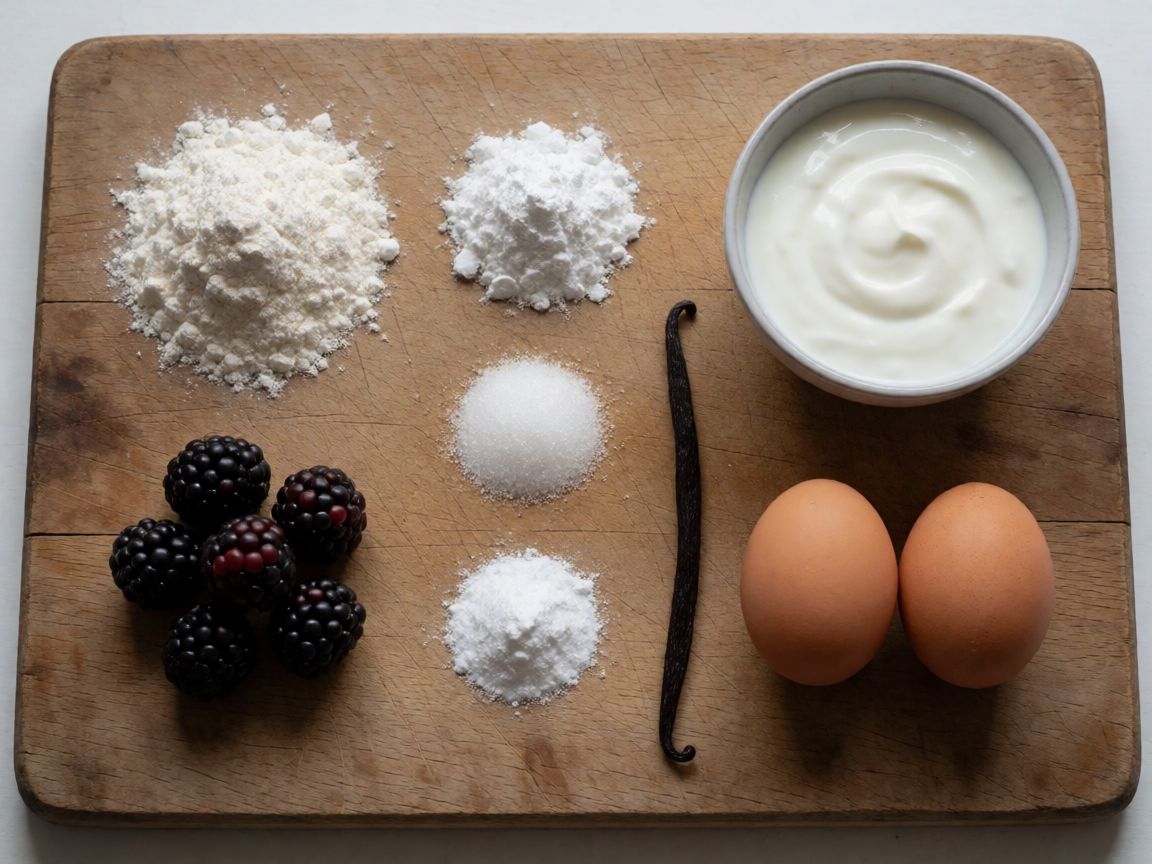
- 200 g Plain flour
- 50 g Cornflour
- 160 g Yogurt
- 180 g Sugar
- 80 ml Vegetable oil
- 150 g Blackberries
- 16 g Baking powder
- pinch Salt a pinch
- 2 pcs Eggs
- 1 pcs Vanilla pod
- ml Milk as needed











Steps
Crack the eggs into the mixer bowl, add a pinch of salt and start whisking.
Add the sugar and the seeds from the vanilla pod, and keep whisking until pale and fluffy.
Add the vegetable oil and yogurt, folding gently from the bottom up.
Sift in the flour, baking powder and cornflour.
Add milk as needed to adjust the batter's consistency.
Grease the tin with butter, dust with flour or line with baking paper, then pour in the batter.
Wash the blackberries and arrange them on top of the batter.
Bake the cake in an oven preheated to 170°C for about 40 minutes.
40 minLet the cake cool before serving.
This is a plain-flour sponge with the structural cheat built in: cornflour. You're not making a genoise, you're making a cake that forgives you — pale and airy on the inside, blackberries sinking just enough to leave dark bruises through the crumb rather than a soggy layer on top. What decides whether it works isn't the oven, it's what happens in the bowl before the flour ever goes in.
Eggs and sugar whisked until "pale and fluffy" is doing real work: you're beating air into the yolk-sugar emulsion, and that trapped air is most of your rise, since this cake only gets a modest 16g of baking powder to carry two eggs' worth of batter. Skip the whisking stage and the powder alone can't save you — you get a dense, close crumb and blame the recipe instead of the three minutes you didn't spend.
Cornflour replacing a third of the plain flour lowers the overall gluten in the mix. Less gluten means a more tender, almost cottony crumb instead of something chewy and bread-like. Some say cornflour is just a thickener for sauces — no, here it's doing the opposite job to gluten: it dilutes structure rather than building it, and that's exactly why the cake stays light even with fruit sitting in it.
The blackberries go on top, not folded through, for a reason: a loose batter can't hold fruit suspended, it'll all sink to the bottom and scorch against the tin. Placed on top, they settle partway as the batter firms in the first few minutes of heat, giving you fruit distributed through the top half instead of a fruit layer on the base.
Plain flour and cornflour together, 200g to 50g, is the proportion to protect. Cornflour on its own has no gluten at all, so push the ratio too far that way and the cake can't hold its own weight — it'll be crumbly rather than tender. If you've got nothing but plain flour, you can make the cake without cornflour, but expect a slightly tighter, more "bready" crumb; there's no magic in cornflour, just less gluten-forming protein per spoonful.
Yogurt here is acid and fat and moisture in one ingredient — it tenderises (acid breaks down a bit of gluten structure), keeps the crumb moist for days rather than hours, and reacts gently with the baking powder. Any plain, unsweetened yogurt works; soured cream or buttermilk are the honest substitutes, same logic, slightly different fat content. Don't reach for flavoured yogurt — the sugar and additives throw off both sweetness and texture.
Vegetable oil instead of butter is a texture decision, not a flavour one. Oil stays liquid at room temperature, butter doesn't — a cake made with oil stays soft the next day, one made with butter firms up as it cools because the butterfat solidifies again. Use anything with no smell of its own: sunflower, rapeseed, a neutral light olive oil at a push. Skip anything cold-pressed and strongly flavoured — you'll taste it in the finished cake and it fights the vanilla and berries.
The milk "as needed" line isn't vagueness, it's honesty about how flour, yogurt and eggs vary batch to batch. You're adjusting for a dropping consistency — batter that falls off a spoon in a slow ribbon, not a splat and not a solid lump. Too stiff and the cake bakes dry and dense; too thin and it won't support the blackberries at all. Add milk a tablespoon at a time and judge it by eye, not by a number nobody can give you honestly.
Vanilla pod seeds scraped in with the sugar is the traditional move because the sugar grains carry the seeds through the batter instead of clumping — some say the pod is just for show, no, the seeds are genuinely more fragrant than extract, but a good teaspoon of vanilla extract or paste is a fair stand-in if pods are pricey, which in a UK supermarket they generally are.
Blackberries are a late-summer, early-autumn fruit in Britain — if you're making this out of season, frozen blackberries work, but don't thaw them first: scatter them on frozen, straight from the freezer, so they don't bleed juice into the batter before it's even in the oven. 170°C in a domestic fan or conventional oven is a real number to trust here, but the 40 minutes is your lower bound, not your alarm clock — check with a skewer through the centre, avoiding a berry, and it should come out clean. A loose, bendy top that springs back slowly is the other sign; a cake that's still wobbling in the middle wants another five or ten minutes, oven variation being what it is.
Let it cool properly before cutting — patience is the last ingredient and the easiest one to skip. Cut it warm and the structure that set around those berries hasn't finished setting; you'll get a messier slice and a crumb that seems gluier than it actually is. Let it sit, have your tea with milk while you wait, and it holds its shape properly.