
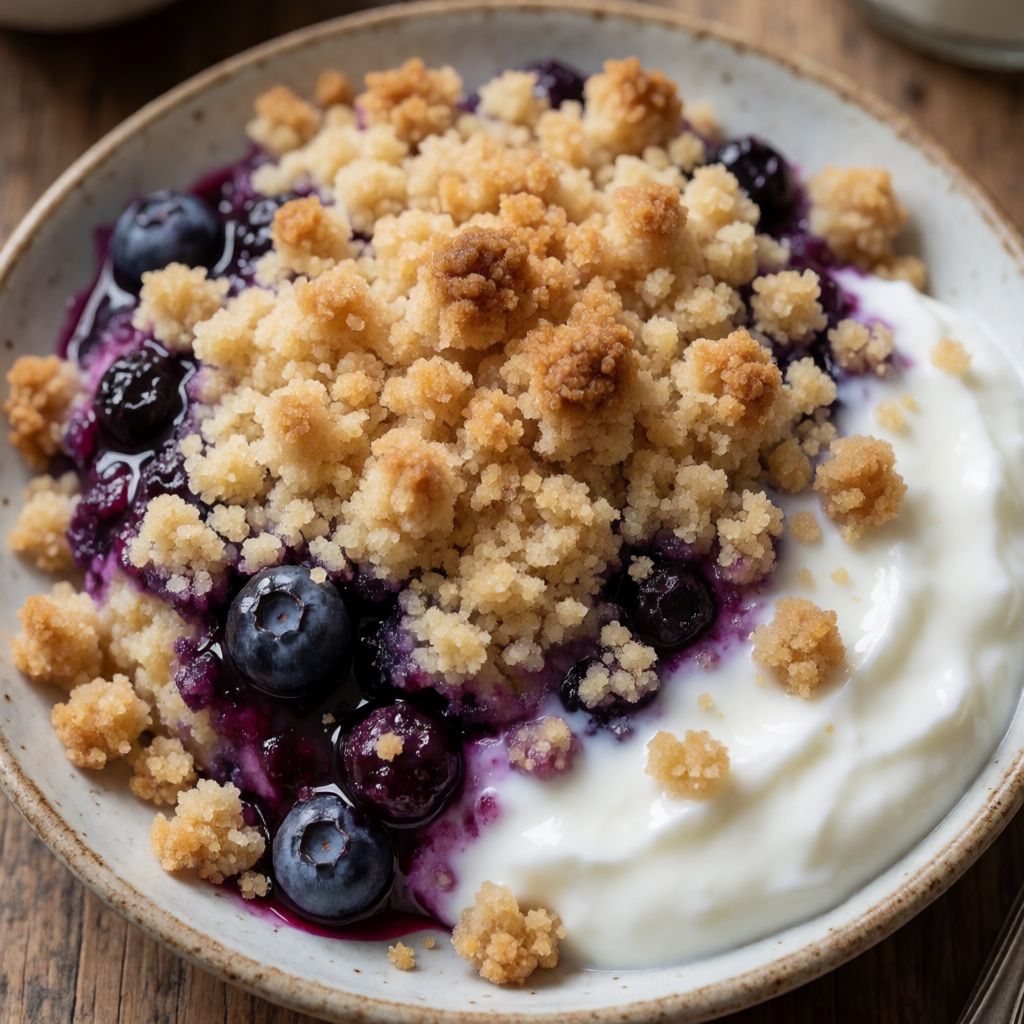
 AI photo
Blueberry and Coconut Yogurt Crumble
A fruity blueberry crumble with a layer of tangy coconut yogurt, baked in individual muffin cases.
Labels are worked out automatically from the ingredients and can be wrong. Check the packaging if it matters to you.
Ingredients
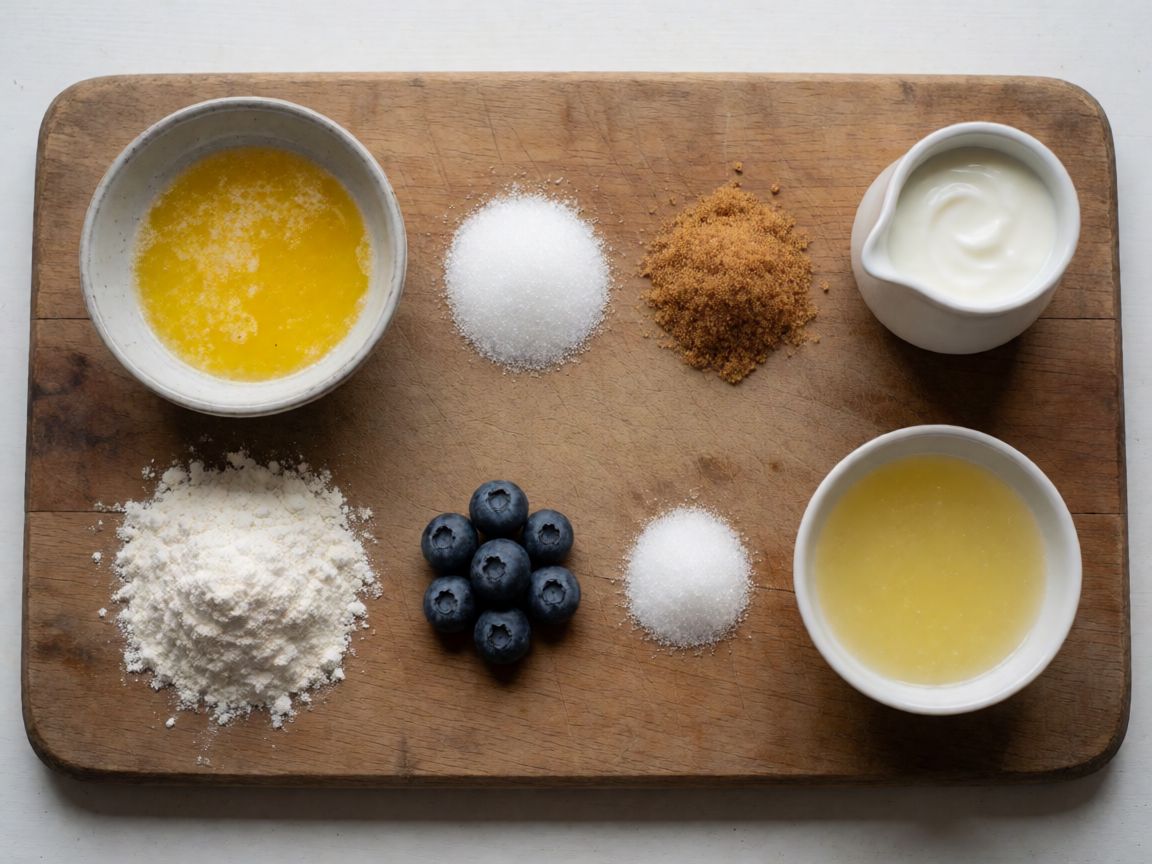
- 120 g Butter melted
- 110 g Caster sugar
- 55 g Brown sugar
- 250 g Plain flour sifted
- 250 ml Coconut yogurt
- 130 g Blueberries
- 50 g Caster sugar for the blueberries
- 1 tbsp Lemon juice
- Brown sugar to taste






Steps
Combine the melted butter, caster sugar, brown sugar and sifted plain flour; mix first with a whisk, then by hand, until the dough forms large crumbs.
Rinse the blueberries, place them in a bowl, add the sugar and lemon juice, and mix well.
Line a muffin tin with paper cases and press in two-thirds of the prepared crumb dough.
Spoon a layer of coconut yogurt on top.
Add the blueberries, then top with the remaining dough and sprinkle with brown sugar.
Bake in the oven at 180°C for 45 minutes.
45 minRemove from the oven and let cool slightly.
This is not the crumble your gran makes over an apple pie in a baking dish. It's crumble built the other way round — in a muffin tin, in individual portions, with a soft yogurt cushion trapped between two layers of crumb. Think of it as a miniature tart that doesn't need a tart tin, and a crumble that doesn't need a big dish to go gooey in the middle of the oven while the edges burn.
What decides whether it works is the crumb itself, and here's where the myth needs breaking: some say crumble topping only happens with cold butter, rubbed in with cold fingers, so it stays separate and sandy. No — that's one method, for one texture. This recipe melts the butter first. Melted fat coats the flour evenly and fast, so when you work it by hand you get larger, heavier crumbs that hold together under their own weight instead of scattering like sand. That's exactly what you need, because this crumb has to do two jobs — sit as a base you can press flat, and sit as a lid you can scatter loose. Cold-butter crumble can't be pressed into a base; it just falls apart. Melted-butter crumble can.
Butter is the mechanism, not just the fat. Melted, it glues sugar and flour into clumps rather than a dough — you want crumbs the size of a hazelnut, not a ball you could roll out. If your mixture comes out too wet and paste-like, you've likely melted the butter too hot and it's drowned the flour instead of coating it; let it cool to just-liquid, not hot, before you mix. Any unsalted butter works; margarine will do in a pinch but gives a flatter crumb with less of that short, biscuity bite, because it carries more water and less milk fat.
Two sugars, two jobs. Caster sugar is fine and dissolves into the crumb evenly, giving a tight, pale crumble. Brown sugar carries molasses, which means moisture and a deeper, almost toffee note, and it's what you want on top for colour — at 180°C it has enough sugar and enough moisture to catch and caramelise rather than just melt. If you've only got one sugar in the cupboard, use it for both jobs; the crumble will be a shade paler and a shade less complex, nothing more dramatic than that.
Flour just needs to be sifted so it takes up the butter evenly — lumps of flour mean dry, floury patches in the finished crumb that taste of nothing. Plain flour, no raising agent: you don't want lift here, you want structure that holds its shape under its own crumbly weight.
Coconut yogurt is chosen for texture, not virtue-signalling dairy-free trendiness — though it is dairy-free, which matters if you're feeding someone who can't do dairy. The criterion for substitution is simple: any thick, unsweetened yogurt that won't run when spooned in a layer. Greek yogurt works. Thin, watery yogurt doesn't — it'll just soak into the bottom crumb before it's even baked, and you'll lose the barrier effect entirely.
Blueberries get macerated in sugar and lemon before they ever see the oven, and this isn't decoration — it's drawing juice out early, under control, in a bowl, rather than letting it happen uncontrolled in the heat of the oven where it can overcook the fruit to mush. The lemon juice does two things: it cuts the flat sweetness of cooked blueberry, and its acid firms the fruit's pectin slightly so the berries hold some shape rather than collapsing to jam. If you've no lemon, any sharp vinegar-free acid will do the same job in a smaller amount — a splash of orange juice, at a push, though it's gentler and you'll taste more sugar than tang.
Proportions here feed eight, which in a muffin tin means eight cases, no bigger decisions to make about tin size — that's the whole appeal of baking this way on a domestic hob and oven that may run a little hot or cold depending on where it sits. And once it comes out, don't rush it to the table. The yogurt layer needs those first minutes of cooling to firm from warm cream into something you can bite through cleanly — cut it straight from the oven and you'll get a hot purple river instead of layers. Patience here isn't optional, it's the last ten minutes of the recipe that nobody writes down.