
 AI photo
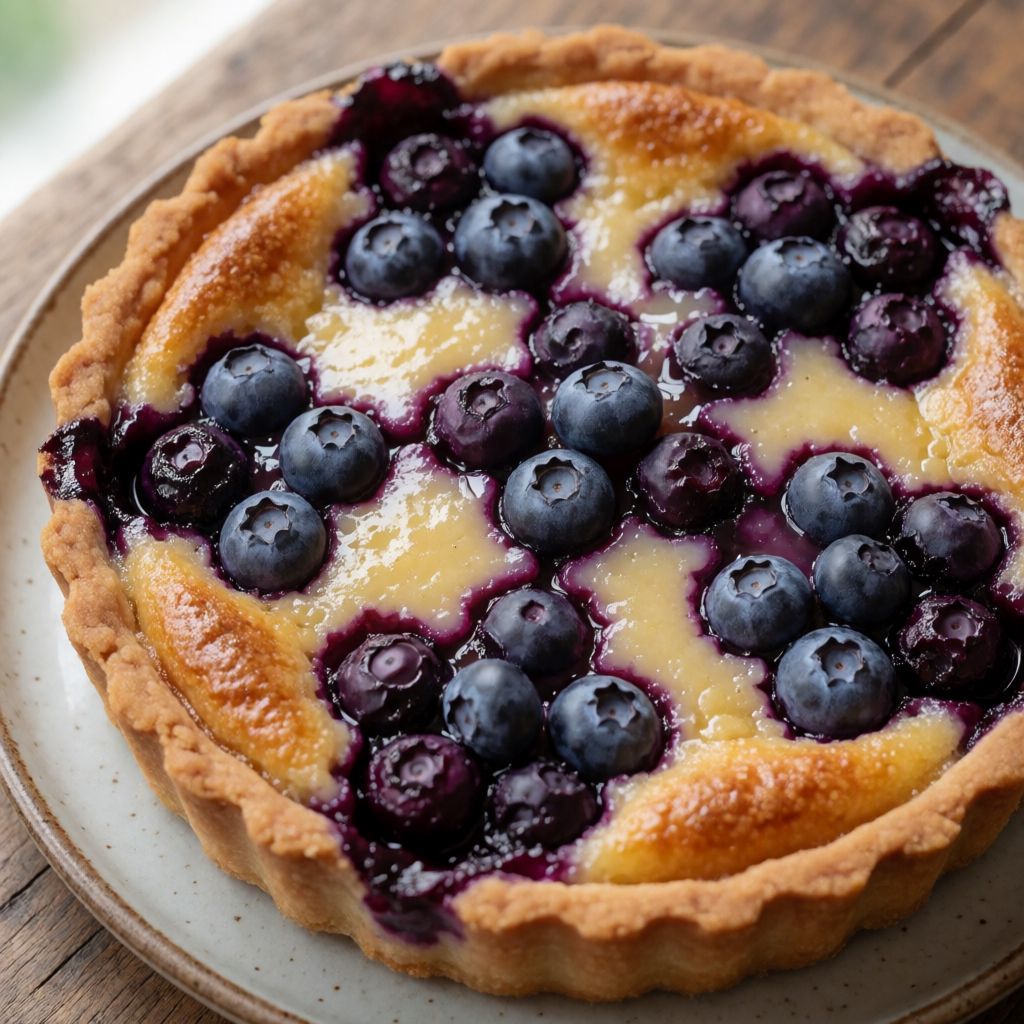
Blueberry Frangipane Tart
A buttery pastry case filled with almond frangipane and studded with blueberries.
Labels are worked out automatically from the ingredients and can be wrong. Check the packaging if it matters to you.
Ingredients
- 240 g Plain flour
- 50 g Icing sugar
- 1 pinch Salt
- 120 g Butter cold
- 1 pcs Egg beaten
- Water cold, as needed
- 100 g Butter at room temperature
- 100 g Caster sugar
- 2 pcs Eggs
- 100 g Ground almonds
- 225 g Blueberries frozen
- 100 ml Crème fraîche









Steps
In a food processor, mix the plain flour, icing sugar, salt and cold butter until crumbly. Bring the dough together in a bowl with the beaten egg, adding cold water as needed until it forms a ball.
5 minRoll out the dough between two sheets of baking paper and chill for 30 minutes.
30 minGrease a 24 cm tin, line it with the dough, press into the edges and trim off the excess.
Prick the base with a fork, cover with a sheet of baking paper, fill with baking beans or baking beads and blind-bake in a preheated fan oven at 175°C for about 15 minutes.
15 minBeat the butter with the caster sugar until light and fluffy, then add the eggs one at a time, beating well after each addition. Fold in the ground almonds until smooth.
5 minSpread the frangipane over the cooled pastry base, scatter the blueberries over the top and press them lightly into the filling.
2 minBake the tart in a preheated fan oven at 175°C for 30 minutes, or until the frangipane is golden.
30 minServe the tart with a generous spoonful of crème fraîche, vanilla ice cream or whipped cream.
A frangipane tart is really two separate custards of fat pretending to be one dessert: a short, cold pastry shell built to hold its shape, and a warm almond-and-butter filling built to puff and set. What decides whether it works is temperature discipline — keeping the pastry cold until it's baked, and the frangipane warm enough to emulsify but not so warm it splits. Everything else, including the blueberries, is decoration on top of that structure.
The pastry here is a pâte sucrée relative — flour, icing sugar, cold butter rubbed to crumb, then bound with egg rather than water alone. The egg does two jobs: it adds fat and protein that make the dough more cohesive and less likely to crack, and it gives you a buffer so you need less water, which is the enemy of short pastry. Add water only in drops, because water develops gluten, and gluten is what turns "short and sandy" into "tough and biscuity." Some say you must handle pastry as little as possible — true, but not because of some delicate mystique; it's because warm hands melt the butter, and melted butter can't do the one thing solid butter does: stay in separate flakes that steam apart in the oven and give you shortness instead of a dense biscuit.
Blind-baking isn't ritual either. An unbaked base under a wet filling steams instead of browning, and you end up with a soggy, pale disc under the frangipane — baking beans weigh the pastry down so it doesn't bubble and lose its shape while the structure sets on its own in the heat, before anything wet goes anywhere near it.
Flour: plain, not strong bread flour — you want low gluten here, because gluten is structure and structure is the opposite of short. If you've only got self-raising, use it but skip any raising agent elsewhere; otherwise the base can puff unevenly rather than stay flat enough to carry the filling.
Icing sugar, not caster, in the pastry: it dissolves without grit and doesn't leave sugar crystals that could toughen the dough or scorch at the pastry's edges before the filling is done. If you're out, pulse caster sugar finer in a blender rather than using it as is.
Butter, cold, in the pastry, is not a style choice — it's the mechanism. Cold butter stays in distinct lumps when cut into flour; those lumps melt in the oven and leave gaps, which is what "short" means on the tongue. Warm or softened butter coats the flour like a paste and seals those gaps shut, giving you a hard biscuit instead. Any neutral fat that stays solid at fridge temperature can substitute, but butter also brings flavour the others don't, so there's little reason to swap it here.
For the base, the egg plus a little cold water is the binder. Resist the urge to add more water "to make it easier to roll" — easier now means tougher later, because excess water keeps developing gluten even in the fridge. Chilling the rolled dough for the stated half hour isn't about tradition, it's about relaxing that gluten and firming the butter back up after your hands warmed it, so the pastry holds its shape in the oven instead of slumping down the sides of the tin.
In the frangipane, room-temperature butter is deliberate and opposite to the pastry's cold butter — here you want it soft enough to trap air when beaten with sugar, because that trapped air is what keeps the eggs from curdling the mixture when they go in one at a time. Adding eggs too fast, or cold, is the real cause of a frangipane that looks "split" or greasy on top after baking — not bad luck, just eggs hitting fat too quickly for the emulsion to catch up.
Ground almonds carry fat and give the filling its characteristic moist, dense bite; if you need a nut-free version, some bakers use ground sunflower seeds or desiccated coconut, though the flavour and texture shift noticeably and you lose the point of calling it frangipane at all — at that stage you've made a different tart, and that's fine, just don't expect the same result.
Frozen blueberries, pressed in rather than folded through, stay whole and release their juice slowly into the frangipane as it bakes, giving pockets of sharp fruit against the rich filling rather than a uniform purple sponge. Fresh blueberries work the same way and need no adjustment; what matters is they go in cold and get pressed lightly, not stirred, so you don't streak the batter purple before it's even in the oven.
In a domestic fan oven, 175°C is a working heat for setting egg-and-butter mixtures without scorching the almonds on top before the centre firms — a non-fan oven runs a touch cooler for the same dial setting, so give it a few extra minutes and judge by the frangipane's colour and a slight firm spring when you press it, rather than trusting the clock alone. Crème fraîche at the end earns its place for the same reason as the blueberries: something cold and faintly sour against a tart that's all butter and sugar underneath.