
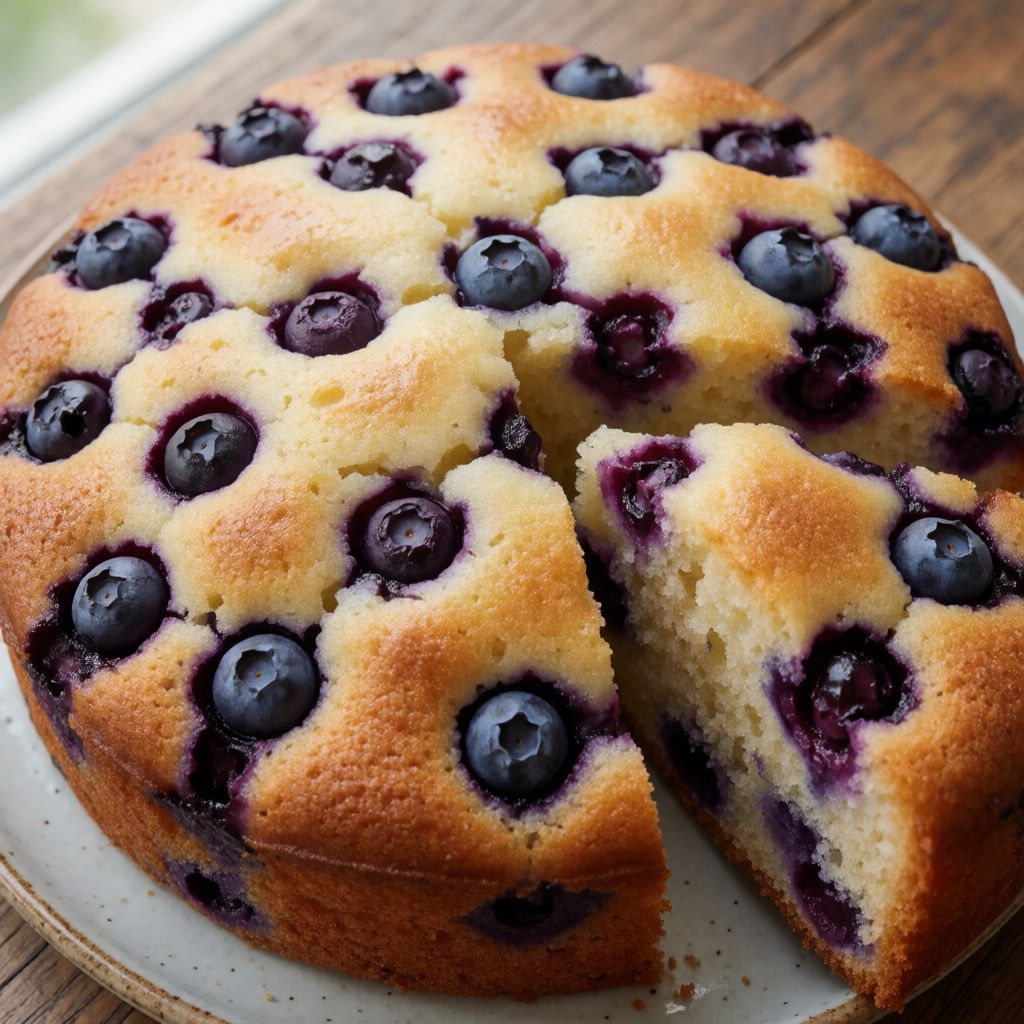
 AI photo
Blueberry Cake
A buttery blueberry loaf cake with layers of berries baked through the batter, finished with a tangy lemon cream cheese frosting.
Labels are worked out automatically from the ingredients and can be wrong. Check the packaging if it matters to you.
Ingredients
- 200 g Butter room temperature
- 200 g Caster sugar
- 1 tsp Vanilla sugar
- 4 pcs Eggs
- 200 g Plain flour
- 2 tsp Baking powder
- 1 pinch Salt
- ½ pcs Lemon finely grated zest, organic if possible
- 60 g Blueberries frozen
- 50 g Blueberries fresh








Frosting
- 75 g Butter room temperature
- 50 g Icing sugar
- ½ pcs Lemon finely grated zest and 1 tbsp juice
- 75 g Cream cheese
- 20 g Blueberries frozen


Steps
Beat the butter, sugar and vanilla sugar until light and fluffy, then beat in the eggs one at a time.
Mix the flour, baking powder, salt and lemon zest, then fold gently into the batter until smooth.
Spoon a third of the batter into a greased tin, about 10 x 25 cm.
Sprinkle over some blueberries, spread a little more batter on top, sprinkle with blueberries again and keep layering until all the batter and berries are used.
Bake the cake in a preheated fan oven at 175°C for 45-50 minutes.
Let the cake cool on a wire rack before covering it with the frosting.
For the frosting: beat the butter, icing sugar, lemon juice and lemon zest until pale and fluffy, then add the cream cheese and beat briefly to combine.
Put the blueberries in a pan and bring to a gentle simmer, just until boiling, stirring constantly.
Strain the juice through a sieve and stir 1-2 tbsp of the juice into the frosting along with a few of the blueberries.
Cover the cake with the blueberry frosting.
Finish with fresh blueberries on top and serve the cake.
A pound cake with blueberries buried inside it, not scattered on top — that's the whole engineering decision this recipe makes. Butter, sugar, eggs and flour in roughly equal weight is the old ratio, a pound of each, which is where the name comes from and why it needs almost nothing else to taste rich. Frozen berries go in because they're firmer than fresh and won't bleed into the crumb the second they hit warm batter — fresh ones you'd fold in gently or they turn the whole loaf purple-grey.
What decides whether it works is the layering, not the oven. You spoon a third of the batter in, scatter berries, more batter, more berries — three thin strata instead of one dump of fruit. Do it in one go and the berries sink: they're denser than the batter and a loaf tin is deep enough for them to fall straight to the bottom before the crumb sets around them. Three layers means each berry only has to be suspended through one-third of the rise.
The tin shape matters too — long and narrow, not round. A loaf-shaped tin gives you more surface area touching the metal relative to the volume of batter, so the centre cooks through before the edges burn, which a deep round tin won't manage as kindly at this oven temperature.
The frosting is a cream cheese buttercream sharpened with lemon and marbled with a cooked-down blueberry syrup — it sits on top once the cake is properly cold, because warm cake means melted frosting sliding onto your worktop, and nobody wants to be scraping lemon butter off a cooling rack.
Butter, room temperature, not melted — you need it soft enough to trap air when beaten with the sugar, which is the only leavening this crumb gets besides the baking powder. Melted butter can't hold a bubble; it just coats the sugar crystals and sits there. Room temperature for an English kitchen in a centrally heated flat usually just means taking it out an hour before you start — don't microwave it, that's the melted-butter mistake by a different route.
Caster sugar rather than granulated because the finer crystal dissolves into the fat faster during creaming — less grinding time, less risk of overbeating the butter into a greasy mess trying to force coarse sugar to dissolve. Vanilla sugar is a small flavour top-up; if you don't keep a jar of it, a few drops of vanilla extract added with the eggs does the same job.
Eggs go in one at a time, and the reason isn't fussiness — it's that butter and egg (mostly water) don't naturally want to mix, and a creamed-butter emulsion can curdle, go grainy and separate if you dump four eggs in at once. One at a time, beaten in properly, keeps the fat holding onto the water instead of weeping it out. If it does split, a spoonful of the flour beaten in brings it back — that's not a secret, that's just starch soaking up the loose liquid.
Flour, baking powder, salt and lemon zest get mixed dry before they ever touch the batter, so the baking powder is distributed evenly rather than landing in one pocket that puffs while the rest stays flat. Folding, not beating, once this goes in — you've built air into the butter-sugar-egg mixture and vigorous stirring now just knocks it back out, which is the real reason "overmixed" cakes come out dense and tight rather than any mystique about gluten alone, though gluten development from over-stirring plain flour doesn't help either.
Frozen blueberries for the inside of the cake, specifically — their skins are firmer straight from the freezer and they don't collapse and weep the second they meet batter at room temperature, which is what fresh berries do, turning a clean crumb grey-purple around each one. Some say you must use fresh fruit for a "proper" cake — no, because here the frozen fruit is doing a mechanical job, holding its shape through baking, and fresh would actively work against you.
For the frosting: butter again at room temperature for the same creaming reason, icing sugar because its fineness dissolves smooth into fat without the grittiness granulated sugar would leave — you're not baking this part, there's no heat to dissolve coarse sugar for you. Cream cheese goes in last and briefly, just enough to loosen and flavour the buttercream without melting it into soup; cream cheese is soft and wet compared to butter, so overbeating it thins the whole frosting past the point of holding a swirl.
The blueberry juice for the frosting is made by simmering berries just to a gentle boil — not a rolling boil, which would drive off the fresh fruit flavour and reduce it to a jammy single note — then straining through a sieve to get a clean, seedless-skin liquid you can fold into the buttercream without lumps breaking the texture.
This feeds eight, cut into slices the width of two fingers rather than wedges, since it's baked in a loaf tin — nearer to a teatime cake than a dinner-party centrepiece, which fits well enough with having it alongside a cup of tea with milk rather than needing a fork-and-plate occasion. Patience here is mostly about the cooling stage: the cake must come fully to room temperature on a wire rack before frosting goes anywhere near it, and that's not a step you can rush by putting it in a cold larder — a warm centre inside a cool-looking crust will still melt butter frosting from underneath.