
 AI photo
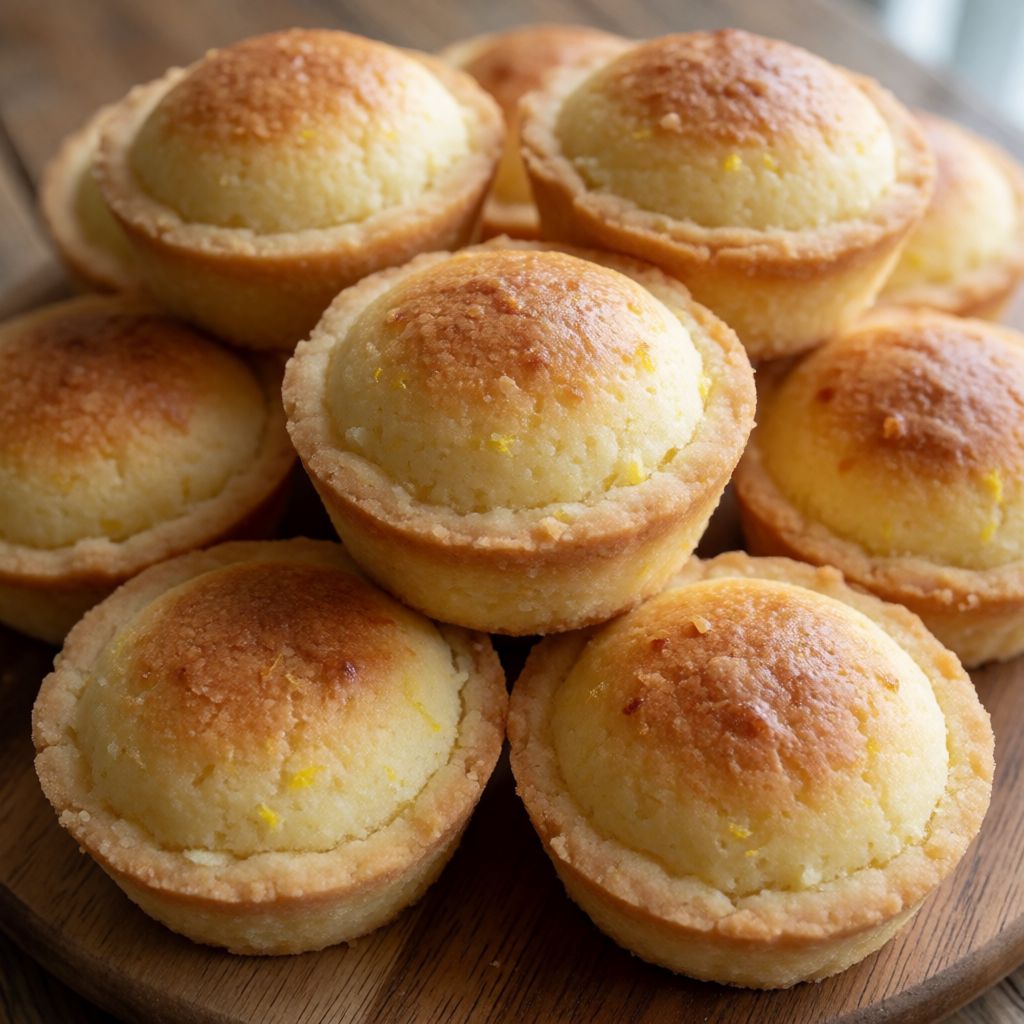
Bocconotti
Small Italian shortcrust pastry baskets filled with cherry jam and dusted with icing sugar.
Labels are worked out automatically from the ingredients and can be wrong. Check the packaging if it matters to you.
Ingredients
- 350 g Plain flour
- 120 g Caster sugar
- 120 g Butter or lard for a traditional version
- 2 pcs Eggs
- 0.5 package Baking powder
- 1 pcs Lemon zest
- 1 pinch Salt
- Cherry jam to taste
- Icing sugar to taste









Steps
Mix the ingredients by hand or with a mixer until you have a smooth, compact dough.
Wrap the dough in cling film and let it rest in the fridge for at least 30 minutes.
30 minRoll out the dough on a lightly floured surface.
Cut out circles 8-10 cm in diameter using a cutter.
Grease the moulds with butter, line with the dough, pressing in, and trim off the excess.
Place a tablespoon of cherry jam into each basket.
Roll out the dough trimmings, cut out circles and cover the filling.
Pinch the edges firmly closed and bake in an oven preheated to 180°C for about 20 minutes.
20 minLet the biscuits cool and dust with icing sugar.
Bocconotti are little sealed pies — a coin of pastry, a spoon of jam, a lid, pinched shut and baked until the shell is sand-coloured, not golden. They come from Abruzzo, where ovens were a shared village resource and fuel cost money, so people made small, dense things that held their shape and their heat, rather than anything delicate that needed watching. That history is why they're moulded, not free-formed: a mould holds its line in a hot communal oven where you can't babysit the tray.
What decides whether these work is the dough, not the jam. This is a shortcrust that needs to stay cold and short — "short" meaning the butter stays in solid flecks until the oven melts it, so you get crumble, not chew. Warm dough is where bocconotti fail quietly: it still looks fine on the counter, then slumps and cracks in the oven because the butter has already half-melted into the flour and lost its structure. The 30 minutes in the fridge isn't a suggestion, it's the fix for that — it lets the gluten relax (less shrinkage when you roll) and the fat re-firm (less slump when it bakes).
Some say lard is "the proper way and butter is a shortcut." No — lard is what a poor household had and butter is what a rich one had; both make a short dough, lard just makes a more brittle, almost savoury-edged one with a higher melting point, which is why bakers who want crisp edges in a hot bread-oven reach for it. In your kitchen, with a domestic fan oven that holds temperature evenly rather than a wood oven that surges, butter behaves well and gives you the better flavour trade for the effort.
Doneness here isn't a clock, it's a colour and a smell. Pale and still soft at 20 minutes means underbaked — the butter hasn't fully set the crumb and they'll be doughy at the pinch-seam, which is the thickest point and the last to cook. You're looking for the shell going from pale straw to the colour of digestive biscuits, and for the kitchen to smell faintly of warm butter and jam rather than raw flour. Twenty minutes is your lower bound; pull a corner one off and check the base is dry, not shiny, before you trust the batch.
Flour: plain flour, not strong bread flour — you want low gluten development so the pastry stays short and doesn't fight back when you roll it. If all you have is self-raising, that's fine, just halve the baking powder since you've already got lift built in.
Sugar: caster sugar dissolves into the fat cleanly when you cream or rub it in; if you only have granulated, give it an extra minute of mixing or it'll leave gritty spots in the baked shell.
Butter or lard: the fat's job is to coat the flour and block water from reaching it fully, which is the actual mechanism of "short" pastry — less gluten contact, less chew. Use it cold, straight from the fridge; room-temperature butter will cream rather than cut, and creamed fat makes a cakey dough, not a crisp one. No lard, no issue — in the UK, butter is the sensible default here and gives a rounder flavour anyway.
Eggs: they bind the dough and add just enough fat-and-water richness that you don't need to add any actual water, which keeps gluten formation low. Two eggs for 350g flour is a fairly rich ratio — if your eggs are small (under 50g each), add a splash of milk so the dough still comes together into one mass rather than crumbs that won't hold a seam.
Lemon zest: this is there for smell, not acidity — it cuts the flatness of a plain butter-sugar-flour mix without adding liquid. Orange zest works the same way if that's what's in the fruit bowl.
Cherry jam: traditionally this is amarena, a sour-cherry preserve set firm enough not to run. Thin, runny jam is the real cause of leaky bocconotti, not sloppy pinching — if your jam is loose, cook it down a few minutes first or it'll seep through the pinch seam under oven heat and glue the lid into the tray. Any firm-set jam works; apricot is the common swap when cherry isn't to hand.
Icing sugar at the end is cosmetic and should go on once the pies are properly cool — dust them hot and it melts into a wet film instead of sitting as a dusting, which tells you nothing about doneness but will tell you a lot about your patience.