
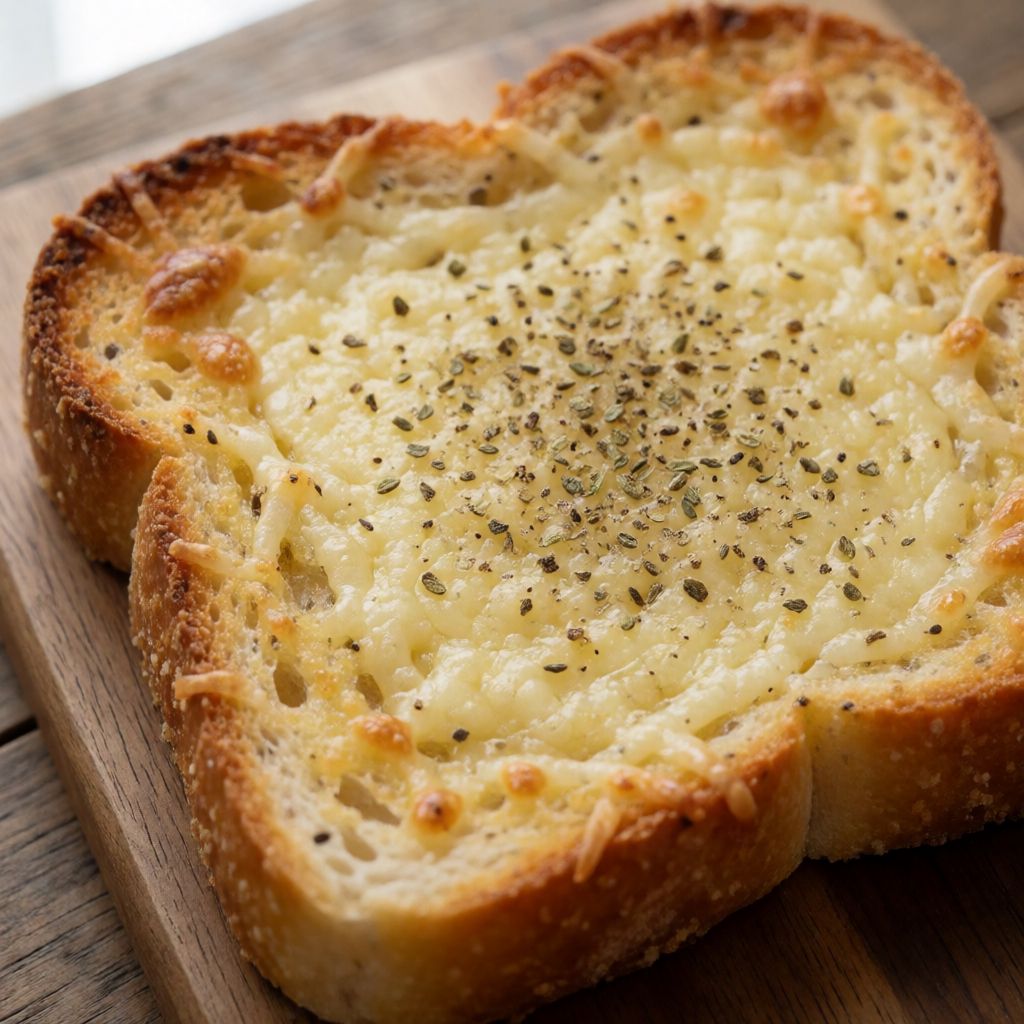
 AI photo
Pan-Fried Bread Pizza
A quick pan-fried pizza made from soaked bread instead of dough, topped with tomato sauce and mozzarella.
Labels are worked out automatically from the ingredients and can be wrong. Check the packaging if it matters to you.
Ingredients
- 400 g Bread
- 200 ml Milk
- Salt to taste
- Black Pepper to taste
- Oregano to taste
- 50 g Parmesan
- 60 g Tomato Passata
- Olive Oil to taste
- 150 g Mozzarella
- Basil a few leaves







Steps
Break the bread into pieces in a bowl, pour over the milk, then work it in with your hands until the bread has soaked it up and turned soft.
Stir in the salt, black pepper, oregano, Parmesan and tomato passata, mixing well by hand until you have a smooth paste.
Grease a frying pan with olive oil and spread the mixture out in an even layer to form a round base.
Fry over a medium heat.
8 minUsing a lid, flip the base over onto its other side.
Spread the tomato passata and mozzarella over the top, cover with the lid and fry.
3 minServe scattered with a few basil leaves.
This isn't pizza with a shortcut dough — it's stale bread doing an impression of dough. You soak broken bread in milk until it falls apart and turns to paste, add cheese and tomato for body and salt, then press it flat in a pan and fry it like a thick savoury pancake. What you get on top looks like pizza. What's underneath is closer to a frittata made of bread.
What decides whether it works is two things: how dry your bread was to start, and whether the heat gets through the middle before the outside scorches. Dry bread drinks the milk and swells into a mass you can shape. Fresh bread is already full of its own moisture — add milk to that and you get wet crumbs, not a base, something that slides apart in the pan instead of holding together. So the staler the bread, the better this works. That's not a compromise, it's the whole method.
Medium heat on the first side isn't a vague instruction — it's the speed at which the base sets from the bottom up while the inside has time to firm from raw paste into something sliceable. Rush it on high heat and you brown the surface while the centre stays gluey, the same way a thick pancake scorches outside and stays batter in. The base is ready to flip when it's no longer soft and shifting underfoot when you nudge the pan — firm enough to hold its shape, not yet trying to be crisp.
Bread is the whole engine here, so choose it by dryness and crumb, not by name. A hard end of a sourdough loaf, yesterday's white tin loaf gone leathery, the heel nobody wanted with Sunday's roast — all of that is better than anything soft and fresh. If what you have is soft, you can still do this: cut it, leave it out uncovered for a few hours, or give it a gentle, low pass in the oven just to dry the surface, not to toast it. The milk's job is to rehydrate, not to drown — if the bread's still springy and damp when you start, you'll end up with sludge instead of a dough-like mass.
Milk, not water, because you need fat and protein as well as moisture. Water would soften the bread but leave it with nothing to bind to; milk's fat carries flavour and its proteins firm up with heat, helping the mass hold together once it hits the pan. Any milk with some fat in it works — whole milk is the safe choice, and if you only have the semi-skimmed that goes in the tea, it'll still do the job, just slightly less richly.
Parmesan here is doing salt and glue, not just flavour — its long-aged proteins melt and knit the bread mass together as it cooks. The rule for substituting it is: any hard, aged, salty cheese that grates to a fine dry crumb. Grana Padano, an aged Pecorino, even a well-matured Cheddar from the usual British fridge will stand in — the texture shifts a little, the mechanism doesn't.
Tomato passata is smooth and pourable on purpose: it needs to sit in a thin, even layer over the base without pooling or soaking through, since there's no oven blast here to drive off extra liquid before it turns the base soggy. If passata isn't to hand, blend tinned tomatoes smooth and drain off a little juice first — anything with visible chunks or too much water undoes the point.
Mozzarella's moisture matters more in a pan than in an oven. Fresh mozzarella in its brine releases water as it melts, and with only a lid trapping steam and no high heat to burn it off, that water has nowhere to go but into your base. Pat it dry, or better, use the firmer low-moisture block mozzarella that's already standard in UK supermarkets for home pizza — it melts stretchy without flooding the top.
And patience is doing real work in those eight minutes on the first side. It feels long for what looks like a pancake, but that's the bread mass needing time to go from wet paste to something structurally sound enough to survive a flip. Shortcut it, and the lid-flip at step five will simply break the base in half — which tells you nothing is wrong with your technique, only that you didn't wait long enough.