
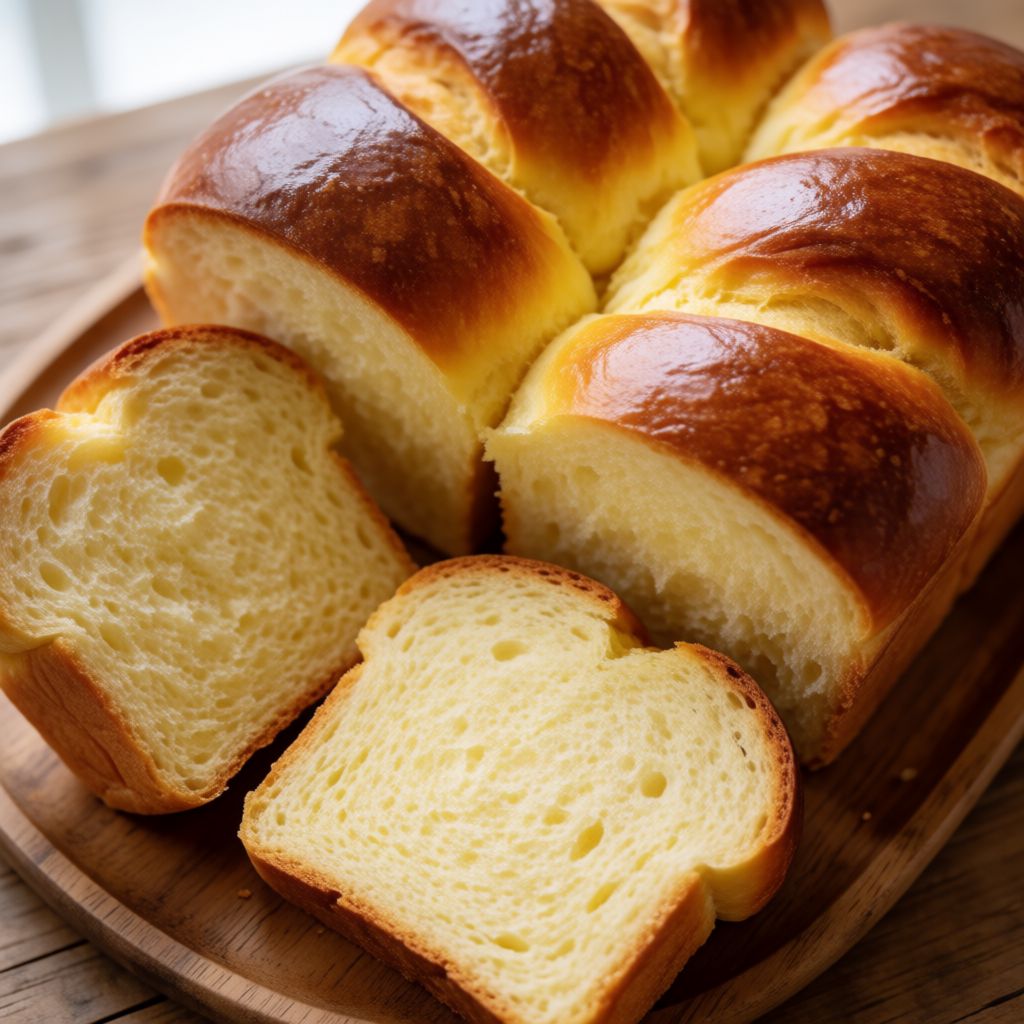
 AI photo
Brioche without butter
A soft, lightly sweet brioche made without butter, perfumed with lemon and orange zest.
Labels are worked out automatically from the ingredients and can be wrong. Check the packaging if it matters to you.
Ingredients
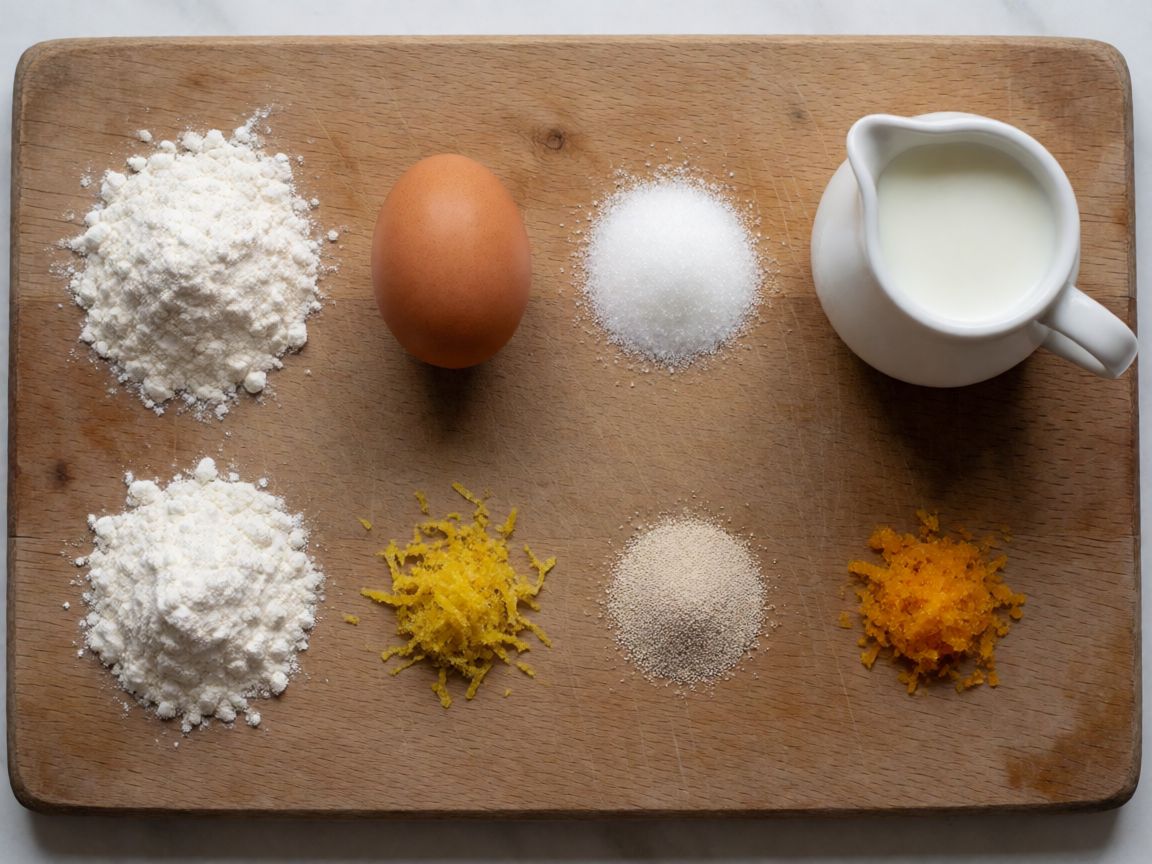
- 250 g strong white bread flour
- 250 g plain flour
- 1 pcs Eggs
- 100 g Caster sugar
- 80 ml Vegetable oil
- 230 ml Milk
- 25 g Yeast or 8 g dried yeast
- 1 pcs Lemon zest
- 1 pcs Orange zest optional
- 1 pinch Salt
- 1 pcs Egg yolk
- 1 tbsp Milk to taste, for brushing










Steps
On the worktop, tip out the strong white bread flour together with the plain flour and make a well in the centre with your fingers: add the sugar, egg, yeast, salt and lemon zest.
Start mixing with a fork, gradually pouring in the warm milk and vegetable oil in a thin stream.
Knead the dough by hand for at least 10 minutes.
10 minPlace the shaped dough in a bowl, cover with cling film and leave to rise for about 2 hours.
120 minOnce well risen, divide the dough into two pieces and roll out on a floured surface into a circle 3-4 mm thick.
Cut each circle into equal segments (8 slices) and roll up, starting from the wider edge.
Let the brioches rest for at least 1 hour in a warm place to rise again.
60 minPlace the brioches on a baking tray lined with baking paper and put them in a switched-off oven with the light on for 40 minutes.
40 minBrush the brioches with beaten egg yolk mixed with milk, and bake at 180°C for 15 minutes.
15 min
Call it brioche if you like, but there's no butter in it, and that's the whole point. This is the Italian cousin — cornetti dough, really, shaped like the croissant's slower, sweeter relative — built on oil instead of fat you have to cream or soften or watch for sweating. Oil doesn't melt out of a dough the way butter does, so you get richness without the fight to keep it cold and structured.
What decides whether this works isn't temperature control, it's two separate waits. The first rise builds the dough's strength — gluten relaxing and the yeast filling it with gas. The second rise, after you've rolled and shaped each piece into its little crescent, is what gives you a soft crumb instead of a dense one, because shaping knocks some of that gas out and the dough needs to recover before heat locks it in place. Skip or shortchange either wait and you get bread that's merely bread-shaped, not bread that pulls apart in layers of soft threads.
The other quiet trick here is the warm, switched-off oven with the light on. Most flats in winter are not warm enough for yeast to work with any urgency, and a draughty kitchen will have your dough sulking for hours. The oven light generates just enough gentle heat to create a proofing box without you needing proper kit — this is a workaround for ordinary domestic cold, not a traditional step with any deeper meaning.
Flour here is split between strong bread flour and plain. The strong flour brings gluten — the stretchy network that traps gas and holds the roll's shape once cut into wedges. Plain flour softens that structure down, so the crumb doesn't turn chewy and bready like a dinner roll. If you only have one or the other, use it alone rather than hunting for the exact split: all strong gives you a tougher, more bread-like result; all plain gives you something more cake-like and delicate, prone to collapsing if overproofed. Neither is wrong, just a different animal.
The oil is the structural decision of the whole recipe — any oil with no smell of its own, so a plain vegetable or sunflower oil, not olive oil, which would fight the citrus and sugar for attention. Oil coats gluten strands and shortens them slightly, giving tenderness without the temperature sensitivity of butter. This is also economic history in miniature: oil keeps at room temperature, doesn't need refrigeration, and was simply the fat people in warmer, poorer regions actually had on hand. Calling the result "brioche" is a bit of marketing; it's closer to a soft Italian breakfast roll wearing a French name.
Sugar does double duty — sweetness, yes, but also food for the yeast and moisture retention in the crumb, which is why these rolls stay soft a day later rather than drying out like plain bread. The milk, warmed before mixing, is there to give the yeast a comfortable start — not hot enough to kill it, just blood-warm, test it on your wrist if in doubt. Too hot and you've cooked the yeast before it's had a chance to do anything; too cold and the first rise crawls.
The lemon zest, and the orange if you use it, is not a trivial flourish — it's the dish's only real seasoning beyond sugar, so zest it fresh rather than using dried or bottled zest, which tastes flat and a bit soapy by comparison. A pinch of salt isn't there to make it taste "salty" but to keep the sweetness from turning one-note; bread without any salt at all tastes strangely hollow, even sweet bread.
The egg yolk and milk wash at the end is for colour, not structure — it's what turns the surface a warm gold rather than pale and dusty-looking. Brushing with whole egg gives a shinier, slightly tougher skin; yolk alone with a splash of milk gives that softer, matte-gold Italian bakery look, which is the effect wanted here.
On shaping: rolling the circle into eight wedges and curling each from the wide edge is exactly croissant technique, borrowed because it's an efficient way to turn a flat sheet into individually portioned, evenly sized pieces without wasting dough or measuring each one by eye. It's geometry solving a kitchen problem, not decoration.
As for patience — this dough asks for roughly three hours of your time doing absolutely nothing to it, across two separate rises plus a warm rest. There's no way to buy that back with a hotter oven or more yeast; crowding the yeast just makes it work frantically and inconsistently, giving you uneven, sometimes gluey crumb. Treat the waiting as an ingredient you're measuring just as carefully as the flour.