
 AI photo
Broccoli and Coriander Cappuccino
A creamy broccoli soup served cappuccino-style, finished with a light coriander and anchovy foam.
Labels are worked out automatically from the ingredients and can be wrong. Check the packaging if it matters to you.
Ingredients
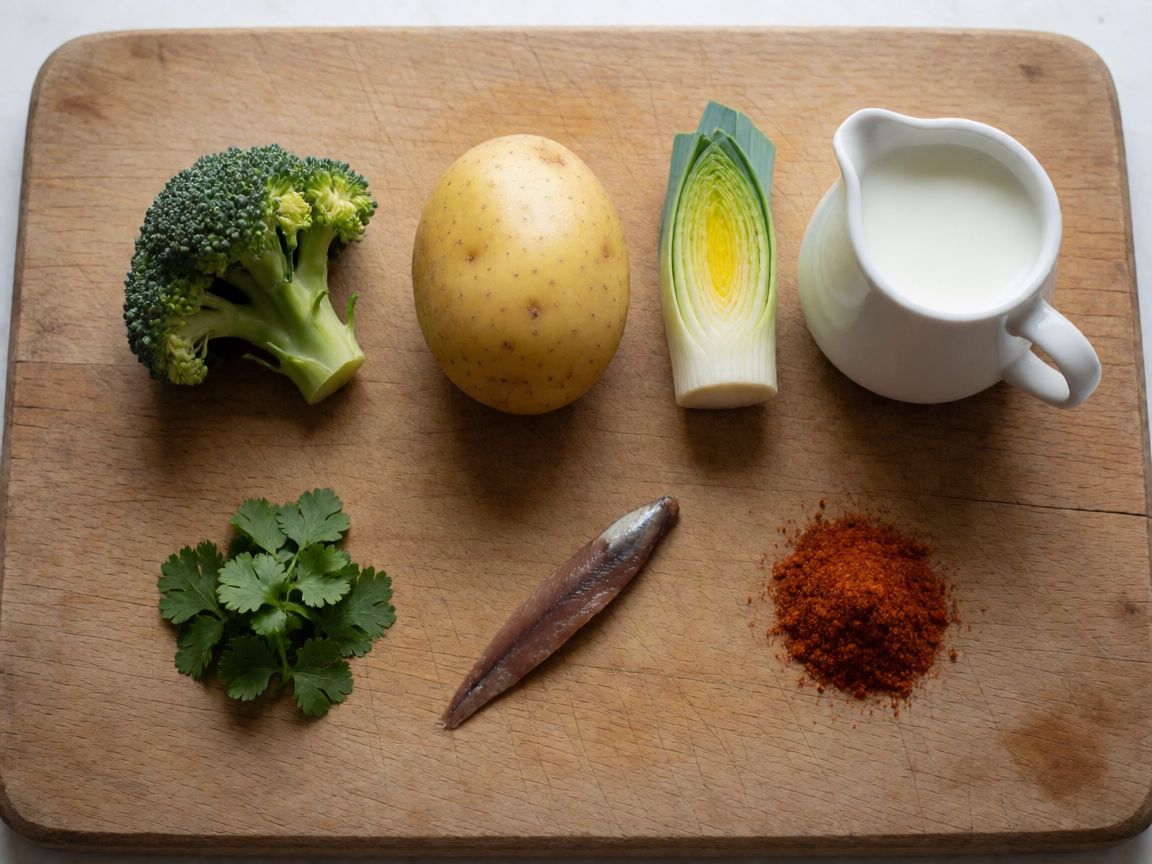










Steps
Heat the olive oil in a frying pan, dice the potato, break the broccoli into florets, and slice half of the leek into rings.
10 minPut the vegetables in the pan, sauté briefly, pour in the water, cover with a lid and simmer until tender.
15 minBlend the vegetables with water, milk, salt and olive oil until you get a thick, creamy soup.
3 minMake the white sauce: gently heat the milk with the coriander and anchovies, bringing it almost to the boil.
5 minRemove the sauce from the heat, strain it and whisk until frothy.
2 minPour the broccoli cream into a glass, top with the foam, and garnish with chilli powder and coriander.
2 min
Call it a soup if you like, but what you're making is a trick: a thick green purée sitting under a pale foam, built to look and feel like a cappuccino. The name isn't decoration — it tells you exactly how to work. Two separate acts of heat decide whether this comes off. First, you cook broccoli, potato and leek into something smooth enough to hold body without a drop of cream. Second, you warm milk just enough that it can be whisked into foam — too cool and it won't lift, too hot and it won't lift either, because by then the proteins have already started to seize and curdle instead of trapping air.
Some say you boil broccoli until it's properly soft, the longer the better. No — because broccoli, like all its cabbage-family relatives, carries sulfur compounds that only really start breaking loose the longer you push heat into it past the point of tenderness. That's the grey, cabbage-canteen smell you're avoiding. The lid in step two isn't there out of habit — it traps steam so the vegetables finish on gentler, trapped heat rather than a hard open boil, and you pull them off the second a fork goes through the potato without resistance. Not later.
Broccoli is doing the real structural work here, so buy it tight-headed, deep green, stalk firm enough to resist a light squeeze. A broccoli that's gone yellow at the edges has already started the breakdown that gives you bitterness later — it's not a vegetable that improves with age in the fridge the way an onion does.
The potato's job is starch, not flavour. You want a floury type, the kind that falls apart rather than holds its shape when boiled — that's what thickens your purée into something with body, so you're not reaching for cream to fake it. A waxy salad potato will stay stubbornly intact in the blender and leave you with a thinner, grainier result.
Half a leek, sliced into rings, is there for a sweetness that sits under the broccoli rather than fighting it — leek is a gentler allium than onion, which is exactly why it's half a vegetable here and not a whole one. No leek in the flat? A mild onion or a couple of spring onions will do the sautéing job, but expect a sharper, more assertive background — it changes the character, it doesn't just substitute for it.
Plain water for simmering, not stock, keeps this a broccoli soup and not a stock soup — the vegetable is meant to be the flavour, and water lets it stay that way without competing. Whole milk, both in the purée and in the foam, matters because the fat in it is what gives the whisked foam structure; skimmed milk will froth thinner and collapse faster, which on a domestic hob with no steam injection you really don't want working against you twice.
Fresh coriander, warmed gently into the milk for the sauce and scattered raw at the end for the garnish, gives you two different versions of the same herb — mellow and infused below, sharp and green on top. There's no clean substitute for its particular flavour; if you haven't got it, you're making a different, plainer soup, and that's fine, just don't expect the same brightness. Chilli powder on top is for colour and a whisper of heat you register at the nose before the tongue — a pinch, not a seasoning decision.
Olive oil earns its place twice: once in the pan for the sauté, where any oil without a strong smell of its own would do the same job, and once blended straight into the finished purée, where it's doing something different — rounding out the texture, carrying flavour on the tongue the way only raw oil can. For that second use, pick one you'd be happy to eat off a spoon, because that's effectively what you're doing. And give the whole thing the patience it asks for: vegetables properly soft before they go anywhere near the blender, milk genuinely warm but short of a boil before you strain and whisk it. Rushing either stage is exactly what turns a clean two-layer drink into a bowl of something merely beige.