
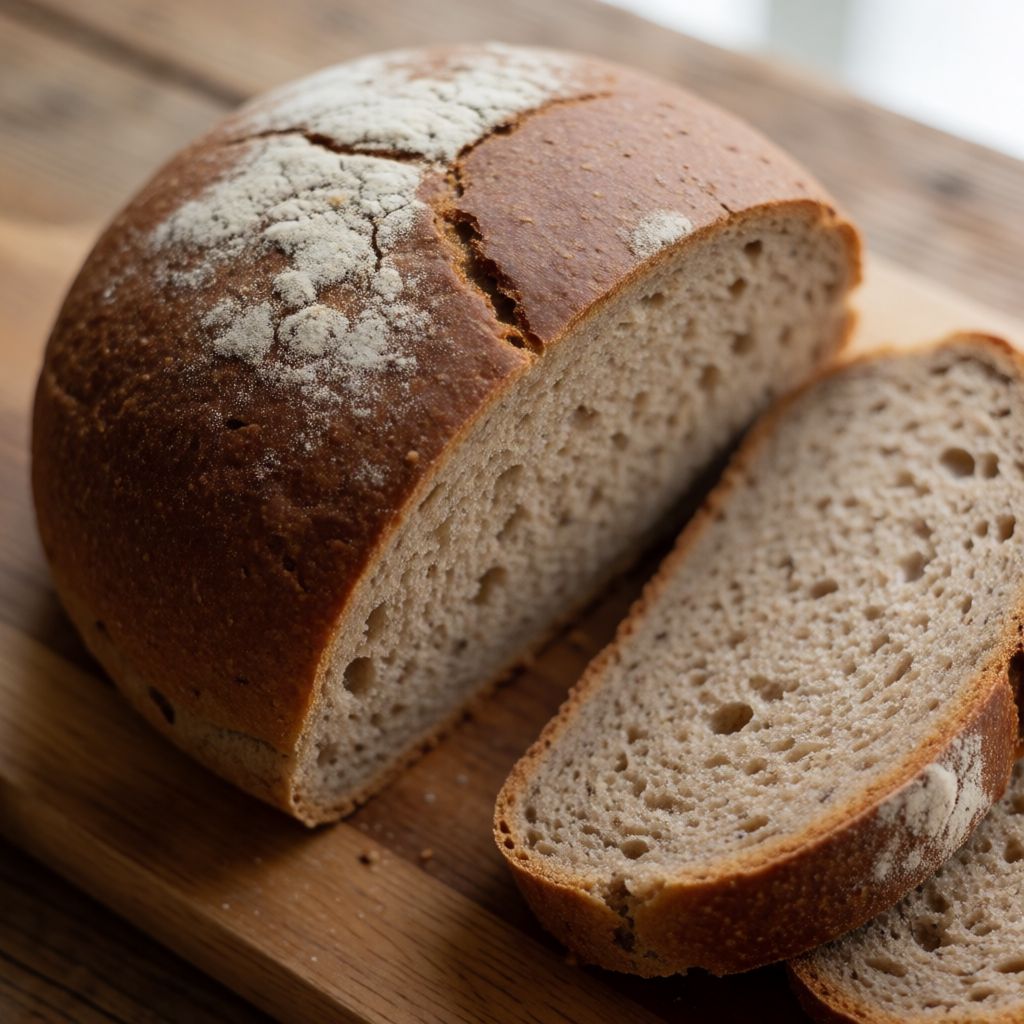
 AI photo
Buckwheat Bread
A rustic bread made with buckwheat flour and dried yeast, with a crisp crust from a tray of water in the oven.
Labels are worked out automatically from the ingredients and can be wrong. Check the packaging if it matters to you.
Ingredients
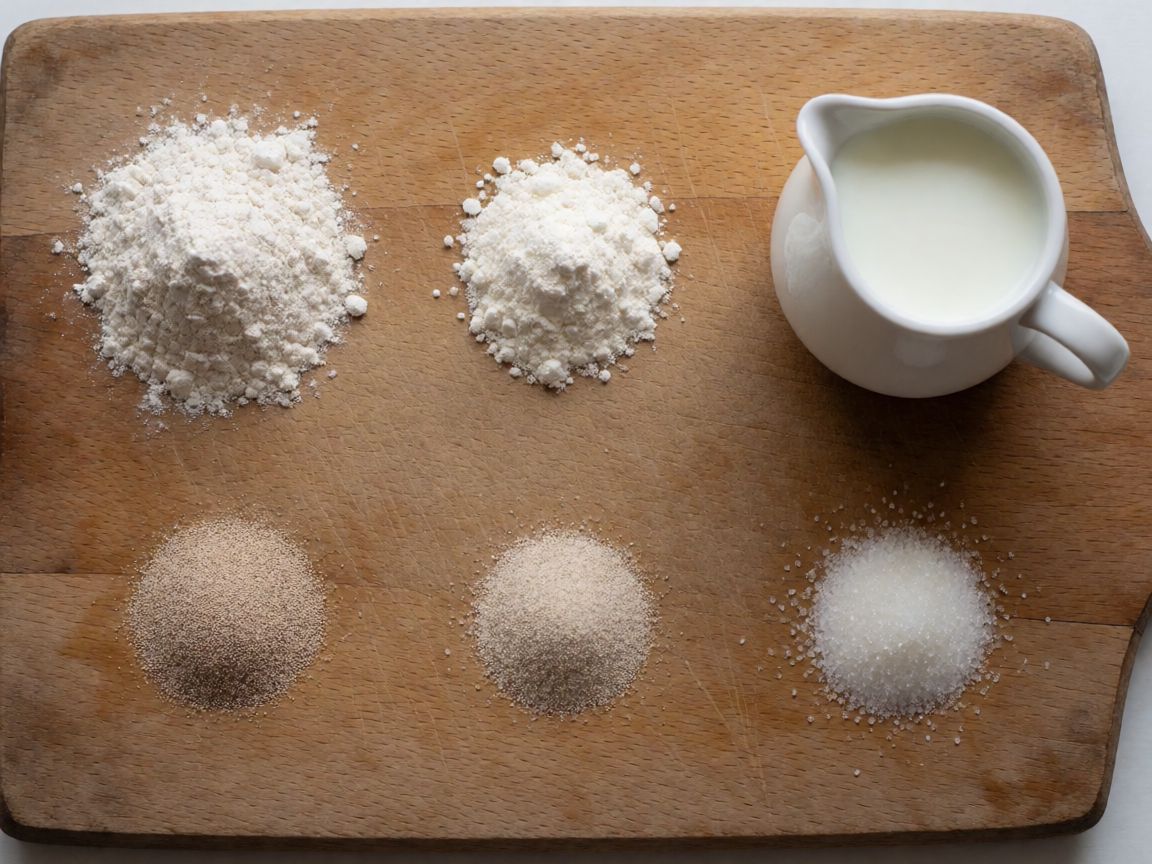
- 500 g Buckwheat flour
- 550 g Plain flour
- 1 l Water
- 7 g Dried yeast dried
- 1 tsp Sugar
- 15 g Salt
- 75 ml Milk
- 5 g Sugar







Steps
Dissolve the yeast in warm milk with a teaspoon of sugar, then gradually add the water to the buckwheat flour, mixing by hand.
Add the flour, the yeast dissolved in milk, and the salt, turn out onto a flour-dusted surface and knead vigorously until smooth, then shape the dough.
Cover with a tea towel and leave to rise in a warm place.
60 minHeat the oven to its maximum temperature and place a dish of water on the bottom of the oven.
Bake the bread for 10 minutes at maximum temperature.
10 minLower the temperature to 180°C and bake for a further 30 minutes.
30 minLet the bread cool completely before slicing.
This is a dense, earthy loaf — half buckwheat, half wheat flour, baked the way a home baker fakes a professional oven. Buckwheat gives the bread its colour (a deep tea-brown, almost purple in the crumb) and a flavour that's nutty, slightly bitter, nothing like the sweetness of plain wheat bread. But buckwheat has no gluten of its own. It can't hold gas, can't stretch, can't rise. Left on its own it would bake into something closer to a pancake. So the plain flour isn't filler — it's the scaffolding. Every bit of structure in this loaf comes from the wheat half of the mix, which is why the kneading has to be vigorous: you're building a gluten net strong enough to carry weight the buckwheat refuses to carry.
What decides whether this works is two things: how well that net gets built, and what happens in the first ten minutes in the oven. The dough here is wet — more water than you'd use for an ordinary loaf — so it will feel sticky and unmanageable under your hands at first. That's not a mistake to fix by adding flour until it behaves; a wetter dough gives a moister, more open crumb, and the extra water is doing real work holding the buckwheat's heavier, grittier particles in suspension. Knead through the stickiness, don't flour your way out of it.
Buckwheat flour: look for one that's finely milled and smells faintly toasted, almost like roasted nuts — that smell is the point, it's what carries through the crumb. Dark buckwheat flour (milled from the whole, unhulled groat) gives a stronger flavour and a greyer crumb; light buckwheat is milder. Either works here; just know which one you're buying, because the darker one will taste noticeably more bitter in the finished loaf, and that's not a fault, it's the character of the bread.
Plain flour: this is the one doing the structural work, so don't think of it as the minor ingredient just because buckwheat gets top billing. Any wheat flour with reasonable gluten will do the job; bread flour (higher protein) will actually give you a slightly taller, more open loaf if you have it, because more protein means a stronger net to hold the gas the yeast produces. Plain flour from the UK supermarket shelf is a perfectly fine compromise — this isn't a recipe that needs the extra protein badly enough to justify a special trip.
Yeast and sugar: the teaspoon of sugar in the milk isn't for sweetness, it's food — yeast needs something simple to eat before it has broken down any starch from the flour, and that gets it active fast rather than waiting around. Keep the milk warm, not hot: yeast is a living thing, and heat that feels pleasantly warm to your finger is fine, heat that makes you pull your finger back will kill it outright, and then nothing in this bread rises at all, however long you leave it. If you only have fresh yeast, use roughly three times the weight given for dried — dried yeast is concentrated by dehydration, fresh isn't.
Salt: fifteen grams across this much flour is not just for taste. Salt tightens the gluten net and slows the yeast down — without it, fermentation runs too fast, the dough rises before the gluten structure is ready to hold it, and then it collapses back on itself in the oven. Never let salt touch the yeast directly before they're both mixed into the dough; a slug of concentrated salt against raw yeast can kill the colony in that spot before it even gets going.
Milk: besides feeding the yeast, milk softens the crumb a little and helps the crust brown — the natural milk sugars caramelise faster than the sugars in flour alone, so that top crust goes a warmer brown than a water-only loaf would. If you're out of milk, water with an extra pinch of sugar gets the yeast going just as well; you'll just lose some of that browning and a little tenderness in the crumb.
As for the rising and baking: "a warm place" means somewhere steady, not a blast of heat — airing cupboard, top of the fridge, near (not on) a radiator while the Sunday roast is in the oven downstairs. What you're waiting for isn't a clock number, it's the dough roughly doubling and holding a dent when you poke it gently instead of springing straight back. And once it's out of the oven, leave it be. Cutting into a hot loaf lets all that trapped steam escape at once instead of finishing its work redistributing moisture through the crumb — you'll get a gummy, wet slice instead of the one you waited for. Patience here is not a virtue, it's the last ingredient in the list, just not written down.