
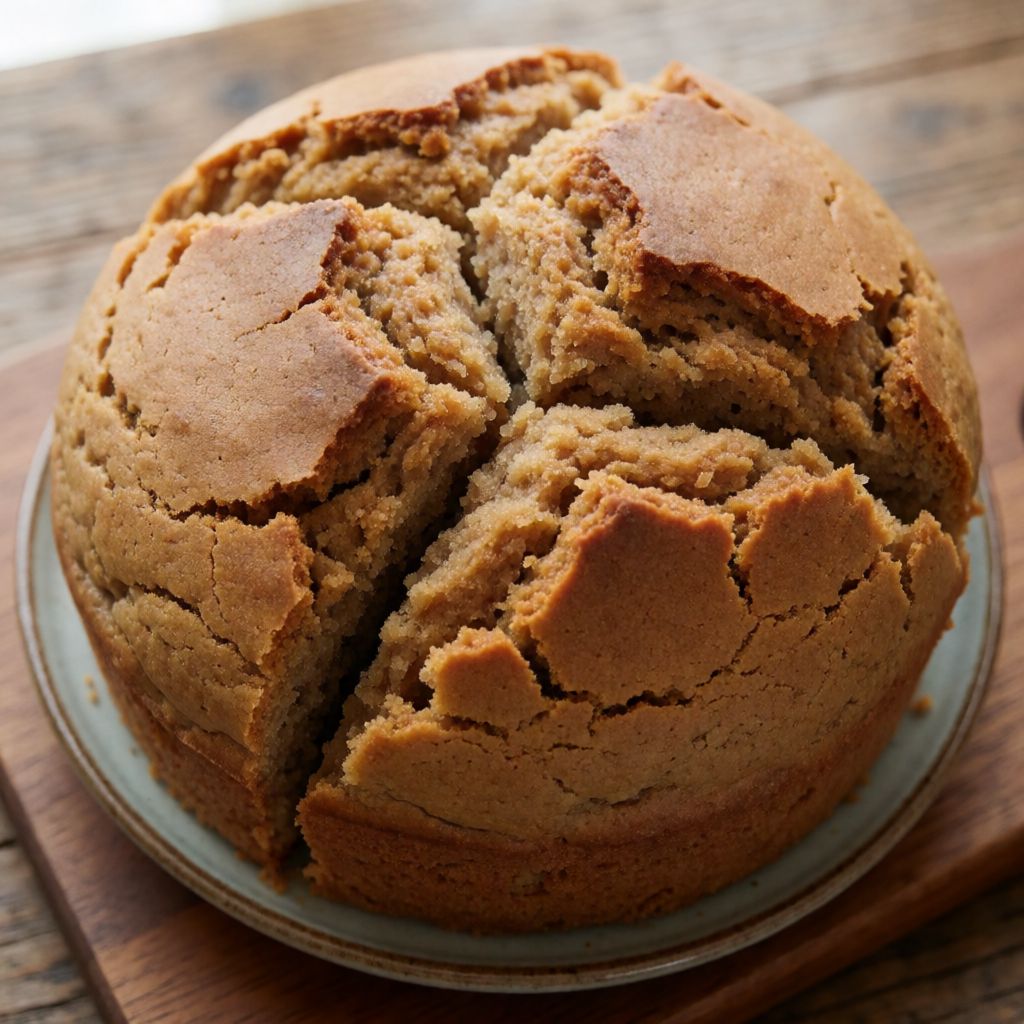
 AI photo
Buckwheat Loaf Cake: a rustic gluten-free breakfast treat
A rustic gluten-free buckwheat loaf cake, perfect for breakfast.
Labels are worked out automatically from the ingredients and can be wrong. Check the packaging if it matters to you.
Ingredients
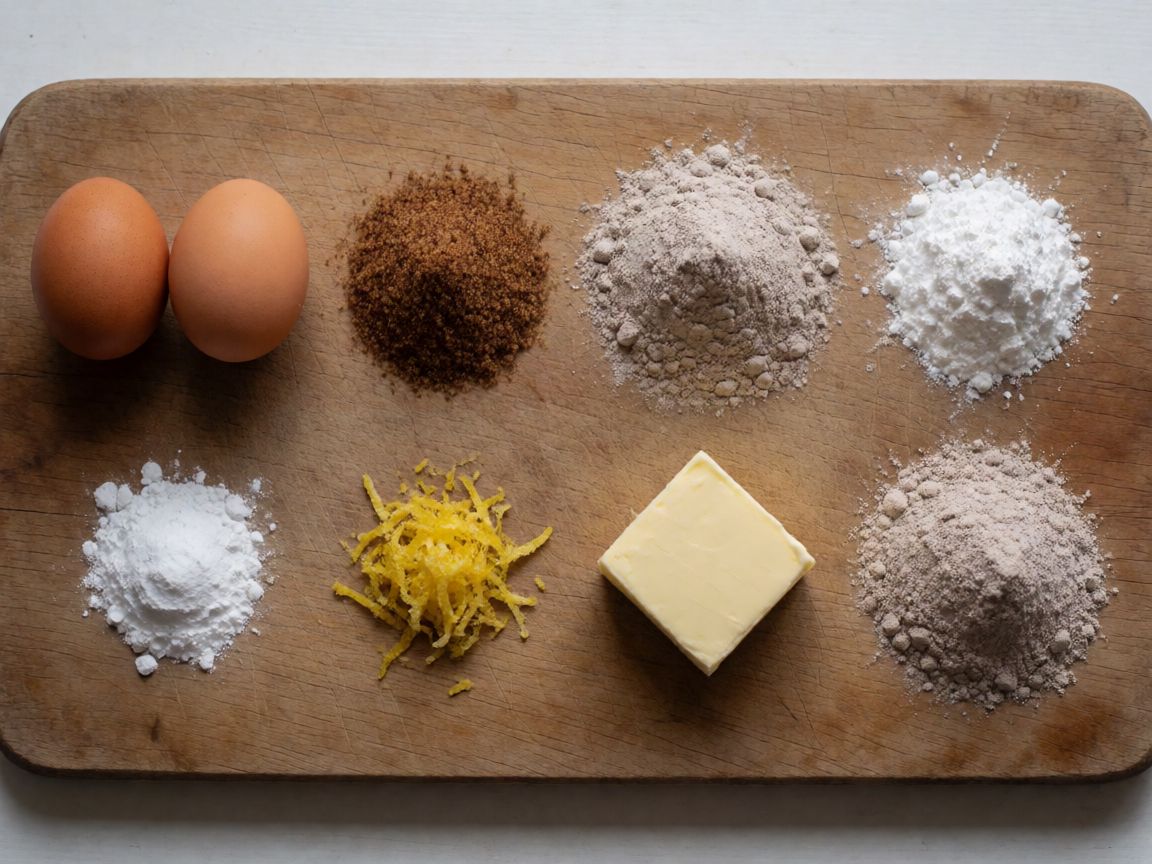
- 3 pcs Eggs
- 120 g Brown sugar or white sugar
- 120 g Vegetable oil
- 130 g Buckwheat flour
- 70 g Potato starch
- 15 g Baking powder
- 0.5 pcs Lemon zest unwaxed, untreated fruit
- Butter for the tin
- Buckwheat flour for dusting the tin








Steps
Crack the eggs into a bowl and beat them with an electric mixer together with the sugar until the mixture is light and creamy.
Pour in the vegetable oil in a thin stream, continuing to beat.
Add the buckwheat flour and mix it well into the batter.
Sift in the potato starch and baking powder, then add to the batter and mix thoroughly.
Flavour the batter with the lemon zest.
Grease the tin with butter or oil and dust with buckwheat flour.
Bake in a preheated oven at 180°C for 40 minutes.
40 minCheck for doneness with a wooden skewer – if it comes out dry, the cake is ready.
Let the loaf cake cool completely before removing it from the tin.
What was changed
Oven temperature rounded to 180°C () to fit the UK's 10°C display step.
This is a loaf cake that has quietly given up on wheat. Buckwheat flour has no gluten in it — none, not a trace — so the whole cake has to hold itself together some other way. That's the real subject here, not the lemon zest or the sugar colour.
What decides whether it rises into something you'd call a cake, rather than a dense, oily brick, is the first few minutes: beating the eggs and sugar until they go pale, thick, and roughly double in volume — a proper ribbon, not just foamy. That foam is doing the job gluten usually does: trapping air, holding shape while the oven sets it. Then the oil goes in a thin stream, still beating. Pour it in all at once and you don't save time, you break the foam — it's the same mechanism as making mayonnaise collapse by rushing it. What you get is heavy and greasy instead of light.
Some people will tell you gluten-free cakes always crumble apart in your hand. No — because here the egg foam and the potato starch between them do a respectable binding job, provided you build the batter in the order given and don't skip the whisking stage to save five minutes.
It's a modest loaf, feeds about six with tea, and it wants patience above all at the end: let it cool completely before you try to tip it out. Nothing dramatic happens if you don't — it just tears.
The eggs aren't just for moisture. Beaten with the sugar into that pale, thick ribbon, they're building a scaffold of tiny bubbles stabilised by protein and sugar — and in the oven, heat sets that protein solid, locking the air in place. That's your rise, your crumb, your lightness, all from one bowl of whisking, because there's no gluten to do a second job of trapping gas. Respect that stage and the rest is easier.
The oil goes in slowly for the same reason mayonnaise asks for patience: you're building an emulsion into an existing foam, not just mixing two liquids. Any oil with no smell of its own will do — sunflower or rapeseed, both easy to find in a British kitchen. Skip a fruity extra-virgin olive oil here; its flavour will fight the buckwheat instead of carrying it.
Buckwheat flour itself isn't a stand-in for anything — it's the whole point of the cake. It's a grain that grows where wheat struggles, in poor soil and short, cold seasons, which is why it was cheap peasant food across Eastern Europe and Brittany long before anyone called it a health food. It brings an earthy, slightly bitter, nutty flavour and a density wheat flour doesn't have. Don't try to substitute it with another gluten-free flour blend expecting the same cake — you'll get a different cake, not this one.
Potato starch is there to lighten what buckwheat makes heavy, and to help the binding without bringing in gluten. If you don't have potato starch, cornflour does the identical job — same mechanism, starch grains swelling and setting as they heat, no real loss. The 15 g of baking powder looks like a lot next to 130 g of flour, and it is — because without a gluten net to help trap gas, the chemical lift has to work harder on its own.
Lemon zest earns its place by cutting through buckwheat's natural bitterness — use unwaxed fruit because you're eating the skin's oil directly, and that oil is the entire reason zest works; a treated lemon gives you wax and bitterness instead of brightness.
The butter-and-flour dusting on the tin isn't habit, it's insurance: without gluten, this crumb is soft and tears easily, and a bare-buttered tin will grip it on the way out. The flour gives it a surface to release from cleanly. The same logic covers the cooling — tip the loaf out warm and the starch gel inside hasn't finished setting; it will sag or tear in your hands. Let it go cold, properly cold, and it holds its own shape. Patience here isn't advice, it's an ingredient you can't buy more of.